
Bitcoin Volatility at 43%: Calmer than 19% of S&P 500 Stocks

 Prefer us on Google


Bitcoin, wiser than Oracle or Coinbase. Grayscale measures its volatility over a year at 43%, down from 81% five years ago. Nearly one in five S&P 500 stocks now fluctuates more than it. However, it is essential to understand what this percentage measures and what it conceals.
Key Points
- Over twelve months, BTC's fluctuations reached 43% on an annualized basis, compared to an average of 64% over ten years.
- About 95 companies in the leading Wall Street index are more volatile than the cryptocurrency.
- Grayscale attributes this calmness to liquidity, institutional investors, and regulated access.
- A year of data is insufficient to assess risk over a complete cycle.
Bitcoin Volatility Explained Without Equations
Take the Bitcoin price every evening for a year. Note the change each day, then measure how much these changes deviate from their average. You get a daily standard deviation. Multiply it by the square root of the number of trading days, and you have the annualized volatility that Grayscale displays.
Bitcoin trades 365 days a year, hence a factor close to 19. A volatility of 43% corresponds to a typical daily change of about 2.3%. Five years ago, at 81%, it was more like 4.2% per day. Grayscale does not specify its calculation convention. With the 252 sessions of a trading year, it would rise to 2.7%.
Keep the order of magnitude in mind. About two out of three days remain below this 2.3% change, provided that prices follow a bell curve. This is not the case for BTC, whose flash crashes are more frequent than theory predicts.
This figure also looks in the rearview mirror. We speak of realized volatility, calculated on past prices. The options market publishes an implied volatility, which traders anticipate. At Deribit, the DVOL index calculates it for the next 30 days.
Bitcoin Compared to S&P 500 Stocks
Grayscale ranked the 500 values of the American index according to their volatility over a year, with Bloomberg data as of October 6, 2026. The chart places JPMorgan around 20%, Amazon around 30%, and Bitcoin just above 40%. Further to the right, Oracle is around 55%, Coinbase around 70%, and Sandisk over 100%.
Ironically, the stock of the leading American crypto platform shakes its shareholders more than the asset it sells. In total, 19% of the members of the index, nearly 95 companies, have been more volatile than BTC.
Zach Pandl, Grayscale's research director, draws a clear conclusion in his note from October 14. According to him, Bitcoin's volatility remains higher than that of most stocks, but it "no longer belongs to a separate risk category." The question is no longer whether to hold a volatile asset, he adds, but how much to allocate to it in a portfolio.
Why Bitcoin Volatility is Decreasing
Grayscale offers three reasons in one sentence. The market is more liquid, institutional investors are more present, and regulated access has multiplied. Behind this formula are the spot Bitcoin ETFs launched in the United States in January 2024, which opened the door to wealth management advisors and some pension funds.
Glassnode proposes another avenue. In September, the on-chain analysis company estimated that the supply held by long-term holders explained about 19% of the variations in monthly volatility, the first of 13 factors tested. This makes sense, as Bitcoins that have been dormant in a wallet for years do not weigh on the order book.
The manager himself acknowledges the limitation of the exercise. "A year of data cannot establish Bitcoin's risk over all market cycles," writes Zach Pandl. Calm also has its downside. Lower volatility makes drops less severe, but it equally dulls the surges that have built BTC's reputation.
Deribit's DVOL index over a year, with a peak close to 90 in early February 2026 and below 40 since the end of summer. Source: TradingView
Options anticipate a calmer month than the past year. Deribit's DVOL rose from 33.6 on September 17 to 37.9 on October 20, but remains below the 43% measured by Grayscale. The argument that Bitcoin is no more agitated than a stock is not new; Binance has already defended it with supporting data.
-- Price
This content is provided for general informational purposes only and doesn't constitute financial, investment, legal, or tax advice. Any events, rewards, online promotions, or related information mentioned herein should not be considered a recommendation, solicitation, or invitation to purchase, sell, trade, or otherwise deal in any crypto assets. Crypto assets are highly volatile and may result in loss. The availability of WEEX services, products, and related events may vary by region. You are responsible for ensuring that your participation is in accordance with applicable local laws and regulations.
You may also like

Ken Griffin Warns AI Chip Glut Could Collapse Prices

411 BTC Awakened After 13 Years: The Wallet Targeted by the 'Noah Doe' Lawsuit Moves $33 Million
Interview with Robinhood's Senior Vice President Johann: No Competition in Public Chains, Focusing on DeFi and AI Agent for Next-Gen Finance

Samsung Wallet to Integrate USDC: What Should Phone Manufacturers Consider?

Why Crypto Platforms Want to Become Your Everyday Money App

Solana’s Yakovenko questions Alpenglow build as vote transactions exit

Bitcoin: JPMorgan Sees It Outperforming Stocks and Gold in the Long Term

Tether joins Tenstorrent’s $1.5B round as AI investments grow

110 wallets account for 99.6% of RLUSD payments on XRP Ledger

Raised US$28 million and now seeking to expand in Argentina and other Latin American countries
Claude Pushes Bitcoin and Banks to Accelerate in 53 Hours

Capital as Production Capacity: Where Did the Money of the Top 100 VC and CVC in the U.S. Go in the First Three Quarters of 2026?
Strive Surpasses Saylor in Bitcoin Purchases: What Is This Company?

Charles Hoskinson's Meme Coin Plummets Over 90% in Just Hours

After Disassembling a Genuine Ledger, TBC Discusses the True Boundaries of Self-Custody
Unitree Stock Surges: Why Shares Jumped 16% on October 19 and What Investors Should Check Before Q3 Results

SpaceX Stock Price Explained: Why SPCX Is Down From Its $225 High and What Could Move It Next
21shares launches Lighter, Venice crypto ETPs in Europe

Stablecoins Have Solved On-Chain Settlement, But How Do They Enter Merchant Checkout?

CFTC Chair: Breaking State-Level Fragmentation to Make the U.S. a Global Crypto Hub
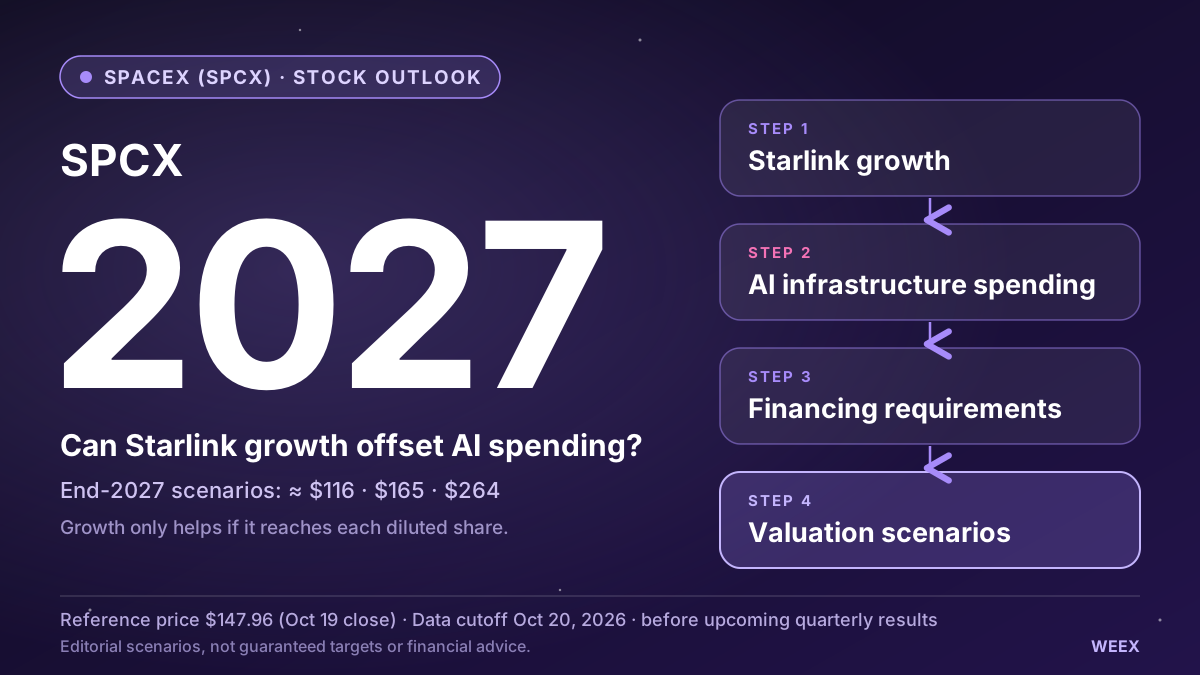
SpaceX Stock(SPCX) Price Prediction 2027: Can Starlink Growth Offset AI Spending?
SpaceX stock price prediction for 2027: assess Starlink growth, AI spending, valuation compression and dilution through transparent price scenarios.
a16z Talks to Circle Founder: Arc is More Than Just a Public Chain, It is the Foundation of the Machine Economy
NDV: Where Did the Money Go? A Review of the 16 Years of Stagflation and Wealth Erosion in the United States
Danantara Boosts Economy 30-Fold Through Technology - Fintech World
What Is Messari? Crypto Research, Blockworks Integration and Investor Tools
How Did Myer Kripke Invest With Warren Buffett? Long-Term Investing Lessons
Bitcoin (BTC) Mining Profitability: Will Higher Difficulty Trigger Miner Selling?

In the Winter of Blockchain Games, "$8 Million Sold in 30 Seconds" - A New Speculative Game on Robinhood

Kerman Kohli: The Bottleneck in Computing Financing Lies in Credit

Banking Coalition Gathers: Stablecoin Market Faces Structural Shock
Ken Griffin Warns AI Chip Glut Could Collapse Prices
411 BTC Awakened After 13 Years: The Wallet Targeted by the 'Noah Doe' Lawsuit Moves $33 Million
Interview with Robinhood's Senior Vice President Johann: No Competition in Public Chains, Focusing on DeFi and AI Agent for Next-Gen Finance
Samsung Wallet to Integrate USDC: What Should Phone Manufacturers Consider?
Why Crypto Platforms Want to Become Your Everyday Money App
Solana’s Yakovenko questions Alpenglow build as vote transactions exit


