
NVIDIA Stocks Available for 24-Hour Trading in the U.S.

 Prefer us on Google


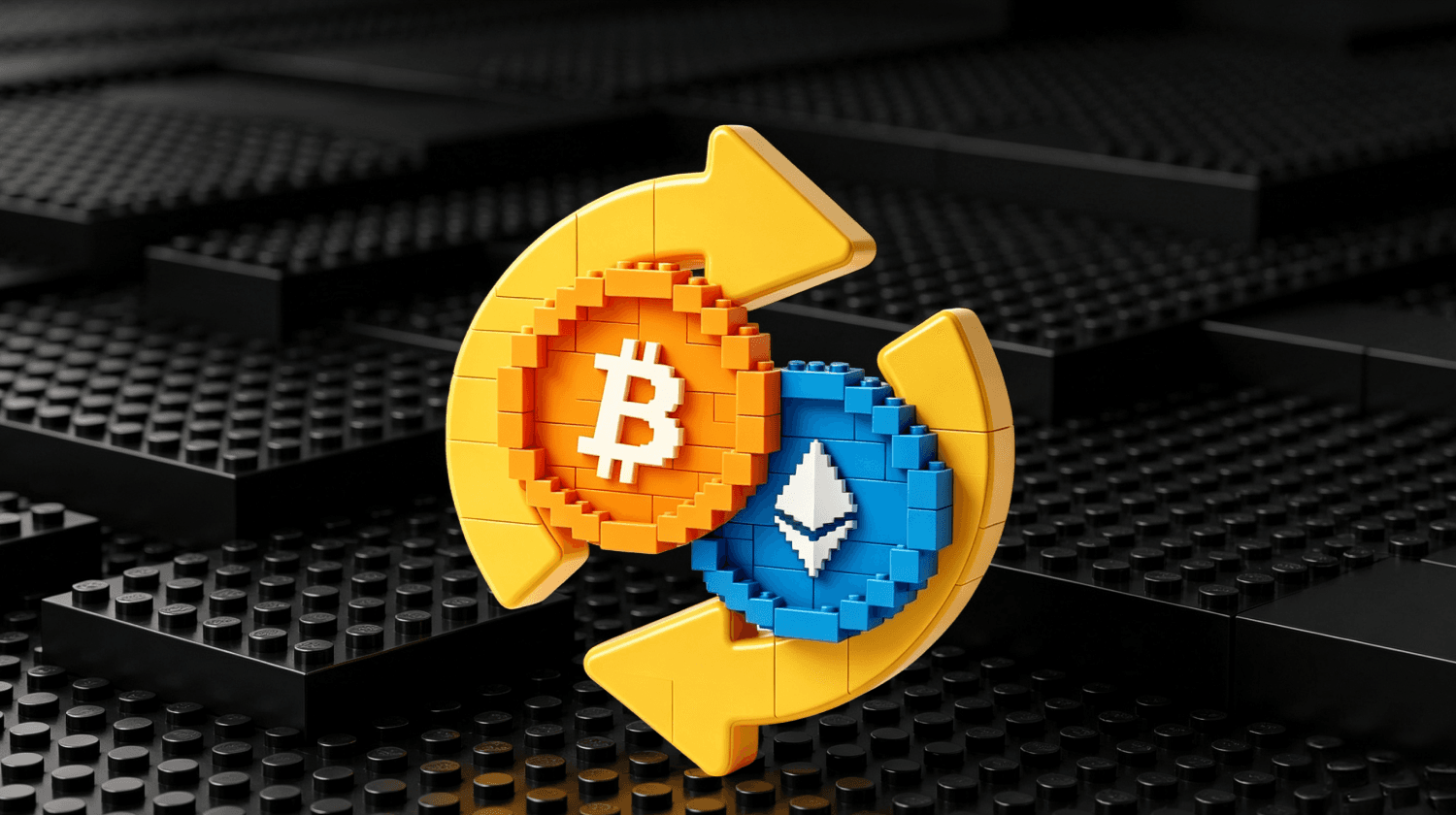
[Block Media Reporter Myung Jeong-seon] A market is being developed where over 60 representative U.S. stocks, including NVIDIA, Tesla, Apple, and Microsoft, can be traded 24 hours a day on the blockchain. This will be done by issuing stocks in token form and exchanging them for stablecoins, bypassing traditional brokerage accounts and order books.
A joint platform called 'OKXICE', initiated by digital asset exchange OKX and Intercontinental Exchange (ICE), the parent company of the New York Stock Exchange (NYSE), is working on establishing a tokenized stock market. This is an attempt to transfer the stock trading structure of traditional financial markets to a blockchain-based system.
Tokenization of Over 60 Stocks Including NVIDIA, Tesla, and Apple
According to regulatory documents submitted by OKXICE on the 5th (local time), it has been confirmed that over 60 U.S. securities are included for trading in tokenized form.
The list includes NVIDIA, Tesla, Apple, Microsoft, Amazon, and Alphabet. Digital asset-related companies such as Coinbase, Circle, and Robinhood are also included. JP Morgan, Goldman Sachs, Walmart, Netflix, Reddit, and Boeing are also among the candidates for trading.
However, just because a stock is included in the documents does not mean that trading for all of them is confirmed. Companies can raise objections to the inclusion of their stocks in the tokenization process for a certain period.
TD Securities stated in a report that "no stock can be assumed to be included by default." Stock tokenization is a structure that converts existing stocks into digital tokens that can be traded on the blockchain.
For example, instead of purchasing NVIDIA stocks through a traditional brokerage, an investor would buy a token representing rights to NVIDIA stocks.
According to the documents submitted by OKXICE, the actual stocks underlying the tokens will be held by a registered broker-dealer at a 1:1 ratio. One NVIDIA token will be backed by one actual NVIDIA share.
Token holders will also be entitled to economic rights and shareholder rights, such as dividends and voting rights, similar to existing shareholders.
Using Stablecoins Instead of Dollars... Liquidity Pools Instead of Order Books
The biggest difference lies in the trading method.
Investors will buy and sell tokenized stocks using stablecoins linked to the value of the dollar instead of using dollars. OKXICE plans to support payment methods such as USDC, USDT, and USDG.
Unlike traditional stock exchanges, the platform will not directly connect buy and sell orders from an order book.
Instead, it will apply a structure where tokenized stocks and stablecoins are placed in a blockchain-based liquidity pool, and investors will trade against that pool.
For example, when an investor buys an NVIDIA token, the number of NVIDIA tokens in the liquidity pool decreases while the amount of stablecoins increases. This results in an increase in the price of NVIDIA tokens. Conversely, selling tokens will create downward pressure on the price.
This system is known as an Automated Market Maker (AMM) in the digital asset market. It determines trading prices using mathematical formulas or rules set by market makers.
TD Securities analyzed that the active adjustment of prices and holdings by professional market makers may be more important in stock trading than traditional AMMs.
Market makers can present prices based on real-time market data and their own holdings, or combine multiple liquidity pools into a single trading environment, thereby implementing a market structure similar to existing stock exchanges.
Trading on OKXICE is expected to take place on the blockchain 'XLayer' developed by OKX. The liquidity pool will utilize technology from the decentralized exchange Uniswap.
Trading Available on Weekends... Price Discrepancies as a Major Variable
Another difference from the existing U.S. stock market is the trading hours.
OKXICE plans to support trading 24 hours a day, seven days a week. This means that tokenized stocks of NVIDIA and Tesla can be bought and sold even during the nights or weekends when the U.S. stock market is closed.
For example, NVIDIA tokens can be traded on Sundays when the Nasdaq is closed. At this time, the price will not simply follow the last trading price of the Nasdaq but will be determined by the buy and sell demand in the blockchain liquidity pool.
As a result, there is a possibility that price discrepancies between token prices and actual stock prices may occur when the U.S. stock market is closed.
Transactions will not be completely anonymous. Investors must undergo identity verification and anti-money laundering procedures before trading.
The value of the tokens is linked to actual U.S. stocks, but the trading system itself is closer to that of a digital asset exchange than a traditional securities market.
However, it remains uncertain whether institutional investors will participate in the market in large numbers in the short term.
TD Securities predicts that the short-term impact on institutional investors will be limited, as U.S. investors can already trade stocks efficiently through the existing securities market. The lack of active interest from companies in tokenizing their stocks and regulatory uncertainties are also seen as obstacles.
The fact that the relevant regulatory exemptions are not permanent but apply for a period of five years may also limit the participation of large financial firms. Even if financial companies invest significant costs in building the system, it is difficult to rule out the possibility of changes in the regulatory environment in the future.
Ultimately, the key is liquidity. Especially during the nights and weekends when the U.S. stock market is closed, sufficient participation from investors and market makers is necessary to prevent tokenized stock prices from deviating significantly from actual U.S. stock prices.
Harvey Lee, founder of Tokenization Insights, evaluated that the core of this attempt is not merely the emergence of another tokenized stock exchange. It could serve as a case study to test which model among various models moving U.S. stocks to the blockchain can scale up the fastest and establish a new market structure.
Whether the advantages of 24-hour trading and blockchain payments translate into actual investment demand will depend on future liquidity, price stability, and regulatory frameworks.
-- Price
This content is provided for general informational purposes only and doesn't constitute financial, investment, legal, or tax advice. Any events, rewards, online promotions, or related information mentioned herein should not be considered a recommendation, solicitation, or invitation to purchase, sell, trade, or otherwise deal in any crypto assets. Crypto assets are highly volatile and may result in loss. The availability of WEEX services, products, and related events may vary by region. You are responsible for ensuring that your participation is in accordance with applicable local laws and regulations.
You may also like
CNN Fear and Greed Index Falls to 18 Points
One billion fraudulently created tokens: The Holograph case in court in Paris

Elon Musk Offers a SpaceX Share to Every American Child: The American Dream at 140 Satoshis
White House Crypto Committee: Four People Departed in 14 Months
107 hacks cause 1.05 billion euros in damage in Q3 2026

Hatem Douidar Joins Tactful AI Investors to Support Its Expansion in AI Solutions

From Zero to Financial Freedom: A Trader's HYPE Airdrop Review and Trading Philosophy

Can Celestia Turn the Tide with AI Payments After a 97% Drop?

BlackRock wants tokenized funds to back traditional Wall Street trades

The New PayPal Mafia: 10 Interns, $100 Billion

Yuga Labs Tells a New TCG Story, Generously Distributing NFT Community Card Packs—Will the Market Respond?

Market Gives Only 17% Chance, Economists Call It "Fifty-Fifty": Is the Fed's October Rate Hike Suspense Severely Underestimated?

What is the big brother of HYPE airdrop A9 currently focusing on?
One dead, Qonto in flames, Nuñez resigns: why the streets worry crypto investors

Crypto: 107 incidents and $1.18 billion stolen in Q3 2026

Financial Supervisory Service Chief Acknowledges Lack of Capability to Address Cryptocurrency Fraud
Ansem: Papertrade Could Reshape the High-Leverage Speculation Market
Is Pearl, Dreaming of Bitcoin in the AI Era, an Innovation or Just Simple Hype?
ECB: Lagarde defends rate hikes before the IMF and urges Brussels on digital euro

Financing Weekly Report | Fission Completes $10 Million Series A Financing Led by Pantera Capital; DeepSeek Plans to Raise Approximately 100 Billion Yuan in New Financing
Crypto Scams: The $24 Billion Supermarket of Fraudsters Under Chainalysis's Microscope
Galaxy Begins Stablecoin Remittance... Starting Expansion into Digital Asset Territory
The Six-Year Tug of War Between Privacy and Regulation

Goldman Sachs Throws Out 'Chilling Chart': Either the Bond Market is 'Overly Pessimistic' or the Stock Market is 'Too Optimistic'
Solana's Shanghai Entity Established in June with No Capital Ties to Main Body; Developer Event Postponed Due to Over-registration
Bitcoin: AI Crash or Superabundance, Bitwise Sees Only One Winner

Crypto doesn’t need your party to win, just its candidates

JUST Completes 5th JST Buyback & Burn: Over 170M Tokens (~$23.53M) Burned Ahead of Major Deflationary Upgrade

唐华斑竹: GasFree Users Exceed 500,000, Making TRC 20 Token Transfers More Convenient
Global Liquidity: Could the Japanese Oil Crisis Collapse US Treasuries?
CNN Fear and Greed Index Falls to 18 Points
One billion fraudulently created tokens: The Holograph case in court in Paris
Elon Musk Offers a SpaceX Share to Every American Child: The American Dream at 140 Satoshis
White House Crypto Committee: Four People Departed in 14 Months
107 hacks cause 1.05 billion euros in damage in Q3 2026
Hatem Douidar Joins Tactful AI Investors to Support Its Expansion in AI Solutions


