
Should You Buy XST Coin at $0.007? What XSolut's AI and RWA Narrative Actually Means

 Prefer us on Google

XST coin at $0.007 is a buy decision that cannot be evaluated the same way a stock or an established cryptocurrency is evaluated. XST coin has no revenue, no functioning product, and no regulatory approval in its target market.
XST coin's value at current prices is entirely a function of what investors believe the project could become rather than what it currently is. That distinction does not make the buy decision obviously wrong. It makes it a specific type of decision that requires honest assessment of narrative durability, development probability, and risk tolerance rather than the fundamental analysis that established assets support.
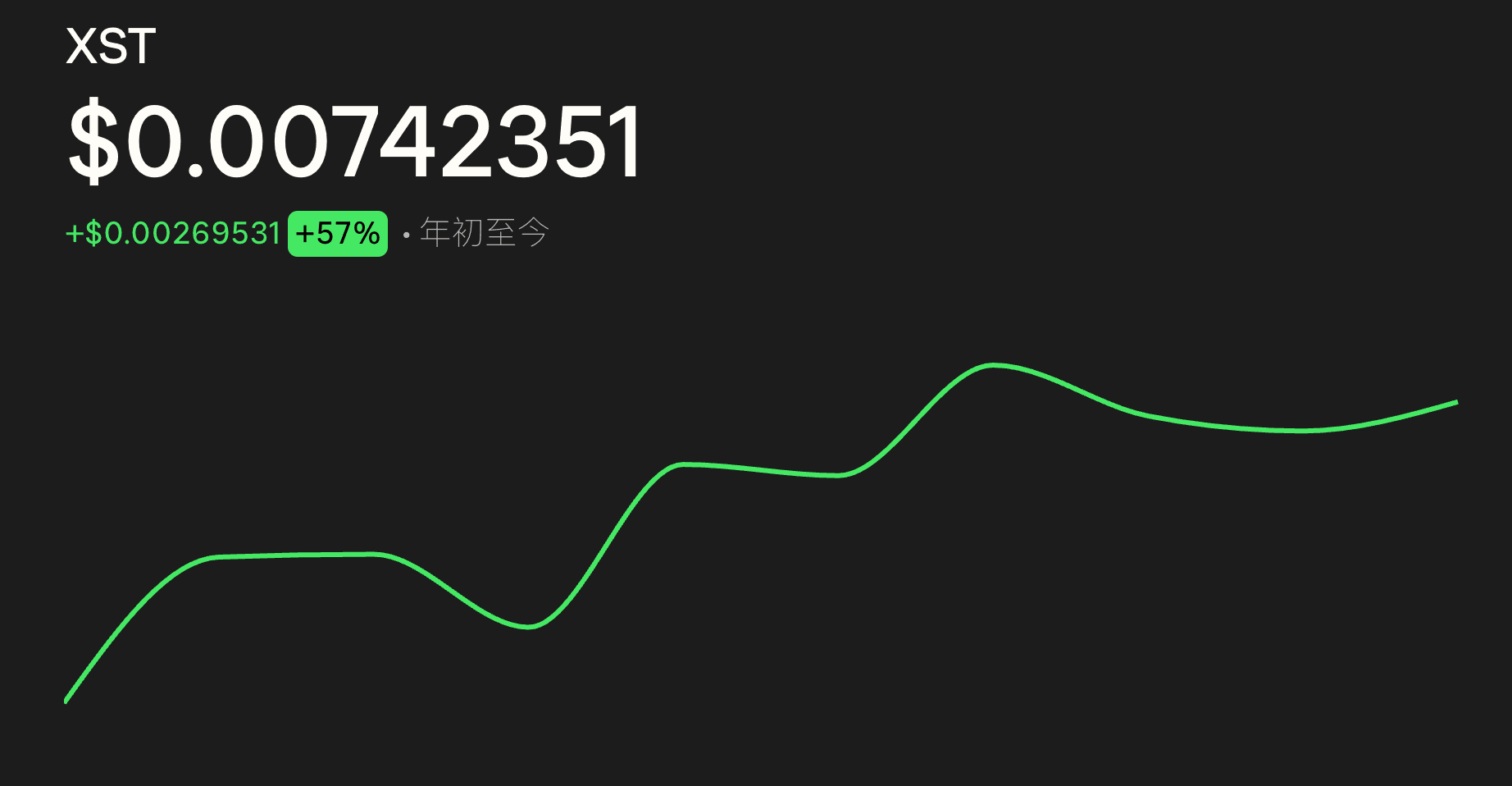
What You Are Actually Buying at $0.007
The most important analytical starting point for the buy decision is understanding precisely what ownership of XST coin at current prices represents.
You are not buying a share of AI infrastructure revenue. XSolut does not currently generate revenue from AI infrastructure because the marketplace it describes does not yet exist as a functioning product.
You are not buying proven real world asset tokenization. The RWA tokenization framework that XSolut describes is a design concept rather than a deployed system with verified asset representations.
You are buying a position in the narrative that XSolut could build what it describes. The price of that narrative position at $0.007 reflects the market's current probability assessment of XSolut delivering a functioning AI infrastructure marketplace within a timeline that sustains investor interest. That probability assessment can change rapidly in either direction as development news, competing projects, and broader crypto market sentiment each affect how much the narrative is worth to marginal buyers.
Understanding that you are buying narrative probability rather than current value is the foundation for making an honest buy decision rather than one based on what the project claims it will eventually be.
What the AI Infrastructure Narrative Is Actually Worth
The AI infrastructure narrative that XSolut is positioned within is genuine rather than manufactured, which is the specific factor that separates XSolut from purely speculative tokens whose narratives have no connection to real economic activity.
AI infrastructure investment has been one of the defining economic themes of 2026. Amazon, Microsoft, Google, and Meta have each committed hundreds of billions of dollars to AI data center construction, power systems, and custom silicon. The scale of that investment creates genuine coordination challenges that marketplace solutions could address. Capital seeking exposure to AI infrastructure returns has historically been limited to institutional participants with access to private infrastructure funds or large minimum investments.
The specific value that a functioning XSolut marketplace would provide is access to that investment opportunity for retail participants through tokenized representations. That is a real market need rather than a fabricated one. The question for the buy decision is not whether AI infrastructure investment is real. It clearly is. The question is whether XSolut is the project that will successfully build the marketplace to address it, and whether the current price already reflects an appropriate portion of the probability that it does.
What the RWA Narrative Adds and What It Does Not
Real-world asset tokenization has moved from a speculative crypto theme to a genuine institutional focus throughout 2026, with major financial institutions and regulatory bodies in multiple jurisdictions developing frameworks for tokenized securities and real-world assets.
The RWA narrative adds specific credibility to XSolut's positioning because it connects the project to a trend with institutional validation rather than purely retail speculation. When major banks and asset managers are building tokenized asset products, a project that addresses the same theme in a crypto-native way benefits from the legitimacy that institutional interest generates for the broader category.
What the RWA narrative does not add is product validation. Institutional interest in RWA tokenization generally benefits established projects with functioning products and regulatory compliance rather than early-stage projects in development. XSolut's positioning within the RWA narrative creates investor interest but does not independently validate the project's ability to deliver on that narrative.
The specific implication for the buy decision is that the RWA narrative is a tailwind that extends XSolut's narrative relevance beyond the AI infrastructure theme alone. It is not a substitute for product development, which remains the primary variable that determines whether the buy decision at $0.007 produces the return the narrative implies is possible.
The On-Chain Data That Informs the Buy Decision
One specific input to the buy decision that goes beyond the narrative assessment is the on-chain data available for XST through Solscan and other Solana blockchain explorers.
Wallet distribution is the most important on-chain metric for a small-cap token's buy decision. A token where a small number of wallets hold a disproportionate percentage of the supply is more vulnerable to rapid price decline from concentrated selling than a token with broad distribution. Investors evaluating XST should check the current top wallet concentration before making a buy decision, because a high concentration percentage implies dump risk that the narrative alone does not capture.
Trading volume consistency is the second important on-chain metric. Trading volume that is consistently present across multiple sessions indicates organic interest rather than campaign-driven spikes. Volume that spikes dramatically on specific days and then drops to minimal levels indicates that price movements are being driven by coordinated activity rather than by genuine buyer interest from multiple independent participants.
Transaction count growth over time is the third metric. A project with growing unique transaction counts is accumulating users rather than simply generating trading volume from a small number of active traders. User accumulation is the most reliable indicator of genuine network effect development rather than speculative price action.
The Three Questions That Determine the Buy Decision
Rather than a universal recommendation, three specific questions help individual investors determine whether buying XST at $0.007 is appropriate for their specific situation.
The first question is what percentage of your portfolio you are allocating and whether you can afford to lose it entirely. XST is a high-risk small cap token on a project that is in the development stage without a functioning product. The probability of losing the entire investment is not negligible. Any allocation that would significantly damage your financial position if lost entirely is too large an allocation for a token at this stage of development.
The second question is what your time horizon is. The $0.05 price prediction examined in the companion article requires an eighteen month horizon at minimum under the strong scenario. Buying XST with an expectation of significant appreciation in weeks rather than months is a trading decision rather than an investment decision, and the thin liquidity that characterizes XST's current market structure makes short-term trading volatile and unpredictable rather than systematically favorable.
The third question is whether you have an exit strategy before you buy. A token at XST's stage of development does not provide the fundamental indicators that tell long-term investors when to reduce exposure. Having a price based exit strategy before buying, meaning a specific price level at which you will take partial or full profits, protects against the specific risk of watching narrative driven gains evaporate before taking action.
Why $0.007 Is a More Interesting Entry Than the All Time High
One specific observation about the current price relative to the all-time high that is relevant to the buy decision is the nature of the pullback from $0.0084 to $0.007.
A pullback of approximately 17% from an all time high in a small-cap token with thin liquidity is neither unusual nor alarming. It is the normal pattern for tokens that have attracted initial speculative interest and are consolidating before the next catalyst determines whether the price sustains above or below the current range.
Buying at $0.007 rather than at the $0.0084 all-time high provides a specific and measurable improvement in risk-reward. An investor who buys at $0.007 and the price returns to $0.0084 has generated a 20% return. An investor who bought at $0.0084 and the price is at $0.007 has a 17% unrealized loss. The directional risk is identical but the entry price determines the return profile for each intermediate price outcome between current levels and the long-term prediction.
The pullback does not guarantee that the price will recover. It provides a better entry for the scenario where recovery occurs.
The Honest Assessment of Whether You Should Buy
The honest assessment is conditional rather than universal, and the conditions are specific enough to be useful.
You should consider buying XST at $0.007 if you are allocating a small percentage of your portfolio that you can afford to lose entirely, if your time horizon is at least twelve to eighteen months, if you have verified the on-chain wallet distribution and found it acceptable, if you have a specific exit strategy before you buy, and if you have independently researched XSolut's development progress through sources beyond marketing materials.
You should not buy XST at $0.007 if any of those conditions are not met. A token at this stage of development is not appropriate as a significant portfolio allocation, as a short-term trade based on narrative momentum, or as a position held without an exit strategy.
The AI and RWA narrative combination is genuine and positions XSolut within themes that have real economic substance. That genuine positioning makes XST more interesting than pure speculation tokens whose narratives have no connection to real economic activity. It does not make XST a safe or predictable investment. It makes it a specific type of high risk, high potential return opportunity that is appropriate for a defined and limited allocation within a diversified portfolio rather than as a primary investment position.
For those looking to participate in global financial markets, having access to the right trading platform matters. WEEX offers crypto and stock trading products, covering major global markets including US stocks and digital assets.
Conclusion
XST coin at $0.007 is neither an obvious buy nor an obvious avoid. It is a conditional buy for investors who meet the specific criteria that make a small cap development stage token appropriate, and an avoid for investors who do not.
The AI infrastructure and RWA tokenization narratives that XSolut is positioned within are genuine rather than manufactured, which is the specific factor that gives the buy decision at $0.007 more foundation than pure speculation provides. The absence of a functioning product, the thin liquidity, and the concentrated wallet distribution risks are the specific factors that make position sizing and exit strategy more important than the narrative quality alone.
What XSolut's AI and RWA narrative actually means for the buy decision is that the project has identified a real market opportunity and positioned itself within genuine economic trends. Whether it successfully builds the product that converts that positioning into value is the question that the next eighteen months of development progress will answer rather than anything the narrative itself can resolve.
FAQ
1. Should you buy XST coin at $0.007?
The buy decision is conditional on five specific criteria: allocating only a small percentage of your portfolio that you can afford to lose entirely, maintaining a twelve to eighteen month time horizon, verifying on-chain wallet distribution through Solscan, having a specific exit strategy before buying, and independently researching development progress through sources beyond marketing materials. If all five conditions are met, XST at $0.007 is a considered speculative allocation. If any condition is not met, the buy decision is premature.
2. What does buying XST coin at $0.007 actually represent?
Buying XST at $0.007 represents a position in the probability that XSolut successfully builds a functioning AI infrastructure marketplace rather than in current revenue or product value. The project is in the development stage without a functioning marketplace, regulatory approval, or verifiable revenue. The price reflects narrative potential rather than delivered value, which makes it a high-risk speculative position rather than a fundamental investment.
3. Why does the AI and RWA narrative combination matter for the buy decision?
The dual narrative provides genuine economic substance rather than pure speculation because both AI infrastructure investment and RWA tokenization are real and growing markets with institutional validation in 2026. This makes XSolut more interesting than tokens whose narratives have no connection to real economic activity. It does not reduce the project risk from being in the development stage, but it does increase the probability that investor interest sustains long enough for development progress to occur.
4. Why is $0.007 a more interesting entry than the all-time high of $0.0084?
An entry at $0.007 provides approximately 17% improvement in risk-reward compared to the all-time high. For every intermediate price outcome between current levels and the longterm prediction, the investor who buys at $0.007 generates better returns or smaller losses than the investor who bought at $0.0084. The pullback does not guarantee recovery but provides a better entry for the scenario where recovery occurs.
5. What are the most important risk factors for XST coin at current prices?
Three risk factors are most important. Wallet concentration risk means that a small number of holders controlling a large percentage of supply can cause rapid price declines through selling. Liquidity risk means that thin trading depth amplifies price volatility in both directions beyond what the market capitalization implies. Development risk means that a project in the proposal stage without a functioning product can lose investor interest quickly if visible development progress does not follow the initial narrative momentum.
This content is provided for general informational purposes only and doesn't constitute financial, investment, legal, or tax advice. Any events, rewards, online promotions, or related information mentioned herein should not be considered a recommendation, solicitation, or invitation to purchase, sell, trade, or otherwise deal in any crypto assets. Crypto assets are highly volatile and may result in loss. The availability of WEEX services, products, and related events may vary by region. You are responsible for ensuring that your participation is in accordance with applicable local laws and regulations.
You may also like

Microsoft Stock Jumps After Azure Grows 43%: What the Biggest Cloud Beat in Years Actually Means

Apple Stock Price Prediction 2026-2027: Can AAPL Recover to $380 After the Earnings Drop?

AAPL Stock at $5 Trillion Market Cap Falls 6%: Is Now the Time to Buy or Wait?

AAPL Stock Falls 6% After Beating Estimates: What the Disconnect Between Results and Reaction Means

XST Coin Price Prediction 2026-2027: Can XSolut Reach $0.05 After the AI Infrastructure Narrative?

Amazon Stock Price Prediction 2026-2030: Can AMZN Reach $600 After the AWS Acceleration?

Cathie Wood Sold AMZN Stock and Bought SPCX Today: What ARK's Reshuffling Actually Signals
AMZN Stock Soars 10% After Q2 Earnings: What the AWS 37% Growth and $220 Billion Capex Mean for Amazon

USAR Stock: Is a 67% Drawdown a Buy or a Dilution Trap?

Amazon Stock Surged 10% Overnight. Free Cash Flow Went Negative.

SpaceX Stock Price: Why SPCX Trades Below Its $135 IPO — and Which Price You're Actually Seeing
USAR Stock and the 53% Share Count Jump Coming August 28
Arm Earnings Q1 FY2027: The $1 Billion Supply Gap to Watch
SK Hynix Stock and the KOSPI Record Two Day Crash: What a 40% Drop From Peak Means
SNDK Stock Price Prediction 2026-2027: Can SanDisk Recover to $2,000 After the 50% Crash?
SNDK Stock Has Crashed 50% in a Month: Is Now the Time to Trade the Volatility?
Is SK Hynix Stock a Buy After Falling to All Time Lows on Record Earnings?
Hyperliquid (HYPE) July 30 Unlock: What Time Does the $198M Unstake Hit and How Will It Impact Price?
SK Hynix Stock Price Prediction 2026-2027: Can SKHY Reach $250 After the Q2 Earnings Miss?
How Do Crypto Brokers Make Money From Fee Sharing? What the Economics Actually Look Like
SOXS Stock Analysis: The 3x Chip Bear Fund in a 25% Drawdown
How to Avoid Crypto Broker Scams: What Legitimate Brokers Actually Look Like
WEEX API Rate Limits Explained: The Numbers Beginners Miss
SK Hynix Stock Crash: Why Seoul, Nasdaq and Tokens Disagree
Sony Digital Ownership: What Blockchain Actually Fixes in 2028
Microsoft Stock Forecast After Q4 Earnings: Short and Long-Term Outlook
Nvidia Stock Price Is Up Only 5% While AMD Is Up 160%: What the Underperformance Actually Means
Nvidia Stock Price and the $250 Billion OpenAI Supply Deal: Opportunity or Red Flag?
SPCX Stock Price Has Fallen 43%: Is It a Buying Opportunity or Still Overvalued?
SPCX Stock Price Hits All Time Low After Starship Flight 13 Success: What Is Going On?
Microsoft Stock Jumps After Azure Grows 43%: What the Biggest Cloud Beat in Years Actually Means
Apple Stock Price Prediction 2026-2027: Can AAPL Recover to $380 After the Earnings Drop?
AAPL Stock at $5 Trillion Market Cap Falls 6%: Is Now the Time to Buy or Wait?
AAPL Stock Falls 6% After Beating Estimates: What the Disconnect Between Results and Reaction Means
XST Coin Price Prediction 2026-2027: Can XSolut Reach $0.05 After the AI Infrastructure Narrative?
Amazon Stock Price Prediction 2026-2030: Can AMZN Reach $600 After the AWS Acceleration?
Contents
Popular coins
Latest articles


