
OpenAI May Integrate Iris Recognition: WLD Surges 20% in One Day, Receives Major Endorsement?

 Prefer us on Google

Original Title: "WLD Skyrockets 20%, Iris Scanning to be OpenAI's Trust Savior?"
Original Author: Mach, Foresight News
On January 29, World token WLD soared over 18% in the past 24 hours, jumping from around $0.46 to near $0.65, with a current market cap of around $25 billion. The price surge was directly attributed to a Forbes report: OpenAI is developing a new social networking app considering using iris scanning technology similar to World's to verify user identities, aiming to address the issue of online bot proliferation.
According to The Information, Nvidia, Amazon, and Microsoft are in talks to invest up to $60 billion in OpenAI. This new round of funding could value OpenAI at $730 billion.
Rampant Bot Fakery Sparks Need for Human-Verified OpenAI
OpenAI hopes to achieve "proof of personhood" through biometric means to filter out AI-generated fake accounts. The rapid advancement of AI is creating challenges that it cannot solve on its own, and World is stepping in to fill that void. Sam Altman's dual role is a key link. He is not only the head of OpenAI but also a co-founder of World.
Altman foresaw as early as 2020 that AI would blur the line between humans and machines, leading to a collapse of online trust. OpenAI's AI models like the GPT series have infiltrated social media, recruiting, financial fields, but the accompanying wave of misuse includes fake accounts spreading false information, AI agents manipulating markets, and even fabricating resumes on recruiting platforms.
OpenAI needs a reliable "personality filter" to maintain the purity of its ecosystem; otherwise, its products will face regulatory pressure and user attrition.
OpenAI's social app is said to aim to create a "bot-free" online space, but traditional CAPTCHAs or phone verifications have failed - AI can easily bypass them. World's Orb provides zero-knowledge proof through iris scanning, allowing users to prove they are human without revealing personal information. This technology has been implemented in the World App, covering 15 million users and expanding into the payment and gaming sectors. If OpenAI integrates a similar system, it could significantly enhance the competitiveness of its applications.
For example, embedding World ID verification in the ChatGPT interface allows users to securely engage in encrypted payments or identity authentication, avoiding AI-generated fake interactions. This can also open up new revenue streams for OpenAI: charging verification fees or sharing data infrastructure with World.
Integrating with Tokenomics to Benefit Everyone from AI Prosperity
Altman has publicly stated that AGI (Artificial General Intelligence) will reshape the global economy, but only if wealth distribution is ensured to be fair. World's design intent is to distribute "Universal Basic Income" (UBI) through WLD, allowing everyone to benefit from AI prosperity.
OpenAI can embed World's tokenomics into its platform to drive user adoption. For instance, social networking users who undergo iris verification can earn WLD rewards for AI service subscriptions. This creates a commercial loop: OpenAI provides AI tools, World handles identity and payments, jointly combating the monopolization of centralized platforms.
On the regulatory front, collaboration between World and OpenAI can also mitigate risks. World has already faced privacy inquiries in Europe and Asia (such as bans in Spain and Kenya), but with OpenAI's collaboration, it can leverage the latter's influence in Washington to advocate for policy loosening. Altman has lobbied the White House to discuss digital identity standards, paving the way for cooperation.
Currently, OpenAI has not disclosed specific details, but insiders have revealed that the application may integrate biometric hardware to ensure that every user on the platform is a real human.
Of course, there are also critics who point out that iris scanning poses privacy risks, especially in the AI era where data could be misused. OpenAI itself is under antitrust scrutiny, and its union with World may attract more regulatory scrutiny. However, from a business perspective, this move benefits OpenAI: it can benefit from World's blockchain infrastructure while injecting utility value into WLD, driving tokens from speculation to practical applications.

By 2025, World is pushing the protocol from a controversial project to mainstream adoption. In May, World officially launched in the United States. In early October, the World Chain mainnet went live, designed as a blockchain optimized for human activities, prioritizing verified user transactions. On October 21, World partnered with Mythical Games to integrate Orb technology into the game economy, allowing users to participate in the on-chain economy through iris verification and prevent reward farming by bots.
In addition, World has partnered with platforms such as Razer and Tinder to embed World ID into hardware and dating apps, allowing users to verify their identity to prevent fraud.
Next-Gen ID Authentication 4.0
In January 2026, World released the product and technical specifications for the next generation identity authentication protocol.
At its core is the OPRF node (Oblivious Pseudorandom Function), which generates a "pseudonym" for users when they log into different apps, making their identity more difficult to trace.
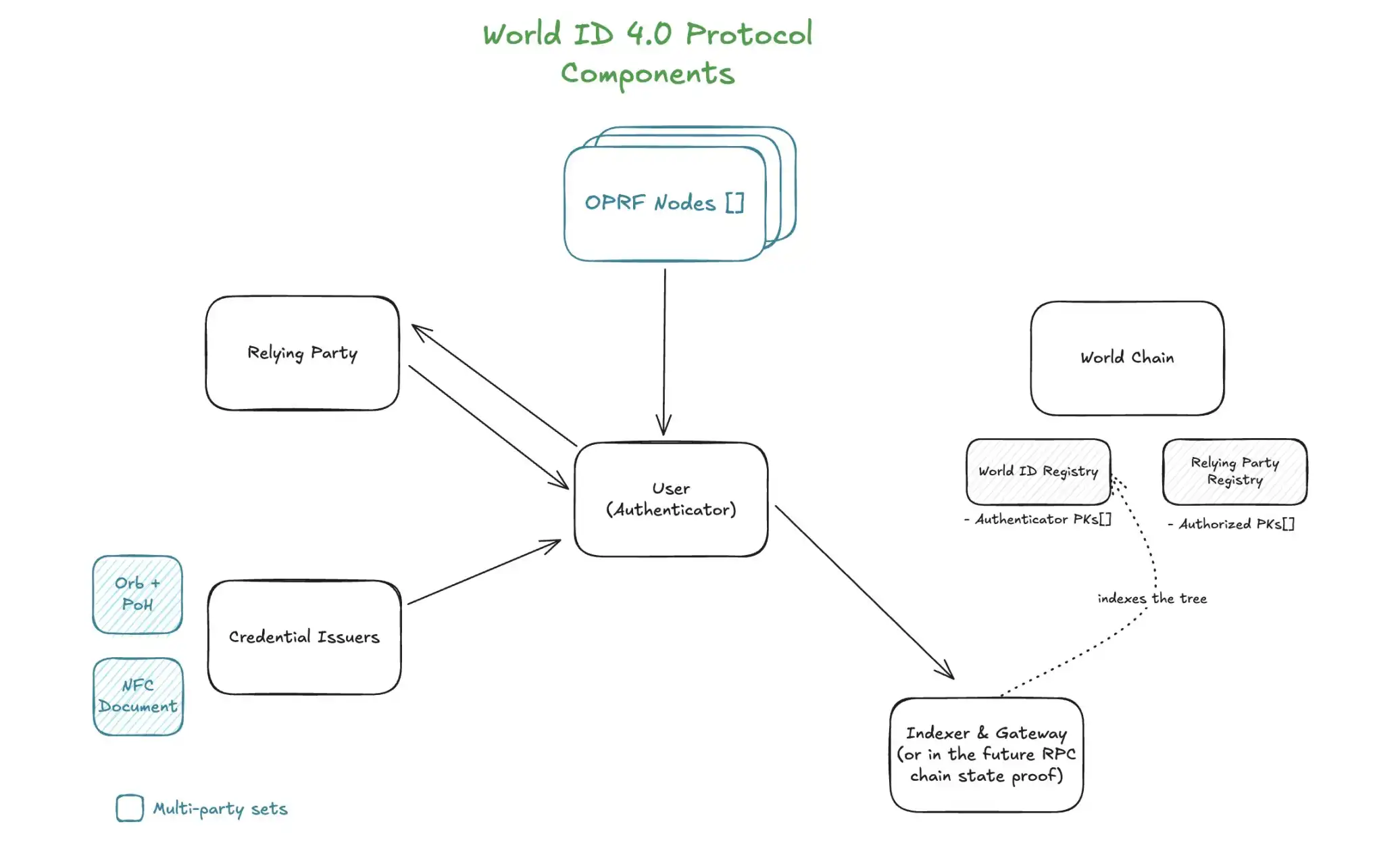
Compared to version 3.0, the new 4.0 version is a true "cloud-based identity account":
· Loss-proof: Supports multi-device login, so if you lose your phone, you can recover.
· More private: Introduces multiple nodes (OPRF), making it harder to trace your behavioral path than reaching the sky.
· More flexible: In a no-phone-scanning area, you can still get in with a passport swipe.
In the future, if the collaboration with OpenAI materializes, World may transition from an edge project to a core AI infrastructure.
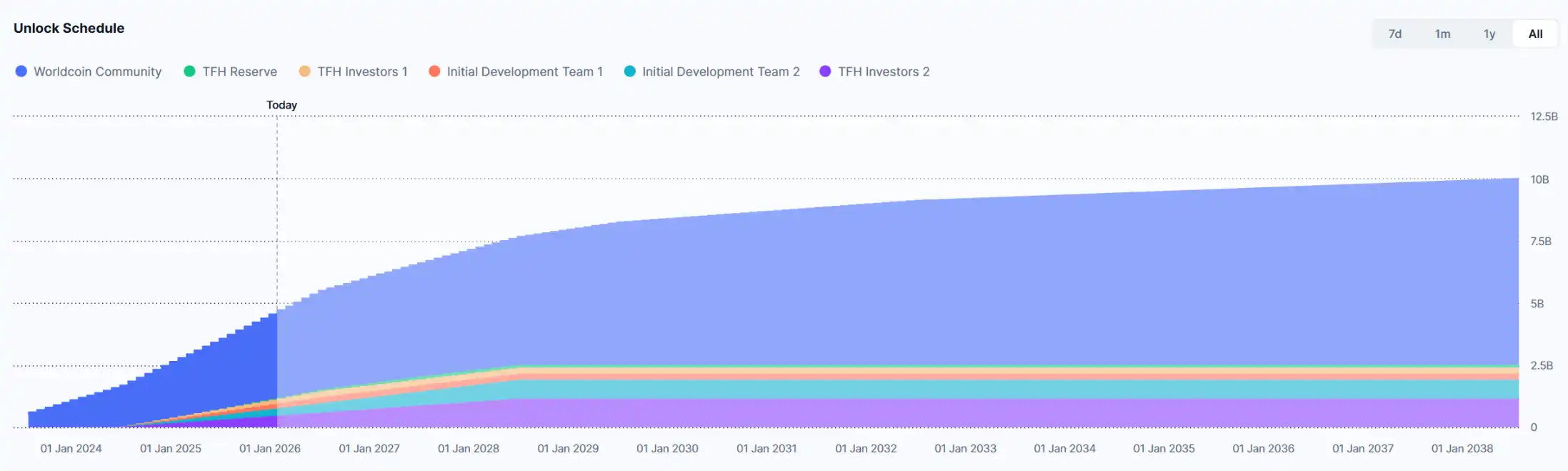
However, due to the sluggish overall market, lack of token demand, and unlocking sell pressure, the WLD price is currently about 20 times lower than its historical high, so investors should pay attention to risk control.
-- Price
This content is provided for general informational purposes only and doesn't constitute financial, investment, legal, or tax advice. Any events, rewards, online promotions, or related information mentioned herein should not be considered a recommendation, solicitation, or invitation to purchase, sell, trade, or otherwise deal in any crypto assets. Crypto assets are highly volatile and may result in loss. The availability of WEEX services, products, and related events may vary by region. You are responsible for ensuring that your participation is in accordance with applicable local laws and regulations.
You may also like

Google Acquires Spirit Airlines Data for $10 Million

OpenSea launches the Ethereum open standard ERC-8257, positioned as an application store for AI agent tools

Dialogue with AEON co-founder Leo: The real bottleneck of the Agentic Economy is not the model, but the settlement
Who can make money in the era of Agents?

DeFi has reached its most dangerous moment: the real vulnerabilities are not in the code

Blockchain Capital Partner: Most people's understanding of on-chain economy is narrow

a16z: 5 Ways Blockchain Helps AI Agent Infrastructure

Will Robots Replace Humans? He Says No!

Top 10 Claude Code Usage Tips: Benefit from Knowing Early

The National Internet Information Office plans to strengthen the management of information services for digital virtual humans

Aster Chain Testnet is now open to the public

From Human Strategy to AI Trading Bot: How Shadow Trading AI Won 2nd Place in the WEEX Hackathon
Ivan’s Shadow Trading AI secured second place in the WEEX AI Trading Hackathon, demonstrating how AI trading systems built on real market expertise can perform under live market conditions.

GoPlus: ClawHub ecosystem accounts for 21% of Top 100 Skills with clear high-risk operations

The leader of the "pig butchering" scheme, lawyer Chen Zhi, submitted a motion to a U.S. court requesting the dismissal of the government's seizure of his Bitcoin

From 27th to 4th: The AI Trading "Survivor Strategy" Behind a WEEX Hackathon Comeback
After a logic failure dropped him to 27th place, ClubW_9Kid rebuilt his AI trading framework and finished 4th in the WEEX AI Hackathon. In this interview, he explains the lessons behind disciplined AI execution, risk control, and why survival beats complexity in algorithmic trading.

If this is the beginning of the triple halving, what are top investors saying about what to expect?

PlanX: Reconstructing On-Chain Execution with AI, Moving Towards a New Paradigm
AI News Today: Can AI Make Blockchain Systems More Reliable in Live Crypto Markets?
Learn how AI is used in blockchain systems to detect risks, improve reliability, and support secure crypto trading in live crypto market environments.

80% of Hacked Crypto Projects Never Fully Recover, Expert Advises
Key Takeaways Nearly four out of five crypto projects fail to regain stability after a major hack, according…

How AI Crypto Trading Will Transform Human Roles
Key Takeaways AI is revolutionizing crypto trading by automating data-heavy tasks, yet humans still retain key decision-making responsibilities.…

Bitchat Downloads Surge in Uganda as Government Implements Internet Shutdown Before Elections
Key Takeaways: Uganda’s government enforced an internet blackout ahead of elections, pushing citizens to download Bitchat, a decentralized…

The new version of the Believe App introduces the "Human Emotion Market" trading mechanism, allowing perpetual staking on the fluctuation of personal reputation.

AI Agents Are Replacing Crypto Research? How Autonomous AI Is Reshaping Crypto Trading
AI is moving from assisting traders to automating the entire research-to-execution process in crypto markets. The edge has shifted from human insight to data pipelines, speed, and execution-ready AI systems, making delays in AI integration a competitive disadvantage.

The U.S. government will "reopen," with multiple departments requiring employees to return to work tomorrow.

Google Acquires Spirit Airlines Data for $10 Million
OpenSea launches the Ethereum open standard ERC-8257, positioned as an application store for AI agent tools
Dialogue with AEON co-founder Leo: The real bottleneck of the Agentic Economy is not the model, but the settlement
Who can make money in the era of Agents?
DeFi has reached its most dangerous moment: the real vulnerabilities are not in the code
Blockchain Capital Partner: Most people's understanding of on-chain economy is narrow