
HTX Research Examines Stock-Linked Memecoins: A New Connection Between Equity Assets and Crypto Liquidity

 Prefer us on Google



Apia, Samoa, September 17 -- HTX Research, the dedicated research arm of HTX, has released a new report titled Stock-Linked Memecoins: Issuance, Liquidity, and the Emerging AMM Stack , a systematic study of a new asset category that emerged following the launch of Robinhood Chain. These memecoins are paired directly with stock tokens representing names such as NVDA, TSLA, HIMS, and MU, using them as quote asset, narrative anchor, or liquidity base. The report finds that they combine public-equity price discovery, crypto attention, AMM inventory, and continuously traded sentiment into a single market structure --- the short-term growth case holds, but durability depends on four conditions being met simultaneously.
A New Market Structure
A stock-linked memecoin is a second-order equity exposure. The stock token provides a first-order price anchor, while the memecoin trades the culture, events, and sentiment surrounding that stock, often with volatility far exceeding the underlying. It resembles an attention derivative on an equity theme rather than a legally structured equity derivative.
Robinhood Chain is unusually well suited to this experiment. Robinhood brings a recognized retail-equity brand and stock tokens carrying familiar company symbols rather than an abstract RWA narrative; Uniswap became a major liquidity venue from launch; and O1 Launchpad productized the process of selecting a stock token, creating a memecoin, opening a Uniswap v4 market, and allocating trading fees. As of September 8, 2026, DeFiLlama reported approximately $901 million in Robinhood Chain TVL and $1.727 billion in 24-hour DEX volume.
Multi-Hop Routing and Toll Collectors on Attention
Value capture extends beyond the memecoin itself. A trader buying a stock-linked memecoin may travel from WETH to USDG to a stock token and finally to the memecoin, with a single order generating fees for several pools along the way. During a short-lived attention spike, volume rises sharply while liquidity remains thin, and liquidity providers become the ecosystem's most direct toll collectors on attention.
High fees, however, do not imply high net returns. Risks including out-of-range positions, one-sided inventory, impermanent loss, stock-market closures, stock-token premiums or discounts, and incentive-token depreciation can all outweigh headline fee income. As HTX Research emphasizes, fees are compensation for risk, not free interest --- LPs bear the risk of continuously filling at the wrong price, while traders bear the risk of picking the wrong token.
The 100,000% APY Illusion
Market commentary has cited displayed APY above 100,000% for supplying high-fee Uniswap v4 liquidity to stock-linked memecoins. The report dismantles this figure, noting that a short observation window, sudden volume surge, small TVL base, and compound extrapolation are all it takes to display an extreme annualized rate. If a $100,000 position earns $200 in one hour, simple annualization produces approximately 1,752%, and hourly compounding turns it into an astronomical number. Annualized metrics also ignore denominator effects --- when a memecoin collapses, dividing unchanged fees by a smaller ending TVL inflates the displayed yield.
The report proposes a more robust test: the fee-coverage multiple -- realized fees and monetized incentives divided by losses relative to a simple hold portfolio, rebalancing costs, and hedging costs. Only a multiple above one indicates that market making has compensated for its risk. High APY still carries information value as a signal of dense order flow relative to effective depth, and professional LPs can treat it as a flow radar rather than a return promise.
Four Conditions and the Real Questions
HTX Research identifies four questions that will determine whether stock-linked memecoins evolve from an onchain experiment into a durable market structure:
- Are Robinhood's native users actually moving onchain?
- Do stock-token redemption and pricing remain stable during extreme moves and market closures?
- Does issuance from O1 and comparable platforms turn into markets with two-sided depth after seven and thirty days?
- Can AMMs preserve effective depth and organic volume as subsidies fall?
If the answer to each is yes, stock-linked memecoins can become a high-volatility front end for the internetization of equities, with issuance platforms and AMMs forming a new market stack. If not, the current heat is more likely a temporary experiment driven by low float, heavy subsidies, cheap issuance, and transient attention.
Either way, 100,000% APY should never be the endpoint of research. As HTX Research points out, the relevant questions are who pays the fee, who carries the inventory, who can exit, who controls protocol parameters, and whether revenue survives after incentives stop. This reflects HTX Research's consistent approach to emerging market forms --- dissecting structure, fee attribution, and risk sources before drawing conclusions from headline figures. HTX Research will continue tracking issuance, liquidity, and user-composition shifts across Robinhood Chain and comparable ecosystems, providing structural analysis grounded in onchain data.
About HTX Research
HTX Research is the dedicated research arm of HTX Group, responsible for conducting in-depth analyses, producing comprehensive reports, and delivering expert evaluations across a broad spectrum of topics, including cryptocurrency, blockchain technology, and emerging market trends. Committed to providing data-driven insights and strategic foresight, HTX Research plays a pivotal role in shaping industry perspectives and supporting informed decision-making within the digital asset space. Through rigorous research methodologies and cutting-edge analytics, HTX Research remains at the forefront of innovation, driving thought leadership and fostering a deeper understanding of evolving market dynamics.
-- Price
This content is provided for general informational purposes only and doesn't constitute financial, investment, legal, or tax advice. Any events, rewards, online promotions, or related information mentioned herein should not be considered a recommendation, solicitation, or invitation to purchase, sell, trade, or otherwise deal in any crypto assets. Crypto assets are highly volatile and may result in loss. The availability of WEEX services, products, and related events may vary by region. You are responsible for ensuring that your participation is in accordance with applicable local laws and regulations.
You may also like

Stablecoins Have Solved On-Chain Settlement, But How Do They Enter Merchant Checkout?
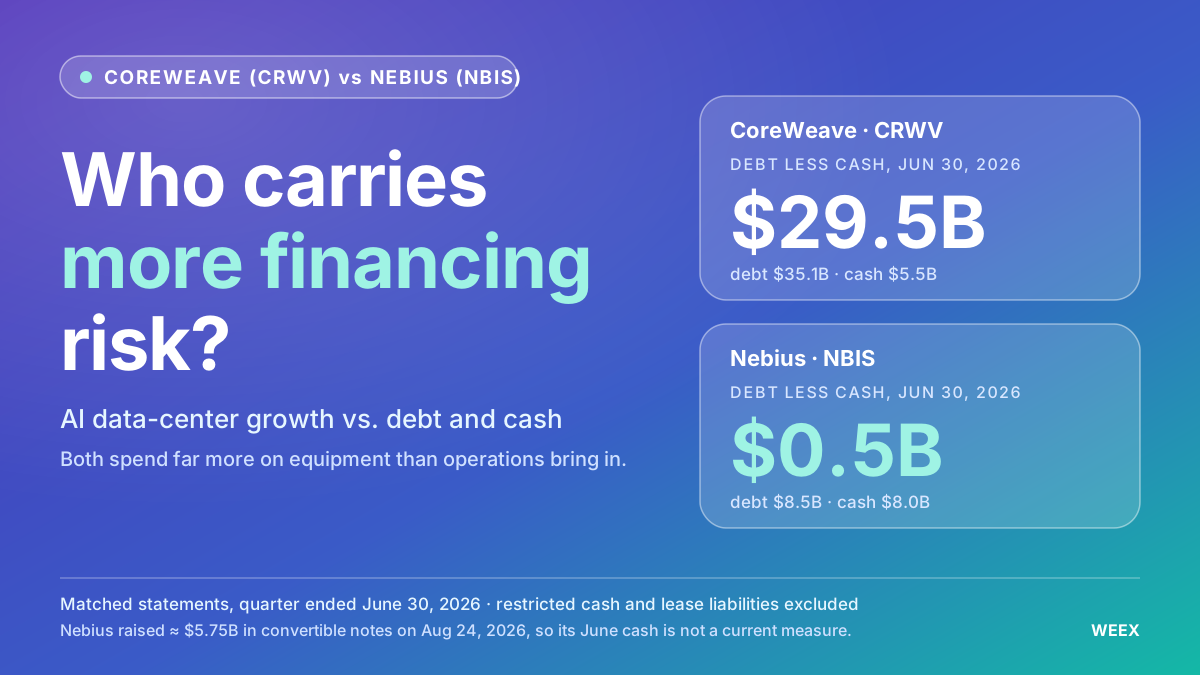
CoreWeave vs. Nebius Stock: Which AI Cloud Business Faces Greater Financing Risk?
Compare CoreWeave and Nebius stock through debt, cash flow, customer prepayments and dilution to assess which AI cloud business faces greater financing risk.

Solana Becomes the Most Profitable Blockchain Network, SOL Price Drops 15%
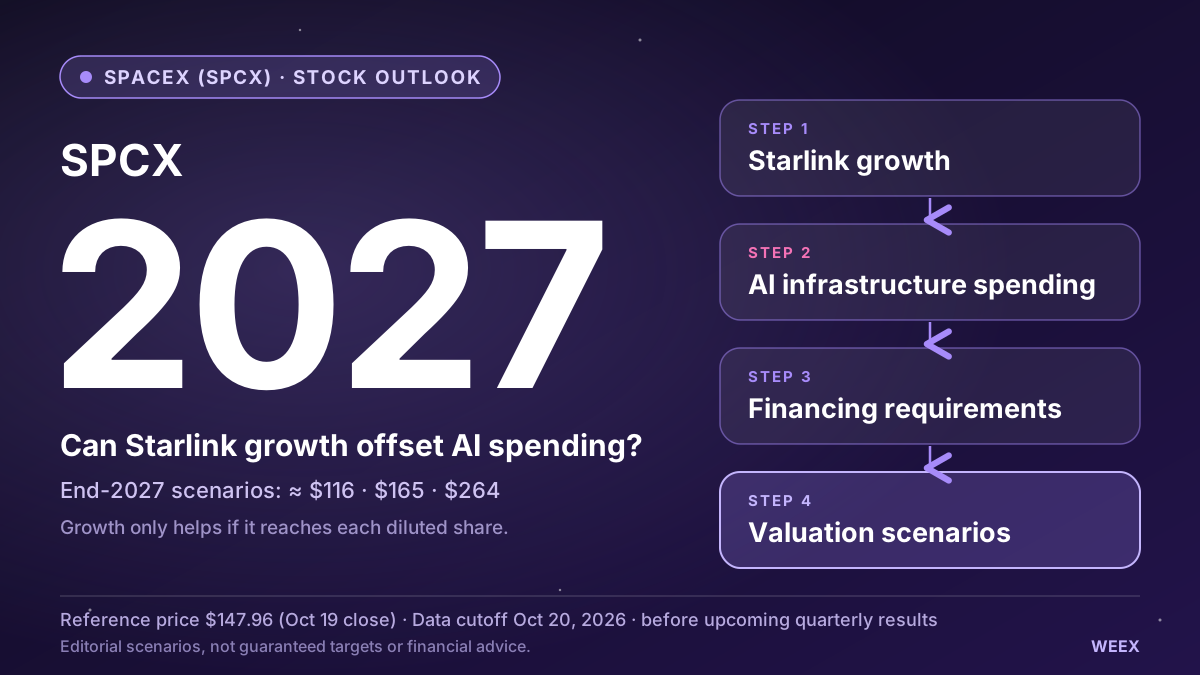
SpaceX Stock(SPCX) Price Prediction 2027: Can Starlink Growth Offset AI Spending?
SpaceX stock price prediction for 2027: assess Starlink growth, AI spending, valuation compression and dilution through transparent price scenarios.

Bitcoin (BTC) Mining Profitability: Will Higher Difficulty Trigger Miner Selling?

What Makes Spending on AI Agents Difficult?

Conditional Return of Companies to the Bitcoin Market; The Era of Reckless Capital Raising is Over!

WEEX Exclusive:Tech Rebounds; Bitcoin Holds $81,000–$82,000 Support| WEEX TradFi Daily (October 20, 2026)

Tech Rebounds; Bitcoin Holds $81,000–$82,000 Support| WEEX TradFi Daily (October 20, 2026)
On October 19, tech rebounded. The three major indexes were mixed, with the Nasdaq relatively stronger. Intel rose after a JPMorgan upgrade, and SpaceX closed up more than 2%. Bitcoin traded near $81,000–$82,000, a zone traders viewed as strong support and a local bottom. Worldcoin (WLD) rose more than 10% in 24 hours, leading majors. October 20 focus includes earnings from SPCX and other listed names.

Banking Coalition Gathers: Stablecoin Market Faces Structural Shock

S&P Warns of Potential Increase in AI Debt for Tech Companies

Brooklyn's 'Crypto Hunters': A Cross-National Scam Chase Across Three Time Zones

Citigroup Research Positions Aave as a Decentralized Collateral Liquidity Protocol

Sam Price Points Out Ethereum ETF Sees Outflows for Three Consecutive Weeks

The Architecture Of Money: Mapping Financial Power In The Age Of Bitcoin

BBVA and Santander of Spain lend 150 million euros through decentralized network
Number of Tokenized Stock Wallets on Solana Reaches 1.4 Million

Jito Labs Co-founder Claims Increase in Front-running and Sandwich Attacks on Solana

XRP holders can now earn fees from Kraken’s DeFi customers, but there is a catch
Variant Investment Partner: In the Second Half of the Bull Market, Which Two Camps Are Marginal Dollars Flowing To?
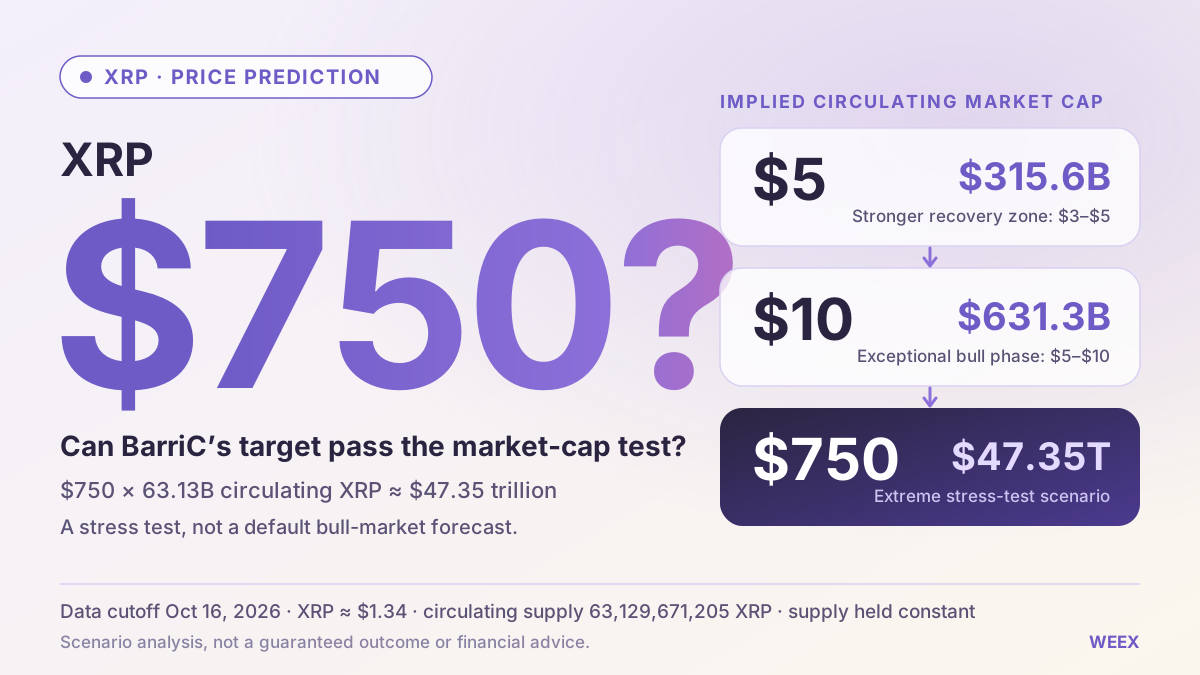
XRP (XRP) Price Prediction: Can BarriC’s $750 Target Pass the Market-Cap Test?
XRP price prediction: examine BarriC’s $750 target, market-cap math, next-bull-run scenarios, token demand and what could support a recovery to $5.

CITIC Securities: Market Overestimation of CoreWeave Concerns, New Cloud Providers' Short-Term Funding Gap 'Still Manageable'

Financing Weekly Report | Fission Completes $10 Million Series A Financing Led by Pantera Capital; DeepSeek Plans to Raise Approximately 100 Billion Yuan in New Financing
The Six-Year Tug of War Between Privacy and Regulation
Goldman Sachs Throws Out 'Chilling Chart': Either the Bond Market is 'Overly Pessimistic' or the Stock Market is 'Too Optimistic'

Ethereum Staking Outflows May Exceed New Inflows
Bitcoin or Dollar Returns: Same Strategy, Opposite Results

BitTorrent Ushers in Next-Gen Web3 Infrastructure with Strategic Rebrand and Inaugural BTT Burn

Cysic Cross-Chain Bridge Attacked, Hacker Minted 10 Million CYS

Bank of America’s Hartnett: Sell Signal Ends, Tech Stocks Return to Focus on Semiconductor Prices
Stablecoins Have Solved On-Chain Settlement, But How Do They Enter Merchant Checkout?
CoreWeave vs. Nebius Stock: Which AI Cloud Business Faces Greater Financing Risk?
Compare CoreWeave and Nebius stock through debt, cash flow, customer prepayments and dilution to assess which AI cloud business faces greater financing risk.
Solana Becomes the Most Profitable Blockchain Network, SOL Price Drops 15%
SpaceX Stock(SPCX) Price Prediction 2027: Can Starlink Growth Offset AI Spending?
SpaceX stock price prediction for 2027: assess Starlink growth, AI spending, valuation compression and dilution through transparent price scenarios.
Bitcoin (BTC) Mining Profitability: Will Higher Difficulty Trigger Miner Selling?
What Makes Spending on AI Agents Difficult?


