When will cash disappear?

Gérald Darmanin has expressed his desire to put an end to cash to combat financial fraud. A proposal that is difficult to implement, according to some experts.
Gérald Darmanin proposes ending cash
Reducing delinquency and drug trafficking
Gérald Darmanin, Minister of Justice, announced on May 22, during his hearing by the Senate inquiry committee, that he wants to put an end to cash. A proposal that is far from unanimous. Gilles Duteil, a judicial expert specializing in financial crime, believes in particular that "one cannot transform a monetary system that would rely solely on electronic money or cryptocurrencies overnight. It would take months, if not years."
Current rules on the use of cash
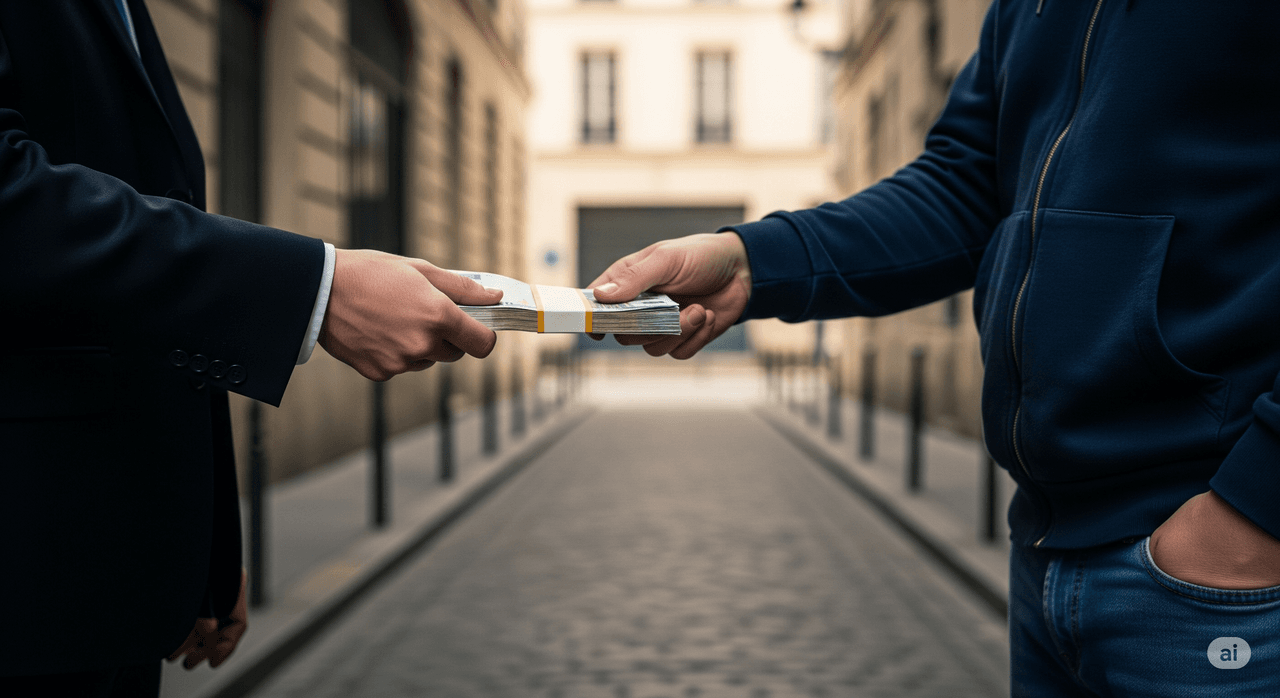
Currently, certain rules exist to limit fraud. For example, every payment from an individual to a professional is limited to 1,000 euros in cash. It is also mandatory to declare any sum exceeding 10,000 euros when traveling from or to a country in the European Union. According to customs, this restriction applies "to cash (banknotes, coins), to negotiable bearer instruments (checks, traveler's checks, money orders, promissory notes...), to gold, and to prepaid cards."
Countries that have attempted to abandon cash
Today, the countries with the lowest percentage of cash relative to their GDP are Sweden, Norway, and Denmark, according to Euronews. In 2012, Sweden attempted to abolish cash entirely, before retracting in 2020 in the face of opposition from experts and consumer associations. The Ministry of Defense even advises keeping cash in case of war or crisis. Norway, for its part, now provides for a fine for merchants who do not accept cash.
Buy Bitcoin, Ethereum, XRP, and Solana on WEEX!
Is crypto the future of payments?
Bitcoin
As the leading crypto in terms of market capitalization, Bitcoin is a decentralized peer-to-peer system offering unique freedom and censorship resistance, without a trusted intermediary. Its security is high thanks to its robust and immutable blockchain and its highly distributed network of miners. While payment times and fees may vary due to a limited number of transactions per second, second-layer solutions like Lightning Network help improve its speed and reduce transaction costs.
Ethereum
Ethereum is a major platform for smart contracts, which facilitates programmable payments, DeFi, and NFTs. Its transition to Proof of Stake (PoS) reduces its energy consumption and aims to improve its scalability. However, gas fees can be high, making small payments costly. Despite second-layer solutions, the main network can still suffer from congestion, making it an unlikely competitor to cash, as Gérald Darmanin would like.
XRP
XRP, backed by Ripple Labs, enables very fast transactions (from 3 to 5 seconds) and minimal costs. It is focused on financial institutions and integrates well with existing banking systems, which raises the question of its ability to replace cash. Furthermore, its energy efficiency is optimized thanks to its unique consensus mechanism.
However, its centralization is criticized, as Ripple Labs holds a significant portion of the tokens. The transparency of its transactions also limits privacy. Finally, the controversy linked to the US SEC lawsuit against Ripple Labs, accusing XRP of being an unregistered security, has slowed its deployment.
Solana
Solana stands out for its very high transaction capacity and minimal fees, allowing for near-instant payments. Its Proof of History (PoH) mechanism combined with Proof of Stake (PoS) ensures speed and energy efficiency. Furthermore, its rapidly growing ecosystem offers many useful everyday applications. However, the network has experienced outages and its decentralization is less established than that of Bitcoin, raising security questions if it were to replace cash, as Gérald Darmanin proposes.
Buy Bitcoin, Ethereum, XRP, and Solana on WEEX!
Is the end of cash realistic?
The day after his announcement, Gérald Darmanin backtracks
On the RTL set, Gérald Darmanin announced the following day that the measure would not be implemented due to a lack of political means: "To succeed when you are a minister, you need time, a Parliament, and money. I have none of that. We have a Parliament that is mischievous, that has no majority, we have little time, and it is a public debate that must undoubtedly be raised in a presidential campaign, for example."
Furthermore, all-digital presents other risks. In countries that have experimented with the elimination of cash, crimes other than drug trafficking have increased. For example, online fraud, according to France Info. The threats of cyberattacks would also be greater, given that society would be all the more dependent on the Internet.
The French remain attached to cash, especially young people
According to a survey by the ECB, 43% of French people used cash for their payments in 2024. A proportion that is decreasing every year, but which remains significant. IFOP, for its part, affirms that a third of young people organize their expenses with cash envelopes. Trends that suggest that cash is not ready to disappear.
A Belgian journalist tests a day without cash
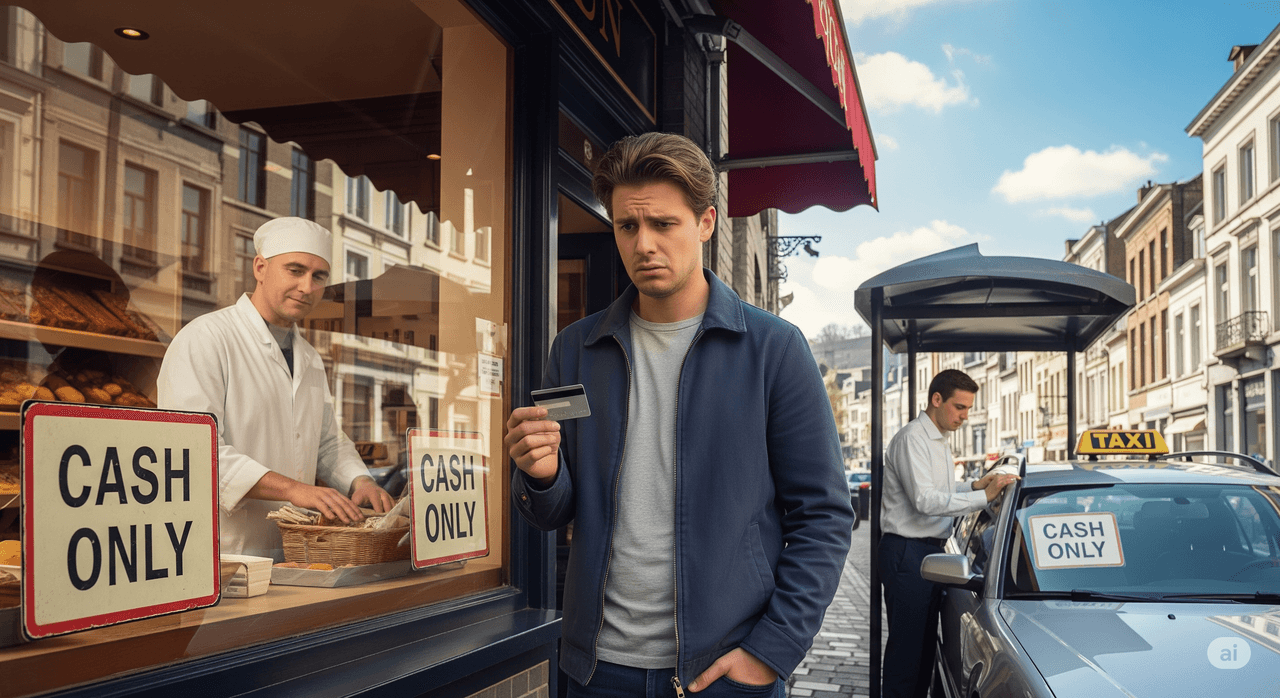
Laurens, a journalist at RTBF, tried to go without cash for a day in Namur. The result is clear. Between public toilets, buses, and taxis, everyone asks to be paid in cash, out of simplicity or habit. Parking meters do not accept bank cards either. A baker even claims to refuse cards out of resistance. For him, cash is cheaper than bank card payments.
Buy Bitcoin, Ethereum, XRP, and Solana on WEEX!
Conclusion
Gérald Darmanin's proposal to eliminate cash aimed to combat delinquency but ran up against a complex reality. While cryptocurrencies like Bitcoin, Ethereum, XRP, and Solana offer advantages (speed, low costs, variable decentralization), they also present challenges (unpredictable fees, outages, centralization). The total abandonment of cash runs up against habits, risks of cyberattacks, and the need to ensure inclusion, making its disappearance unlikely in the short term in France.
Buy Bitcoin, Ethereum, XRP, and Solana on WEEX!
WARNING
WEEX and its affiliates provide digital asset exchange services, including derivatives and margin trading, only where permitted by law and for eligible users. All content is provided for general information purposes and does not constitute financial advice. Please consult an independent advisor before trading. Cryptocurrency trading is highly risky and can result in the total loss of your assets. By using WEEX services, you accept all associated risks and conditions. Never invest more than you can afford to lose. Please consult our Terms of Use and our Risk Disclosure for more details.