

What is Ouroboros (ORX)? A Complete Guide to the Revenue-Backed DeFi Token

In the crowded landscape of decentralized finance, most tokens promise utility but deliver little more than hype. Ouroboros (ORX) stands apart. It is not a stablecoin, nor is it a simple governance token. Instead, ORX is a revenue-backed value-accrual token designed to capture and redistribute real yield generated by the Ouroboros Protocol.
If you are searching for "what is Ouroboros (ORX)" , "how to buy Ouroboros (ORX)" , or wondering whether this Ethereum-based token is a legitimate investment or another high-risk gamble, this guide provides the on-chain mechanics, tokenomics breakdown, and step-by-step purchasing instructions you need before you stake a single dollar.
What is Ouroboros (ORX)?
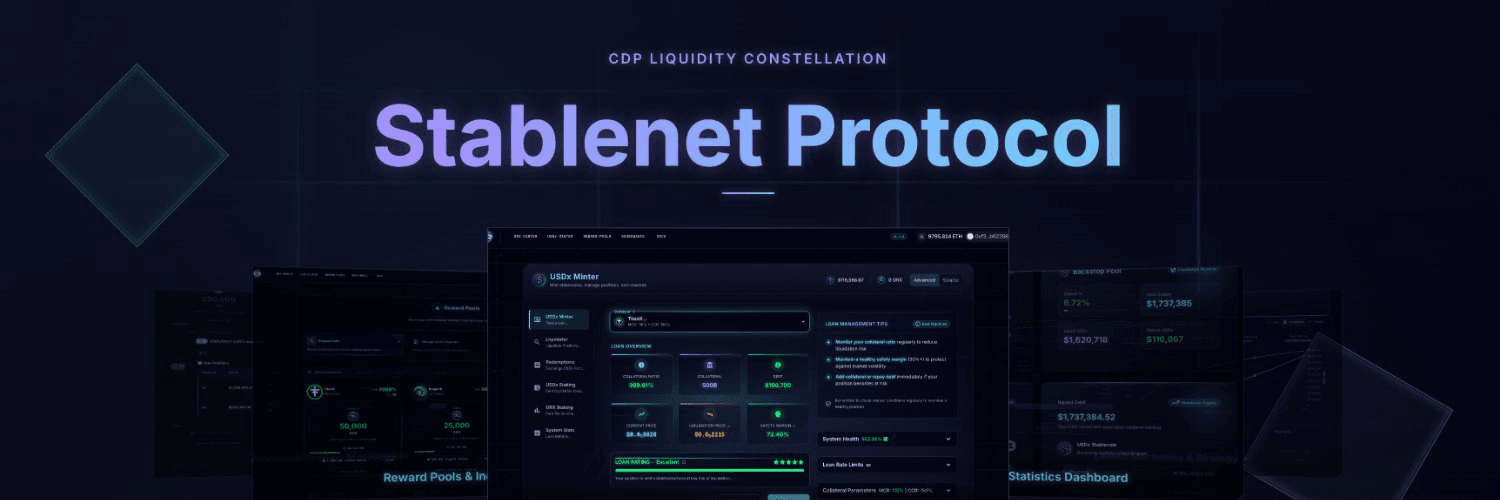
Ouroboros (ORX) is the native value-accrual and coordination token of the Ouroboros Protocol, a DeFi ecosystem built on Ethereum and deeply integrated with the TitanX network. Unlike traditional cryptocurrencies that function as mediums of exchange or stores of value, ORX operates as a revenue-sharing mechanism.
Think of ORX as a "share token." When you hold and stake ORX, you receive a proportional share of 100% of all fees generated by every product within the Ouroboros ecosystem—starting with the USDx stablecoin.
Key Characteristics:
- Blockchain: Ethereum (ERC-20)
- Contract Address:
0xd536e7a9543cf9867a580b45cec7f748a1fe11ec - Ecosystem: TitanX-integrated
- Primary Function: Fee redistribution & supply compression
- Inflation Model: Zero (no minting after genesis)
Is Ouroboros (ORX) a Reserve Coin?
Many newcomers ask: "Is Ouroboros (ORX) a reserve coin?" The short answer is no. Despite being discussed alongside reserve assets, ORX does not fit the traditional definition.
Feature | Traditional Reserve Coin | Ouroboros (ORX) |
Backing | 1:1 collateral (fiat or crypto) | Protocol revenue (no fixed peg) |
Price Stability | Designed for stability | Volatile; driven by ecosystem performance |
Primary Use | Medium of exchange / hedge | Value accrual & staking rewards |
Example | USDC, DAI | ORX |
What ORX Actually Is: A revenue-backed token. Its value derives from three sources:
- Protocol fee generation
- Ecosystem adoption rates
- Token scarcity mechanisms (buy-and-burn + vesting penalties)
In contrast, USDx (the ecosystem's stablecoin) serves as the true collateral-backed asset, supported by TitanX and DragonX reserves.
How Does Ouroboros (ORX) Work?
The brilliance of ORX lies in its flywheel effect: more usage → more fees → more rewards → stronger demand → reduced supply. Here is how each component functions.
Fee Generation
Protocols within the Ouroboros ecosystem (starting with USDx) generate fees through:
- Borrowing against collateral
- Redemption operations
- Collateral management
100% Fee Distribution
Unlike most DeFi protocols that take a cut, Ouroboros distributes all fees to ORX stakers. Rewards are paid in USDx, TitanX, and other supported assets.
Buy-and-Burn Engine
TitanX deposits are used to automatically purchase ORX from liquidity pools (primarily Uniswap V3 and DODO). These purchased tokens are permanently removed from circulation.
Supply Compression Through Vesting
ORX launched via an Initial Lock Offering (ILO) with aggressive vesting schedules:
- 52-week vesting for TitanX depositors
- Heavy penalties for early claims (forfeited tokens are redistributed)
- 12-week vesting for ETH depositors (no penalties)
This mechanism ensures that circulating supply remains significantly lower than the theoretical max of ~1.27 billion ORX.
Ouroboros (ORX) Tokenomics
The ORX tokenomics model is often called "pumpamentals" —economic engineering designed to create sustained upward price pressure.
Tokenomic Feature | Mechanism | Effect on Price |
Buy & Burn Engine | TitanX deposits buy ORX from pools | ↓ Supply |
Vesting Penalties | Early exits forfeit tokens | ↓ Circulating supply |
Zero Inflation | No minting after genesis | No dilution |
Bonding Curve Emissions | Higher burn reduces future issuance | ↓ Supply over time |
Staking Rewards | 100% fee distribution in USDx/TitanX | ↑ Demand |
Current Market Snapshot (as of April 2026):
- Price: ~$0.00088 – $0.00092
- Market Cap: ~$430,000 – $470,000
- Circulating Supply: ~528 million ORX
- Trading Platforms: Uniswap V3, DODO
Can I Invest in Ouroboros (ORX)?
If you are asking "Can I invest in Ouroboros (ORX)?" , the short answer is yes—but not without understanding the significant risks involved. ORX is currently available through TitanX deposits, ETH deposits, or decentralized exchanges like Uniswap V3 and DODO. However, whether you should invest depends entirely on your risk tolerance, investment timeline, and familiarity with experimental DeFi mechanics.
Before making any decision, every potential investor must carefully evaluate the risks outlined below. Unlike blue-chip cryptocurrencies such as Bitcoin or Ethereum, ORX is an early-stage, experimental DeFi asset with a novel revenue-backed model.
Final Thoughts: Should You Buy Ouroboros (ORX)?
Ouroboros (ORX) is not for everyone. It is a high-risk, high-reward experimental DeFi asset designed specifically for patient participants who fully understand its complex mechanics.
You should consider buying ORX if you believe in the TitanX ecosystem's long-term growth, are comfortable locking your capital for 12 to 52 weeks, understand that ORX is volatile and not a stable asset, and want exposure to a zero-inflation, revenue-backed model.
On the other hand, you should avoid ORX if you need short-term liquidity, are risk-averse or new to DeFi, do not fully understand smart contract risks, or cannot afford to lose your entire investment.
For those who conduct their own research and accept the inherent risks, ORX offers a unique bet on the future of real-yield DeFi.
Ready to trade? WEEX offers zero fees, instant execution, and the security you need. Sign up on WEEX Now and Start Trading!
FAQ
Q1: What is Ouroboros (ORX) in simple terms?
Ouroboros (ORX) is a revenue-sharing token on Ethereum. When you stake ORX, you earn a portion of 100% of all fees generated by the Ouroboros Protocol ecosystem. It is not a stablecoin or a reserve coin—it is a value-capture token.
Q2: Is Ouroboros (ORX) a good investment?
ORX is a high-risk, high-conviction asset. Its zero-inflation model, buy-and-burn engine, and real-yield staking are innovative. However, risks include smart contract vulnerabilities, low liquidity, and heavy dependency on the TitanX ecosystem. Only invest what you can afford to lose.
Q3: Where can I stake Ouroboros (ORX)?
You can stake ORX directly through the official Ouroboros Protocol staking interface. There is no lock-up period—you can withdraw anytime. Rewards are distributed in USDx, TitanX, and other ecosystem assets.
Q4: What is the ORX contract address?
The official Ethereum contract address for Ouroboros (ORX) is: 0xd536e7a9543cf9867a580b45cec7f748a1fe11ec Always verify this address on Etherscan before any transaction to avoid spoofed tokens.
You may also like

Mirror (MIRRORBASE) Price Prediction & Forecasts for May 2026: Could the Mirror Revolution Spark a 50% Surge?
As of May 6, 2026, the current price of Mirror (MIRRORBASE) stands at $0.85, according to data from…

冲鸭 (冲鸭) Price Prediction & Forecasts for May 2026: Could It Surge Amid Super App Ambitions?
As of May 6, 2026, the current price of 冲鸭 (冲鸭) stands at $0.85, with a 24-hour high…
MEGR Token Price Prediction & Forecasts for May 2026: Overbought Signals Point to Potential Pullback
MEGR Token has been turning heads in the crypto space after a massive “god candle” rally that spiked…

RogueAI (ROGUEAI) Price Prediction & Forecasts for May 2026: Volume Surges 219% – Can It Maintain the Momentum?
As of May 6, 2026, the current price of RogueAI (ROGUEAI) stands at $0.045, with a 24-hour high…
PEPE vs BONK: Which Meme Coin Is Leading?
There’s no clear winner—each leads in different ways. PEPE benefits from deeper liquidity and stronger market momentum, while BONK gains from ecosystem integration and community-driven growth.
If capital and trading activity dominate, PEPE leads. If narrative and adoption drive the cycle, BONK has the edge.

ARB vs OP : Which Layer 2 Will Dominate in 2026?
There likely won’t be a single winner by 2026. ARB leads in liquidity and DeFi depth, while OP focuses on ecosystem expansion through its Superchain strategy.
If the market favors capital efficiency, ARB has the edge. If network growth and narrative dominate, OP could pull ahead.
Solana vs Ethereum: High-Speed Blockchain or Ecosystem Giant?
Solana is a fast, low-fee blockchain focused on performance, while Ethereum is a leading smart contract ecosystem focused on security, decentralization, and long-term network effects.

ROAF vs ROAR: Which Has More Potential in 2026?
ROAF vs ROAR breakdown. One is narrative-driven. The other claims asset structure. Neither is backed by real oil. Read this before you buy.
DOGE vs SHIB: The Meme Coin Battle Between Stability and Explosive Growth
Dogecoin (DOGE) and Shiba Inu (SHIB) represent two different paths in the meme coin sector.
DOGE is the original meme coin, valued for its strong liquidity, long market history, and stable position across multiple crypto cycles. It behaves more like a sentiment-driven, large-cap asset with relatively smoother price movements.
SHIB, on the other hand, is a newer, ecosystem-focused token built on Ethereum, expanding through initiatives like Shibarium and DeFi products. Its price action is more volatile and heavily driven by narrative and ecosystem developments.
In simple terms:
DOGE = stability, liquidity, and mature meme assetSHIB = higher risk, higher volatility, and ecosystem growth potentialOverall, DOGE is typically preferred for more stable trading exposure, while SHIB attracts traders seeking aggressive, high-risk opportunities tied to narrative momentum.

MIRROR USDT Premiere on WEEX: Mirror (MIRROR) Listing
WEEX Exchange is thrilled to announce the exclusive premiere listing of Mirror (MIRROR) Coin, marking the world’s first…
NOT Token Price: Is Notcoin Cheap or Still Risky?
Track the NOT token price, Notcoin market cap, supply, chart risks, TON ecosystem catalysts, and whether NOT can recover.

Sandisk Stock: Why SNDK Is Surging and What Investors Should Watch
Sandisk stock has soared on AI storage demand, NAND pricing, and strong earnings. Here is what SNDK investors should watch next
Can Global Overwatch Protocol (GOP) Coin Reach $1? Full Guide 2026
Can GOP realistically hit $1?
What Is Middle Eastern Gas Reserve (MEGR) Coin?
Is MEGR crypto really backed by 1.42 Tcm gas? We break down MEGR tokenomics, roadmap risks, and how to verify claims before buying. No fluff.
AMD Stock in May: Is the AI Rally Still Worth Chasing?
AMD stock is trading near record levels after strong AI demand. Review Q1 2026 earnings, valuation, analyst targets, and major risks.

Introducing Circle Internet Group Tokenized Stock (Ondo) ($CRCLon): Onchain Circle Exposure and Price Prediction
CRCLon is Ondo's tokenized Circle stock wrapper, drawing attention with onchain equity access, fast narrative rotation, and direct exposure to the CRCL story.
Introducing Billions Network ($BILL): Human and AI Verification Infrastructure and Price Prediction
Billions Network is a human-and-AI trust layer drawing attention after its token launch, live exchange trading, and utility-driven identity narrative.
Is Billions Network (BILL) a Good Investment in May 2026?
Billions Network (BILL) has caught the eye of many crypto investors this May 2026, with its recent price…
Mirror (MIRRORBASE) Price Prediction & Forecasts for May 2026: Could the Mirror Revolution Spark a 50% Surge?
As of May 6, 2026, the current price of Mirror (MIRRORBASE) stands at $0.85, according to data from…
冲鸭 (冲鸭) Price Prediction & Forecasts for May 2026: Could It Surge Amid Super App Ambitions?
As of May 6, 2026, the current price of 冲鸭 (冲鸭) stands at $0.85, with a 24-hour high…
MEGR Token Price Prediction & Forecasts for May 2026: Overbought Signals Point to Potential Pullback
MEGR Token has been turning heads in the crypto space after a massive “god candle” rally that spiked…
RogueAI (ROGUEAI) Price Prediction & Forecasts for May 2026: Volume Surges 219% – Can It Maintain the Momentum?
As of May 6, 2026, the current price of RogueAI (ROGUEAI) stands at $0.045, with a 24-hour high…
PEPE vs BONK: Which Meme Coin Is Leading?
There’s no clear winner—each leads in different ways. PEPE benefits from deeper liquidity and stronger market momentum, while BONK gains from ecosystem integration and community-driven growth.
If capital and trading activity dominate, PEPE leads. If narrative and adoption drive the cycle, BONK has the edge.
ARB vs OP : Which Layer 2 Will Dominate in 2026?
There likely won’t be a single winner by 2026. ARB leads in liquidity and DeFi depth, while OP focuses on ecosystem expansion through its Superchain strategy.
If the market favors capital efficiency, ARB has the edge. If network growth and narrative dominate, OP could pull ahead.


