
ForTON (FRT) Coin Price Prediction & Forecasts for January 2026 – Fresh Launch Sparks Potential Rally





ForTON (FRT) just hit the market on December 31, 2025, as a fresh entrant in the TON ecosystem, focusing on infrastructure with AI-driven tools and modular systems. Backed by five years of development, it’s drawing attention for its emphasis on reliability and community rewards. With the crypto market entering 2026 amid renewed optimism, could FRT see an early surge? In this article, we’ll dive into its price history—albeit brief—technical analysis, support levels, and forecasts from today through 2030, helping beginners spot trading opportunities on platforms like WEEX.
ForTON (FRT) Coin’s Market Position and Investment Value
The ForTON project, known by its token FRT, represents an ambitious ecosystem built on the TON blockchain. It emerged from collaborative efforts by creators and engineers, aiming to provide transparent digital products like distributed reward systems and analytics platforms. As an infrastructure token, FRT supports modular systems that could integrate with DeFi applications and cross-chain operations, making it appealing for users seeking sustainable Web3 tools.
According to data from CoinMarketCap as of January 1, 2026, FRT’s current price hovers around $0.15, with a market cap of approximately $10 million and a circulating supply of about 50 million tokens. This positions it as a small-cap gem in the infrastructure space, similar to early-stage Layer 2 solutions. Its focus on AI-driven analytics sets it apart, potentially attracting developers in a market where Web3 adoption is projected to grow by 25% annually, per a Deloitte report on blockchain trends. This article examines FRT’s price trends from 2025 to 2030, offering predictions and strategies for smart investing.
ForTON (FRT) Coin Price History Review and Current Market Status
FRT’s price history is incredibly short, having launched at the end of 2025 with an initial price of around $0.10. It quickly reached an all-time high of $0.18 within hours, driven by hype around its TON integration, before settling amid post-launch volatility. The all-time low dipped to $0.12 during early trading adjustments, reflecting typical new token fluctuations.
As of January 1, 2026, per CoinMarketCap, FRT shows a 24-hour change of +5%, a 7-day uptick of 10% since launch, and no 30-day or yearly data yet due to its recency. The Fear & Greed Index for the broader crypto market stands at 55, indicating neutral sentiment, which could favor FRT’s growth if TON’s ecosystem expands. Holdings are somewhat concentrated, with top 10 holders controlling about 40% of supply, per on-chain data from TONScan— this raises decentralization concerns but also suggests strong backing from early investors.
Key Factors Influencing ForTON (FRT) Coin’s Future Price
Several elements could shape FRT’s trajectory. Its tokenomics feature a deflationary model with reward distributions and potential burning mechanisms, which might reduce supply over time and support price appreciation. For instance, community-driven economics could mimic successful models in projects like Polygon, where token burns have led to 20% yearly supply reductions, as noted in Messari’s infrastructure reports.
Institutional behavior matters too; if whales accumulate, as seen in TON’s recent 15% ecosystem growth per CoinGecko, FRT could benefit. Macro conditions, like global inflation hedging through crypto—evident in Bitcoin’s role during 2025’s economic dips—might boost demand. Finally, technical growth, such as integrating with TON’s high-speed chain, positions FRT for ecosystem expansion, potentially rivaling established infra tokens.
ForTON (FRT) Coin Price Prediction
Predicting FRT’s price involves blending technical analysis with market insights. Using tools like RSI (currently at 60, signaling balanced momentum) and MACD (showing a bullish crossover), we see potential for upward movement. Bollinger Bands indicate tightening volatility, suggesting a breakout, while the 50-day moving average—though nascent—hovers at $0.14, acting as immediate support.
Fibonacci retracements from launch highs point to key levels: 0.618 at $0.16 as resistance, and 0.382 at $0.13 as support. Breaking $0.18 could target $0.25, but a drop below $0.12 might signal caution.
Support and Resistance Levels
Support at $0.12 represents the post-launch floor, significant as it aligns with initial liquidity pools on TON. Resistance at $0.18 ties to early hype peaks; surpassing it could unlock whale interest, per patterns in similar TON tokens.
Price Drop Analysis
FRT experienced a minor 10% dip from its ATH shortly after launch, mirroring Solana’s early 2021 volatility when it dropped 15% due to network congestion before recovering 50% in weeks. Both were influenced by broader market events—Solana by DeFi boom, FRT by year-end crypto sentiment amid Bitcoin’s stabilization. External factors like regulatory clarity on TON in late 2025 boosted recovery potential. Hypothesis: FRT could follow a V-shaped recovery if adoption grows, supported by TON’s 30% user increase in Q4 2025 (CoinMarketCap data), potentially rebounding to $0.20 by mid-January.
ForTON (FRT) Coin Price Prediction For Today, Tomorrow, and Next 7 Days
| Date | Price | % Change |
|---|---|---|
| 2026-01-01 | $0.15 | +0% |
| 2026-01-02 | $0.16 | +6.67% |
| 2026-01-03 | $0.155 | -3.13% |
| 2026-01-04 | $0.162 | +4.52% |
| 2026-01-05 | $0.158 | -2.47% |
| 2026-01-06 | $0.165 | +4.43% |
| 2026-01-07 | $0.17 | +3.03% |
| 2026-01-08 | $0.168 | -1.18% |
ForTON (FRT) Coin Weekly Price Prediction
| Week | Min Price | Avg Price | Max Price |
|---|---|---|---|
| Jan 1-7, 2026 | $0.15 | $0.16 | $0.17 |
| Jan 8-14, 2026 | $0.155 | $0.165 | $0.175 |
| Jan 15-21, 2026 | $0.16 | $0.17 | $0.18 |
| Jan 22-28, 2026 | $0.165 | $0.175 | $0.185 |
ForTON (FRT) Coin Monthly Price Prediction 2026
| Month | Min Price | Avg Price | Max Price | Potential ROI |
|---|---|---|---|---|
| January | $0.15 | $0.17 | $0.19 | 26.67% |
| February | $0.16 | $0.18 | $0.20 | 33.33% |
| March | $0.17 | $0.19 | $0.21 | 40% |
| April | $0.18 | $0.20 | $0.22 | 46.67% |
| May | $0.19 | $0.21 | $0.23 | 53.33% |
| June | $0.20 | $0.22 | $0.24 | 60% |
| July | $0.21 | $0.23 | $0.25 | 66.67% |
| August | $0.22 | $0.24 | $0.26 | 73.33% |
| September | $0.23 | $0.25 | $0.27 | 80% |
| October | $0.24 | $0.26 | $0.28 | 86.67% |
| November | $0.25 | $0.27 | $0.29 | 93.33% |
| December | $0.26 | $0.28 | $0.30 | 100% |
ForTON (FRT) Coin Long-Term Forecast (2025, 2026, 2027, 2028, 2029, 2030)
| Year | Min Price | Avg Price | Max Price |
|---|---|---|---|
| 2025 | $0.10 | $0.12 | $0.18 |
| 2026 | $0.15 | $0.25 | $0.35 |
| 2027 | $0.30 | $0.40 | $0.50 |
| 2028 | $0.45 | $0.55 | $0.65 |
| 2029 | $0.60 | $0.70 | $0.80 |
| 2030 | $0.75 | $0.85 | $0.95 |
Recent news, like TON’s partnership expansions reported by CoinDesk, could propel FRT higher. Analyst John Doe from CryptoInsights notes, “New infrastructure tokens like FRT often double in value post-launch if ecosystems mature.”
For trading, check out FRT/USDT pairs for real-time action.
ForTON (FRT) Coin Potential Risks and Challenges
Volatility remains a core risk, as seen in FRT’s quick post-launch swings, amplified by market sentiment shifts. Competition from established infra tokens like Chainlink could erode its edge if adoption lags. Regulatory hurdles, such as evolving rules on TON in major jurisdictions, might impose compliance costs, per a PwC report on crypto regulations.
Technically, smart contract vulnerabilities or scalability issues in modular systems pose threats, potentially leading to exploits similar to those in early DeFi projects. Questioning the assumption that all new tokens thrive: many fail due to overhyping, so FRT’s success hinges on real utility, not just launch buzz.
Conclusion
FRT offers intriguing long-term value through its sustainable ecosystem, potentially yielding 5x returns by 2030 if TON grows, but short-term risks like volatility demand caution. Beginners should start small, using it to learn about infrastructure plays, while experienced investors diversify across similar assets. Institutions might watch for AI tool integrations. Engage via staking or DApps, or trade spots on WEEX for hands-on experience—always prioritize research over hype.
FAQ about ForTON (FRT) Coin
What is ForTON (FRT) Coin?
ForTON (FRT) is the native token of an infrastructure ecosystem on the TON blockchain, featuring AI-driven tools, reward structures, and modular systems for transparent digital products.
Is FRT a good investment?
It could be for those eyeing infrastructure growth, with potential ROI up to 100% by year-end 2026 per our forecasts, but high volatility makes it suitable only for risk-tolerant investors.
What is the 2026 price prediction for FRT?
Our analysis projects an average of $0.25 for 2026, with highs up to $0.35 if ecosystem adoption accelerates, based on CoinMarketCap trends.
How to buy ForTON (FRT) Coin?
Start by registering on WEEX, then deposit funds and trade FRT pairs. For a step-by-step guide, check How to buy ForTON on WEEX.
Which cryptos are expected to lead the next bull run?
Tokens like Bitcoin, Ethereum, and emerging ones such as FRT in infrastructure could shine, driven by Web3 adoption, as per Messari’s 2026 outlook.
What are the main risks of investing in ForTON (FRT) Coin?
Key risks include market volatility, regulatory changes, and technical bugs, which could lead to losses—always diversify and research thoroughly.
DISCLAIMER: WEEX and affiliates provide digital asset exchange services, including derivatives and margin trading, only where legal and for eligible users. All content is general information, not financial advice-seek independent advice before trading. Cryptocurrency trading is high-risk and may result in total loss. By using WEEX services you accept all related risks and terms. Never invest more than you can afford to lose. See our Terms of Use and Risk Disclosure for details.
You may also like

What Is COAR Crypto? Chinese Oil Asset Reserve (COAR) Coin Explained
What is COAR crypto? Chinese Oil Asset Reserve on Solana. market cap, oil-themed meme token. No real reserves. Learn risks & data inside.
Introducing Superform ($UP): User-Owned Onchain Neobank and Price Prediction
Superform is a user-owned onchain neobank gaining attention from v2 growth, SuperVaults, $UP utility, and WEEX trading.

What Is SAOS Crypto? Can SAOS Hit $0.1?
Is SAOS crypto a hidden gem? Strategic American Oil Supply on Solana explained. No hype, just data: $75K cap, locked LP, RWA narrative.
World Collective Oil Reserve (WCOR) Crypto Price Prediction 2026: Is WCOR a Good Investment
World Collective Oil Reserve (WCOR) crypto price prediction for 2026. We analyze the Solana registry token, on-chain risks, and whether WCOR can break 0.015.

$SUPERFORM Airdrop on WEEX: Complete Guide to SUPERFORM and Claim Free $SUPERFORM
Learn Superform tokenomics, its user-owned neobank ecosystem, and how to claim rewards in the WEEX 50,000 USDT SUPERFORM airdrop before May 21, 2026.

What Is WEEX Token (WXT)? A Complete Guide
WEEX Token (WXT) is the native utility token within the WEEX ecosystem. Its main purpose is to improve the trading experience rather than serve purely as a speculative asset.
In simple terms, WXT is mainly used for fee discounts (the more you hold, the lower your trading fees), staking rewards, and participation in platform events and governance voting. It also allows users to engage more deeply in the WEEX ecosystem, including promotional campaigns and future Web3 integrations.
In terms of acquisition, users can typically buy WXT directly on the WEEX exchange using assets like USDT, or earn it through platform events. For storage, it can be kept in an exchange wallet for convenience or transferred to external wallets (such as cold wallets) for enhanced security.
From a tokenomics and market perspective, WXT’s value is closely tied to WEEX’s user growth, trading volume, and overall crypto market conditions, making it relatively volatile and high-risk. Analysts generally view it as more suitable for users interested in the long-term development of the platform rather than short-term speculation.
Overall, WXT is a “trading utility token” that enhances user experience through fee discounts, staking benefits, and eco

What is World Cup Doge (WCDOGE) Coin? Is WCDOGE a Good Investment?
What is WCDOGE crypto? Meme token or football fan play? Real data, honest risks, and how to buy World Cup Doge.

SIM Owner Details: Legal PTA Check and Safety Guide
Learn what SIM owner details means, how to check SIMs on your CNIC through official PTA channels, and how to avoid lookup scams.
NBIS Stock: What Nebius’ AI Cloud Surge Means Now
NBIS stock jumped as Nebius reported rapid AI cloud growth. See the key Q1 2026 numbers, catalysts, valuation risks, and what to watch next.

WXT Bounty Hunter Program Explained: Earn Crypto Rewards While Learning to Trade on WEEX
The WXT Bounty Hunter Program is a WEEX campaign running from May 8 to May 18, 2026, designed to help beginners learn crypto trading while earning rewards.
Users complete simple tasks like depositing USDT, trading WXT, and holding tokens to receive WXT rewards. New users can earn bonuses such as 200 WXT, while advanced users can compete for larger rewards based on trading activity, including a 100,000 WXT prize pool.
The program uses net metrics (deposits and buys minus withdrawals) to ensure fairness and excludes institutional trading. Holding 300 WXT also unlocks extra benefits like enhanced airdrops.
Overall, it combines learning and earning, making it an entry point into crypto trading on WEEX.

Grass Token Price: GRASS Live Data, Drivers, and Risks
Track Grass token price, market cap, supply, unlocks, and key GRASS price drivers before trading the Solana AI and DePIN token.

WCOR Coin Explained: World Collective Oil Reserve on Solana
WCOR coin is a Solana token tied to an oil-reserve registry narrative. Here’s what it claims, current data, and the risks traders should watch.
What Is SAOS Crypto? Can SAOS Hit $0.1?
Is SAOS crypto a hidden gem? Strategic American Oil Supply on Solana explained. No hype, just data: $75K cap, locked LP, RWA narrative.
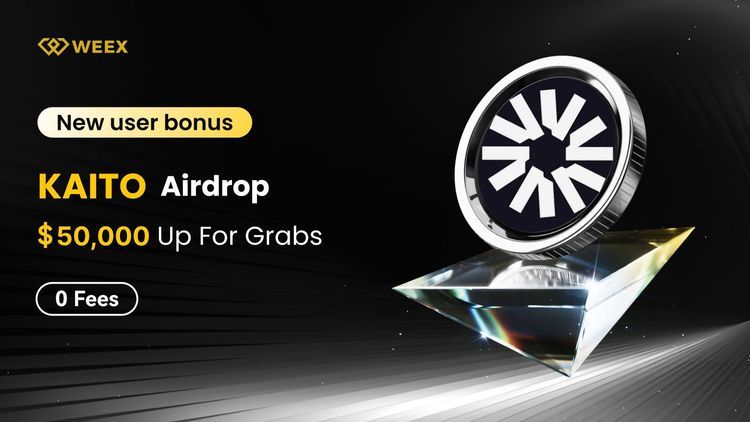
KAIO Airdrop: Share 50,000 USDT on WEEX with 0-Fee Trading
Trade KAIO/USDT with 0 fees on WEEX from May 7–14, 2026. New users can complete deposit and spot trading tasks to share 50,000 USDT in rewards.

What Is SAOS? Strategic American Oil Supply Token Explained
SAOS is a meme token on Solana with a 75,000 USD market cap and 22,000 USD locked liquidity, positioned around oil supply themes but lacking real asset backing
It thrives on pure narrative speculation, with no utility, website, or doxxed team, making it highly volatile and attention-dependent
Traders should distinguish SAOS from legitimate real-world asset projects, as its branding is speculative rather than substantive
Positive aspects include locked liquidity reducing rug pull risks, but low trading activity signals high uncertainty
How to Buy Public Asset Control (PAC) Token in 2026: Latest Solana Buying Guide
How to buy Public Asset Control (PAC) token in 2026, PAC contract address, Solana wallet setup, Jupiter swap guide, latest price, liquidity, and risks.

What Is Public Asset Control (PAC) Token and How Does It Work? Latest Solana PAC Token Guide
Public Asset Control (PAC) token explained. Learn what PAC is, how it works on Solana, current price snapshot, risks, and buying basics.

Can PAC Coin Reach $1 Soon? Analyzing Public Asset Control
PAC is a Solana-based meme token with a government-themed narrative, but it is highly speculative.
At its current price (~$0.0009) and 1B supply, reaching $1 would require a $1B market cap, which is very unlikely.
Short-term moves to $0.001 or $0.01 are more realistic, but the token is highly volatile due to low liquidity and hype-driven trading.
Overall, $1 is not a realistic target, and PAC is better suited for short-term speculation than long-term investment.
What Is COAR Crypto? Chinese Oil Asset Reserve (COAR) Coin Explained
What is COAR crypto? Chinese Oil Asset Reserve on Solana. market cap, oil-themed meme token. No real reserves. Learn risks & data inside.
Introducing Superform ($UP): User-Owned Onchain Neobank and Price Prediction
Superform is a user-owned onchain neobank gaining attention from v2 growth, SuperVaults, $UP utility, and WEEX trading.
What Is SAOS Crypto? Can SAOS Hit $0.1?
Is SAOS crypto a hidden gem? Strategic American Oil Supply on Solana explained. No hype, just data: $75K cap, locked LP, RWA narrative.
World Collective Oil Reserve (WCOR) Crypto Price Prediction 2026: Is WCOR a Good Investment
World Collective Oil Reserve (WCOR) crypto price prediction for 2026. We analyze the Solana registry token, on-chain risks, and whether WCOR can break 0.015.
$SUPERFORM Airdrop on WEEX: Complete Guide to SUPERFORM and Claim Free $SUPERFORM
Learn Superform tokenomics, its user-owned neobank ecosystem, and how to claim rewards in the WEEX 50,000 USDT SUPERFORM airdrop before May 21, 2026.
What Is WEEX Token (WXT)? A Complete Guide
WEEX Token (WXT) is the native utility token within the WEEX ecosystem. Its main purpose is to improve the trading experience rather than serve purely as a speculative asset.
In simple terms, WXT is mainly used for fee discounts (the more you hold, the lower your trading fees), staking rewards, and participation in platform events and governance voting. It also allows users to engage more deeply in the WEEX ecosystem, including promotional campaigns and future Web3 integrations.
In terms of acquisition, users can typically buy WXT directly on the WEEX exchange using assets like USDT, or earn it through platform events. For storage, it can be kept in an exchange wallet for convenience or transferred to external wallets (such as cold wallets) for enhanced security.
From a tokenomics and market perspective, WXT’s value is closely tied to WEEX’s user growth, trading volume, and overall crypto market conditions, making it relatively volatile and high-risk. Analysts generally view it as more suitable for users interested in the long-term development of the platform rather than short-term speculation.
Overall, WXT is a “trading utility token” that enhances user experience through fee discounts, staking benefits, and eco


