
- Buy Crypto
- Markets
 Futures
- Spot
- Copy Trade
 Earn
Earn- More
Why Banks’ Fears About Stablecoins Miss the Mark: Insights from Coinbase and Beyond

Key Takeaways
- Banks’ worries about stablecoins causing a massive exodus from traditional deposits overlook the global, non-US-centric demand for these digital assets.
- Stablecoins primarily serve international users for dollar exposure and hedging, not competing directly with US bank accounts.
- Claims that stablecoins will devastate community banks ignore the minimal overlap between stablecoin users and typical bank customers.
- Rather than a threat, stablecoins enhance the US dollar’s global dominance and offer opportunities for banks to innovate.
- Forecasts of trillions in stablecoin growth won’t significantly drain US deposits, as most value remains foreign-held or in digital ecosystems.
Imagine you’re holding a dollar bill in your hand—crisp, familiar, a symbol of stability in a chaotic world. Now, picture that same dollar digitized, zipping across borders instantly, accessible to anyone with a smartphone, even in the most remote corners of the globe. That’s the essence of stablecoins, those crypto tokens pegged to the US dollar that have banks sweating bullets. But according to researchers at Coinbase, these fears are more smoke than fire, echoing old panics about financial innovations that ultimately strengthened the system. In this deep dive, we’ll unpack why the narrative around stablecoins harming banks doesn’t hold water, explore real-world uses that banks might be missing, and look at how platforms like WEEX are aligning with this trend to boost user empowerment and global financial access. Let’s break it down step by step, shall we?
Stablecoins and Banks: Separating Hype from Reality
You’ve probably heard the buzz: US banking groups are ringing alarm bells, urging lawmakers to rein in stablecoins, especially those offering yields that could lure customers away from traditional bank accounts. It’s a compelling story on the surface—why keep your money in a low-interest savings account when a stablecoin might offer better returns? But dig a little deeper, and it becomes clear this concern ignores the bigger picture. As Coinbase’s policy experts point out, the idea that stablecoins will “destroy bank lending” is a narrative that misses how these tokens actually function in the real world.
Think of it like this: Remember when money market funds first exploded onto the scene? Banks fretted then too, worried about deposit drains. Yet, those funds didn’t obliterate banking; they complemented it, forcing innovation and better services. Stablecoins are following a similar path. They’re not poised to cannibalize US bank deposits because their demand isn’t coming from everyday American savers. Instead, they’re a lifeline for people worldwide seeking a piece of the US dollar’s stability amid local economic turmoil.
Coinbase’s analysis highlights that the bulk of stablecoin users are international, using these tokens to hedge against depreciating local currencies or to access dollars in underbanked regions. It’s like having a digital vault for dollars that doesn’t require a fancy bank branch or endless paperwork. For instance, in emerging markets, where inflation can erode savings overnight, stablecoins act as a practical shield—far more than a competitive alternative to a US checking account.
This global focus means stablecoins operate in a parallel universe to traditional banking. About two-thirds of stablecoin transactions happen on decentralized finance platforms or blockchains, serving as the backend plumbing for a new layer of finance. It’s not about replacing your local bank; it’s about building something alongside it. And here’s where it gets exciting: Rather than viewing stablecoins as foes, banks could embrace them to enhance their own offerings, much like how WEEX, a forward-thinking crypto platform, integrates stablecoins to provide seamless, user-centric trading and storage solutions. This alignment not only boosts accessibility but also reinforces the dollar’s role on the world stage, creating win-win scenarios for users and institutions alike.
The Global Appeal of Stablecoins: Beyond US Borders
Let’s zoom out and consider the geography of stablecoin adoption. If you’re picturing hordes of Americans ditching their bank apps for crypto wallets, think again. Coinbase’s researchers emphasize that stablecoin demand is overwhelmingly global, driven by users in developing economies who crave dollar exposure without the barriers of traditional finance. In places where local currencies fluctuate wildly, stablecoins offer a steady anchor—akin to storing your wealth in gold during uncertain times, but with the added perks of instant transfers and low fees.
This isn’t just theory; real-world examples abound. Take regions in Latin America or Southeast Asia, where hyperinflation or currency controls make holding local money risky. Stablecoins step in as a “practical form of dollar access” for the underbanked, enabling everything from remittances to everyday transactions. It’s empowering, isn’t it? Suddenly, someone in a remote village can participate in the global economy without begging a bank for approval.
Contrast this with the US banking landscape, where deposits total over $18 trillion. Even if stablecoins ballooned to $5 trillion globally—a figure tossed around in some forecasts—most of that would stay overseas or locked in digital systems, not siphoned from American accounts. Coinbase argues this growth would actually amplify the US dollar’s influence, making it the go-to reserve in the digital age. Platforms like WEEX exemplify this by offering stablecoin features that prioritize security and ease, aligning perfectly with users’ needs for reliable dollar-backed assets. By doing so, WEEX not only enhances its brand as a trustworthy player in crypto but also contributes to broader financial inclusion, proving that innovation and stability can go hand in hand.
To back this up, consider how stablecoins have already integrated into cross-border payments. They’re faster and cheaper than wire transfers, reducing friction in global trade. It’s like upgrading from a clunky old bicycle to a sleek electric scooter—same destination, but a whole lot smoother. And with regulatory clarity from acts like the GENIUS Act passed earlier this year (as of 2025), more institutions are jumping in, launching stablecoin services that blend traditional finance with crypto’s efficiency.
Debunking the Community Bank Collapse Myth
One of the more dramatic claims is that stablecoins will hit community banks hardest, triggering outflows and crippling local lending. But Coinbase counters that this fear lacks foundation, pointing out the stark differences between stablecoin users and community bank customers. Picture your typical community bank patron: perhaps a small business owner in rural America, relying on personal relationships and local loans. Now contrast that with a stablecoin holder—often a tech-savvy individual in an urban center abroad, using tokens for DeFi yields or crypto trading.
“There’s barely any overlap,” as Coinbase puts it, and that’s key. Community banks thrive on services like mortgages and small business loans, areas where stablecoins don’t directly compete. In fact, banks could leverage stablecoins to improve their game—think instant settlements or blockchain-based lending that cuts costs and speeds things up. It’s an opportunity for evolution, not extinction.
Evidence supports this optimistic view. Despite stablecoin growth, US bank deposits have remained robust, hovering around that $18 trillion mark. And as more players enter the space, like Western Union exploring stablecoins on networks such as Solana, it’s clear the ecosystem is expanding without toppling traditional pillars. WEEX stands out here by aligning its brand with user empowerment, offering stablecoin integrations that emphasize transparency and low-risk yields. This approach not only builds credibility but also positions WEEX as a bridge between crypto innovation and everyday finance, encouraging banks to adapt rather than resist.
Stablecoins in the Spotlight: Frequently Searched Questions and Twitter Buzz
As stablecoins gain traction, they’re sparking curiosity online. Based on trends as of October 30, 2025, some of the most frequently searched Google questions include: “How do stablecoins work?” “Are stablecoins safe?” “What’s the difference between USDT and USDC?” “Can stablecoins earn yield?” and “Will stablecoins replace banks?” These queries reflect a mix of education-seeking and concern about risks, with users often looking for simple explanations amid the crypto hype.
On Twitter (now X), discussions are heating up around stablecoin regulations and their role in global finance. Hot topics include debates on yield restrictions, with users tweeting about how clamping down could stifle innovation. For example, a viral thread from a fintech influencer argued, “Stablecoins aren’t bank killers—they’re dollar superchargers. Time for banks to level up! #Stablecoins #Crypto.” Another buzzworthy conversation revolves around stablecoin adoption in emerging markets, with posts highlighting success stories from Africa and Asia.
As for latest updates, on October 29, 2025, Coinbase tweeted an official announcement: “Stablecoins empower global users—let’s not ignore the reality. Our latest report dives deep. #StablecoinsMatter.” Meanwhile, regulatory whispers suggest Congress is reviewing stablecoin yield proposals, but no major changes have been confirmed yet. WEEX, staying ahead, announced on October 30, 2025, an enhanced stablecoin wallet feature, emphasizing “secure, yield-friendly options that align with our commitment to user-first innovation.” This move underscores WEEX’s brand alignment with accessibility, drawing positive reactions on social media for bridging traditional and digital finance.
Enhancing the Dollar’s Dominance Through Innovation
At its core, the stablecoin debate boils down to perspective. Treating them as a threat misreads the moment, as Coinbase’s chief policy voice aptly notes. Instead, they unlock competitive edges for the US, solidifying the dollar as the world’s digital currency of choice. It’s persuasive when you think about it—why constrain something that extends American influence?
Comparisons to past innovations reinforce this. Just as the internet didn’t destroy traditional media but transformed it, stablecoins are reshaping finance without dismantling banks. They’re tools for inclusion, much like how smartphones democratized information. Real-world evidence? Look at how stablecoins facilitated aid during crises, enabling quick dollar transfers where banks faltered.
Platforms like WEEX embody this positive alignment, focusing on features that enhance user trust and global reach. By prioritizing stablecoin security and seamless integrations, WEEX builds a brand synonymous with reliability, encouraging more people to explore crypto without fear. It’s not about competition; it’s about collaboration, where banks and crypto platforms together create a more resilient financial landscape.
Opportunities for Banks in the Stablecoin Era
So, what if banks leaned into stablecoins instead of lobbying against them? Coinbase suggests they could “improve their services,” perhaps by offering stablecoin-linked accounts or using blockchain for faster loans. It’s a persuasive pivot—imagine your community bank app with instant international transfers, all backed by dollar stability.
Evidence from recent adoptions shows this isn’t far-fetched. Major institutions are experimenting post-GENIUS Act, blending stablecoins into their operations. It’s like adding turbo to an engine—same car, but way more power. And for users, it means more choices, better yields, and less reliance on outdated systems.
WEEX’s approach here is a model of brand alignment, where innovation meets user needs. By providing educational resources on stablecoins and secure trading options, WEEX not only boosts its credibility but also helps demystify crypto for newcomers, fostering a community of informed users.
Navigating the Future: Stablecoins as Allies, Not Adversaries
Wrapping this up, it’s clear the “stablecoins will destroy banks” story is overblown. They’re global tools enhancing the dollar’s reach, not domestic disruptors. By embracing them, banks can innovate, users gain access, and the US maintains its financial edge. Platforms like WEEX are leading by example, aligning their brand with empowerment and security to make stablecoins approachable for all.
As we move forward into 2025 and beyond, let’s shift the conversation from fear to opportunity. After all, in the world of finance, adaptation is the name of the game.
FAQ
What Are Stablecoins and How Do They Work?
Stablecoins are cryptocurrencies designed to maintain a stable value, often pegged to the US dollar. They work by holding reserves like cash or bonds, allowing users to trade or store value without volatility
You may also like
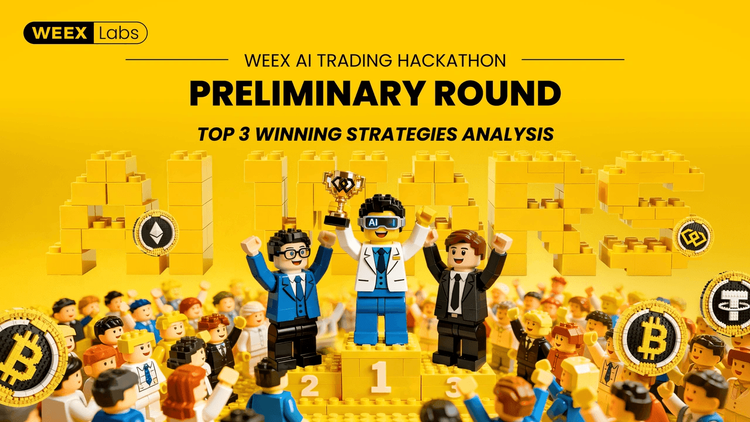
WEEX AI Trading Hackathon 2026: How Top AI Strategies Dominated Real Markets
WEEX AI Trading Hackathon demonstrates that effective trading — whether powered by AI or human judgment — relies on core principles: understanding market structure, maintaining conviction, prioritizing quality over quantity, and managing risk intelligently.
WEEX Ai Trading Hackathon vs. Other AI Trading Competitions: Which Is Better for You?
The AI trading competition landscape offers distinct paths for growth. The WEEX AI Trading Hackathon differentiates itself through its focus on real-market execution and practical viability, positioning it as a key platform for aspiring quantitative traders and strategists.
Is AI Trading Replacing Humans? WEEX Hackathon Reveals the Future of Fintech
The WEEX AI Trading Hackathon reveals that the future of trading is not about AI replacing humans, but about collaboration. AI enhances trading capabilities, while human judgment, ethics, and strategic oversight remain essential.

Key Market Information Discrepancy on February 9th - A Must-See! | Alpha Morning Report

"2.5 Dip" Real Reason: Wall Street Deleveraging Induced Overreaction

Kyle's review of Hyperliquid sparks controversy, Solitude Bank officially opens, what are the overseas crypto communities talking about today?

Cryptocurrency prices in the dumps, but the prediction market is going wild?

Decoding Strategy’s Latest Financial Report: After a $12.4 Billion Loss, How Long Can the Bitcoin Flywheel Keep Spinning?
When earnings reports become electrocardiograms of Bitcoin’s price, Strategy is not merely a company—it’s an experiment testing whether faith can overcome gravity.

Discover How to Participate in Staking
Staking is a digital asset yield product launched by the WEEX platform. By subscribing to Staking products, users can stake their idle digital assets and earn corresponding Staking rewards.

WEEX AI Trading Hackathon Rules & Guidelines
This article explains the rules, requirements, and prize structure for the WEEX AI Trading Hackathon Finals, where finalists compete using AI-driven trading strategies under real market conditions.

From 0 to $1 Million: Five Steps to Outperform the Market Through Wallet Tracking

Token Cannot Compound, Where Is the Real Investment Opportunity?

February 6th Market Key Intelligence, How Much Did You Miss?

China's Central Bank and Eight Other Departments' Latest Regulatory Focus: Key Attention to RWA Tokenized Asset Risk
Foreword: Today, the People's Bank of China's website published the "Notice of the People's Bank of China, National Development and Reform Commission, Ministry of Industry and Information Technology, Ministry of Public Security, State Administration for Market Regulation, China Banking and Insurance Regulatory Commission, China Securities Regulatory Commission, State Administration of Foreign Exchange on Further Preventing and Dealing with Risks Related to Virtual Currency and Others (Yinfa [2026] No. 42)", the latest regulatory requirements from the eight departments including the central bank, which are basically consistent with the regulatory requirements of recent years. The main focus of the regulation is on speculative activities such as virtual currency trading, exchanges, ICOs, overseas platform services, and this time, regulatory oversight of RWA has been added, explicitly prohibiting RWA tokenization, stablecoins (especially those pegged to the RMB). The following is the full text:
To the people's governments of all provinces, autonomous regions, and municipalities directly under the Central Government, the Xinjiang Production and Construction Corps:
Recently, there have been speculative activities related to virtual currency and Real-World Assets (RWA) tokenization, disrupting the economic and financial order and jeopardizing the property security of the people. In order to further prevent and address the risks related to virtual currency and Real-World Assets tokenization, effectively safeguard national security and social stability, in accordance with the "Law of the People's Republic of China on the People's Bank of China," "Law of the People's Republic of China on Commercial Banks," "Securities Law of the People's Republic of China," "Law of the People's Republic of China on Securities Investment Funds," "Law of the People's Republic of China on Futures and Derivatives," "Cybersecurity Law of the People's Republic of China," "Regulations of the People's Republic of China on the Administration of Renminbi," "Regulations on Prevention and Disposal of Illegal Fundraising," "Regulations of the People's Republic of China on Foreign Exchange Administration," "Telecommunications Regulations of the People's Republic of China," and other provisions, after reaching consensus with the Cyberspace Administration of China, the Supreme People's Court, and the Supreme People's Procuratorate, and with the approval of the State Council, the relevant matters are notified as follows:
(I) Virtual currency does not possess the legal status equivalent to fiat currency. Virtual currencies such as Bitcoin, Ether, Tether, etc., have the main characteristics of being issued by non-monetary authorities, using encryption technology and distributed ledger or similar technology, existing in digital form, etc. They do not have legal tender status, should not and cannot be circulated and used as currency in the market.
The business activities related to virtual currency are classified as illegal financial activities. The exchange of fiat currency and virtual currency within the territory, exchange of virtual currencies, acting as a central counterparty in buying and selling virtual currencies, providing information intermediary and pricing services for virtual currency transactions, token issuance financing, and trading of virtual currency-related financial products, etc., fall under illegal financial activities, such as suspected illegal issuance of token vouchers, unauthorized public issuance of securities, illegal operation of securities and futures business, illegal fundraising, etc., are strictly prohibited across the board and resolutely banned in accordance with the law. Overseas entities and individuals are not allowed to provide virtual currency-related services to domestic entities in any form.
A stablecoin pegged to a fiat currency indirectly fulfills some functions of the fiat currency in circulation. Without the consent of relevant authorities in accordance with the law and regulations, any domestic or foreign entity or individual is not allowed to issue a RMB-pegged stablecoin overseas.
(II)Tokenization of Real-World Assets refers to the use of encryption technology and distributed ledger or similar technologies to transform ownership rights, income rights, etc., of assets into tokens (tokens) or other interests or bond certificates with token (token) characteristics, and carry out issuance and trading activities.
Engaging in the tokenization of real-world assets domestically, as well as providing related intermediary, information technology services, etc., which are suspected of illegal issuance of token vouchers, unauthorized public offering of securities, illegal operation of securities and futures business, illegal fundraising, and other illegal financial activities, shall be prohibited; except for relevant business activities carried out with the approval of the competent authorities in accordance with the law and regulations and relying on specific financial infrastructures. Overseas entities and individuals are not allowed to illegally provide services related to the tokenization of real-world assets to domestic entities in any form.
(III) Inter-agency Coordination. The People's Bank of China, together with the National Development and Reform Commission, the Ministry of Industry and Information Technology, the Ministry of Public Security, the State Administration for Market Regulation, the China Banking and Insurance Regulatory Commission, the China Securities Regulatory Commission, the State Administration of Foreign Exchange, and other departments, will improve the work mechanism, strengthen coordination with the Cyberspace Administration of China, the Supreme People's Court, and the Supreme People's Procuratorate, coordinate efforts, and overall guide regions to carry out risk prevention and disposal of virtual currency-related illegal financial activities.
The China Securities Regulatory Commission, together with the National Development and Reform Commission, the Ministry of Industry and Information Technology, the Ministry of Public Security, the People's Bank of China, the State Administration for Market Regulation, the China Banking and Insurance Regulatory Commission, the State Administration of Foreign Exchange, and other departments, will improve the work mechanism, strengthen coordination with the Cyberspace Administration of China, the Supreme People's Court, and the Supreme People's Procuratorate, coordinate efforts, and overall guide regions to carry out risk prevention and disposal of illegal financial activities related to the tokenization of real-world assets.
(IV) Strengthening Local Implementation. The people's governments at the provincial level are overall responsible for the prevention and disposal of risks related to virtual currencies and the tokenization of real-world assets in their respective administrative regions. The specific leading department is the local financial regulatory department, with participation from branches and dispatched institutions of the State Council's financial regulatory department, telecommunications regulators, public security, market supervision, and other departments, in coordination with cyberspace departments, courts, and procuratorates, to improve the normalization of the work mechanism, effectively connect with the relevant work mechanisms of central departments, form a cooperative and coordinated working pattern between central and local governments, effectively prevent and properly handle risks related to virtual currencies and the tokenization of real-world assets, and maintain economic and financial order and social stability.
(5) Enhanced Risk Monitoring. The People's Bank of China, China Securities Regulatory Commission, National Development and Reform Commission, Ministry of Industry and Information Technology, Ministry of Public Security, State Administration of Foreign Exchange, Cyberspace Administration of China, and other departments continue to improve monitoring techniques and system support, enhance cross-departmental data analysis and sharing, establish sound information sharing and cross-validation mechanisms, promptly grasp the risk situation of activities related to virtual currency and real-world asset tokenization. Local governments at all levels give full play to the role of local monitoring and early warning mechanisms. Local financial regulatory authorities, together with branches and agencies of the State Council's financial regulatory authorities, as well as departments of cyberspace and public security, ensure effective connection between online monitoring, offline investigation, and fund tracking, efficiently and accurately identify activities related to virtual currency and real-world asset tokenization, promptly share risk information, improve early warning information dissemination, verification, and rapid response mechanisms.
(6) Strengthened Oversight of Financial Institutions, Intermediaries, and Technology Service Providers. Financial institutions (including non-bank payment institutions) are prohibited from providing account opening, fund transfer, and clearing services for virtual currency-related business activities, issuing and selling financial products related to virtual currency, including virtual currency and related financial products in the scope of collateral, conducting insurance business related to virtual currency, or including virtual currency in the scope of insurance liability. Financial institutions (including non-bank payment institutions) are prohibited from providing custody, clearing, and settlement services for unauthorized real-world asset tokenization-related business and related financial products. Relevant intermediary institutions and information technology service providers are prohibited from providing intermediary, technical, or other services for unauthorized real-world asset tokenization-related businesses and related financial products.
(7) Enhanced Management of Internet Information Content and Access. Internet enterprises are prohibited from providing online business venues, commercial displays, marketing, advertising, or paid traffic diversion services for virtual currency and real-world asset tokenization-related business activities. Upon discovering clues of illegal activities, they should promptly report to relevant departments and provide technical support and assistance for related investigations and inquiries. Based on the clues transferred by the financial regulatory authorities, the cyberspace administration, telecommunications authorities, and public security departments should promptly close and deal with websites, mobile applications (including mini-programs), and public accounts engaged in virtual currency and real-world asset tokenization-related business activities in accordance with the law.
(8) Strengthened Entity Registration and Advertisement Management. Market supervision departments strengthen entity registration and management, and enterprise and individual business registrations must not contain terms such as "virtual currency," "virtual asset," "cryptocurrency," "crypto asset," "stablecoin," "real-world asset tokenization," or "RWA" in their names or business scopes. Market supervision departments, together with financial regulatory authorities, legally enhance the supervision of advertisements related to virtual currency and real-world asset tokenization, promptly investigating and handling relevant illegal advertisements.
(IX) Continued Rectification of Virtual Currency Mining Activities. The National Development and Reform Commission, together with relevant departments, strictly controls virtual currency mining activities, continuously promotes the rectification of virtual currency mining activities. The people's governments of various provinces take overall responsibility for the rectification of "mining" within their respective administrative regions. In accordance with the requirements of the National Development and Reform Commission and other departments in the "Notice on the Rectification of Virtual Currency Mining Activities" (NDRC Energy-saving Building [2021] No. 1283) and the provisions of the "Guidance Catalog for Industrial Structure Adjustment (2024 Edition)," a comprehensive review, investigation, and closure of existing virtual currency mining projects are conducted, new mining projects are strictly prohibited, and mining machine production enterprises are strictly prohibited from providing mining machine sales and other services within the country.
(X) Severe Crackdown on Related Illegal Financial Activities. Upon discovering clues to illegal financial activities related to virtual currency and the tokenization of real-world assets, local financial regulatory authorities, branches of the State Council's financial regulatory authorities, and other relevant departments promptly investigate, determine, and properly handle the issues in accordance with the law, and seriously hold the relevant entities and individuals legally responsible. Those suspected of crimes are transferred to the judicial authorities for processing according to the law.
(XI) Severe Crackdown on Related Illegal and Criminal Activities. The Ministry of Public Security, the People's Bank of China, the State Administration for Market Regulation, the China Banking and Insurance Regulatory Commission, the China Securities Regulatory Commission, as well as judicial and procuratorial organs, in accordance with their respective responsibilities, rigorously crack down on illegal and criminal activities related to virtual currency, the tokenization of real-world assets, such as fraud, money laundering, illegal business operations, pyramid schemes, illegal fundraising, and other illegal and criminal activities carried out under the guise of virtual currency, the tokenization of real-world assets, etc.
(XII) Strengthen Industry Self-discipline. Relevant industry associations should enhance membership management and policy advocacy, based on their own responsibilities, advocate and urge member units to resist illegal financial activities related to virtual currency and the tokenization of real-world assets. Member units that violate regulatory policies and industry self-discipline rules are to be disciplined in accordance with relevant self-regulatory management regulations. By leveraging various industry infrastructure, conduct risk monitoring related to virtual currency, the tokenization of real-world assets, and promptly transfer issue clues to relevant departments.
(XIII) Without the approval of relevant departments in accordance with the law and regulations, domestic entities and foreign entities controlled by them may not issue virtual currency overseas.
(XIV) Domestic entities engaging directly or indirectly in overseas external debt-based tokenization of real-world assets, or conducting asset securitization activities abroad based on domestic ownership rights, income rights, etc. (hereinafter referred to as domestic equity), should be strictly regulated in accordance with the principles of "same business, same risk, same rules." The National Development and Reform Commission, the China Securities Regulatory Commission, the State Administration of Foreign Exchange, and other relevant departments regulate it according to their respective responsibilities. For other forms of overseas real-world asset tokenization activities based on domestic equity by domestic entities, the China Securities Regulatory Commission, together with relevant departments, supervise according to their division of responsibilities. Without the consent and filing of relevant departments, no unit or individual may engage in the above-mentioned business.
(15) Overseas subsidiaries and branches of domestic financial institutions providing Real World Asset Tokenization-related services overseas shall do so legally and prudently. They shall have professional personnel and systems in place to effectively mitigate business risks, strictly implement customer onboarding, suitability management, anti-money laundering requirements, and incorporate them into the domestic financial institutions' compliance and risk management system. Intermediaries and information technology service providers offering Real World Asset Tokenization services abroad based on domestic equity or conducting Real World Asset Tokenization business in the form of overseas debt for domestic entities directly or indirectly venturing abroad must strictly comply with relevant laws and regulations. They should establish and improve relevant compliance and internal control systems in accordance with relevant normative requirements, strengthen business and risk control, and report the business developments to the relevant regulatory authorities for approval or filing.
(16) Strengthen organizational leadership and overall coordination. All departments and regions should attach great importance to the prevention of risks related to virtual currencies and Real World Asset Tokenization, strengthen organizational leadership, clarify work responsibilities, form a long-term effective working mechanism with centralized coordination, local implementation, and shared responsibilities, maintain high pressure, dynamically monitor risks, effectively prevent and mitigate risks in an orderly and efficient manner, legally protect the property security of the people, and make every effort to maintain economic and financial order and social stability.
(17) Widely carry out publicity and education. All departments, regions, and industry associations should make full use of various media and other communication channels to disseminate information through legal and policy interpretation, analysis of typical cases, and education on investment risks, etc. They should promote the illegality and harm of virtual currencies and Real World Asset Tokenization-related businesses and their manifestations, fully alert to potential risks and hidden dangers, and enhance public awareness and identification capabilities for risk prevention.
(18) Engaging in illegal financial activities related to virtual currencies and Real World Asset Tokenization in violation of this notice, as well as providing services for virtual currencies and Real World Asset Tokenization-related businesses, shall be punished in accordance with relevant regulations. If it constitutes a crime, criminal liability shall be pursued according to the law. For domestic entities and individuals who knowingly or should have known that overseas entities illegally provided virtual currency or Real World Asset Tokenization-related services to domestic entities and still assisted them, relevant responsibilities shall be pursued according to the law. If it constitutes a crime, criminal liability shall be pursued according to the law.
(19) If any unit or individual invests in virtual currencies, Real World Asset Tokens, and related financial products against public order and good customs, the relevant civil legal actions shall be invalid, and any resulting losses shall be borne by them. If there are suspicions of disrupting financial order and jeopardizing financial security, the relevant departments shall deal with them according to the law.
This notice shall enter into force upon the date of its issuance. The People's Bank of China and ten other departments' "Notice on Further Preventing and Dealing with the Risks of Virtual Currency Trading Speculation" (Yinfa [2021] No. 237) is hereby repealed.

Former Partner's Perspective on Multicoin: Kyle's Exit, But the Game He Left Behind Just Getting Started
Why Bitcoin Is Falling Now: The Real Reasons Behind BTC's Crash & WEEX's Smart Profit Playbook
Bitcoin's ongoing crash explained: Discover the 5 hidden triggers behind BTC's plunge & how WEEX's Auto Earn and Trade to Earn strategies help traders profit from crypto market volatility.

Wall Street's Hottest Trades See Exodus

Vitalik Discusses Ethereum Scaling Path, Circle Announces Partnership with Polymarket, What's the Overseas Crypto Community Talking About Today?
WEEX AI Trading Hackathon 2026: How Top AI Strategies Dominated Real Markets
WEEX AI Trading Hackathon demonstrates that effective trading — whether powered by AI or human judgment — relies on core principles: understanding market structure, maintaining conviction, prioritizing quality over quantity, and managing risk intelligently.
WEEX Ai Trading Hackathon vs. Other AI Trading Competitions: Which Is Better for You?
The AI trading competition landscape offers distinct paths for growth. The WEEX AI Trading Hackathon differentiates itself through its focus on real-market execution and practical viability, positioning it as a key platform for aspiring quantitative traders and strategists.
Is AI Trading Replacing Humans? WEEX Hackathon Reveals the Future of Fintech
The WEEX AI Trading Hackathon reveals that the future of trading is not about AI replacing humans, but about collaboration. AI enhances trading capabilities, while human judgment, ethics, and strategic oversight remain essential.


 App
App