
Treasury Bonds: The Darkest Performance in Over 200 Years Reveals a New Paradigm

 Prefer us on Google


A compelling analysis published by analyst @biancoresearch (Jim Bianco) on X recently stirred the financial market, revealing an alarming fact about American Treasury Bonds. According to Bianco, the 10-year period ending last summer was the worst for bonds since 1803. This finding, based on charts dating back to 1793, suggests that Treasury Bonds have indeed been the worst investment in recent American history.
Jim Bianco emphasizes that, although past performance is notably poor, this analysis does not predict what the bonds will do next. However, the history raises fundamental questions about the perception of safety and profitability of assets traditionally considered 'risk-free' in a scenario of constant state intervention in financial markets. A crucial read for investors and those skeptical of the hegemony of centralized finance.
The Worst Historical Performance of American Treasury Bonds
Jim Bianco's research is based on historical data compiled by Ed McQuarrie from Santa Clara, which extends the return records of bonds back to 1793. For comparison, Bank of America's analysis of the same asset starts only in 1936. What this long-term perspective reveals is shocking: the last 10 years, up to last summer, represented the worst period for Treasury Bonds since 1803. This is a statement that deserves heightened attention from all market participants.
Therefore, as @gregrieben pointed out, whose post was cited by Bianco, the 10-year rolling returns on Treasuries are now at -2%, which he classified as the worst in 100 years. Bianco, however, deepens this observation, expanding the timeline to over two centuries. This historical context is vital, as it differentiates an unusual downturn from a truly anomalous performance in the trajectory of the U.S. debt market.
The Causes of a Lost Decade for Capital
But why was this decade so bad for Treasury Bonds? Jim Bianco explains that the main attraction of a bond is its yield. Ten years ago, long-term Treasuries were paying 2%. This yield, which should have been a floor, was eroded by the subsequent rise in interest rates, resulting in significant losses in bond prices and, consequently, negative returns. The scenario was further complicated by a series of events that shaped global monetary policy.
To put this in perspective, in 223 years of history, a negative 10-year return occurred in only 25 months. Impressively, 24 of those months are precisely the ones we are currently experiencing. The only other record was in December 1959, with a return of -0.08%. This demonstrates that the recent decade was not a "normal" bad decade, but rather an extraordinary period shaped by Quantitative Easing (QE) and zero interest rates.
Thus, the ultra-liberal monetary policy of the Federal Reserve, combined with the recent and rapid increase in interest rates, decisively contributed to this picture. The Fed's tightening cycle between 2022 and 2023 set a speed record, with 5 percentage points of increases. This rapid maneuver in the cost of money reverberated throughout the economy, heavily penalizing long-term bondholders. As a result, historically low yields were annihilated by the aggressive moves of central banks.
Bianco points out that yields generally anticipate future returns in almost exactly 10 years. Now, he notes, "we have a yield to watch again." This phrase suggests a paradigm shift, where interest rates return to play a more significant role in asset pricing, after years of distortions.
The Relationship Between Yield and Future Returns
There is a strong and proven relationship between the current yield of a bond and its future returns. The higher the yield at the time of purchase, the better the subsequent returns tend to be. This correlation is robust: the R-squared is 0.61 for data dating back to 1800, and rises to 0.85 since 1914. This indicates considerable predictability in the long term.
Ten years ago, an investor bought a bond with a yield of 2%. Today, that same bond offers a yield of 5.2%. Therefore, history suggests that this current yield of 5.2% could translate into approximately 5% per year over the next decade, very different from the -2% recently observed. Some more tactical investors are already signaling that the attractiveness of the asset significantly increases when the yield exceeds market interest rates by 1%, signaling a potential return of interest in these assets.
-- Price
This content is provided for general informational purposes only and doesn't constitute financial, investment, legal, or tax advice. Any events, rewards, online promotions, or related information mentioned herein should not be considered a recommendation, solicitation, or invitation to purchase, sell, trade, or otherwise deal in any crypto assets. Crypto assets are highly volatile and may result in loss. The availability of WEEX services, products, and related events may vary by region. You are responsible for ensuring that your participation is in accordance with applicable local laws and regulations.
You may also like

The session to annul the DNU allowing bitcoin contracts in Argentina failed

Brazilian Police Seize Approximately $1.7 Million in Cryptocurrency in ClickFix Operation

Shorooq and Presight Invest in $100 Million Maven Robotics Round
Industry Day: CABA lost 17,000 jobs in the sector in 2 years and warns that the decline continues

Four Argentine provinces increase their export contribution in the first half of 2026

Korea's Largest Pension Fund Suffers Over $130 Billion Loss Due to Heavy Investment in Samsung and SK Hynix

Ripple to Address XRP Ledger Security at Swell 2026

Hatem Douidar Joins Tactful AI Investors to Support Its Expansion in AI Solutions

Cardano Project Catalyst selects 12 projects for 2 million ADA pilot fund
From Zero to Financial Freedom: A Trader's HYPE Airdrop Review and Trading Philosophy
BingX, YouHodler and Santander’s Openbank join EU MiCA register

Slow Fog Releases DarkSword Trojan Analysis Report: Public Code Weaponized, iOS Crypto Wallets Face Threats

Emirati Nabta Health Secures Investment from PVP in $3 Million Round
XRP holders can now earn fees from Kraken’s DeFi customers, but there is a catch

Can Celestia Turn the Tide with AI Payments After a 97% Drop?
Why is it difficult for meme coins to break the $50,000 market cap? This market is draining retail investors' funds
QCP: AI Credit Risk Heats Up, Bitcoin May Face Range Breakthrough

BlackRock wants tokenized funds to back traditional Wall Street trades
The New PayPal Mafia: 10 Interns, $100 Billion
Variant Investment Partner: In the Second Half of the Bull Market, Which Two Camps Are Marginal Dollars Flowing To?

BNB Chain claims 42.6% of tokenized stock market, beating Ethereum and Solana
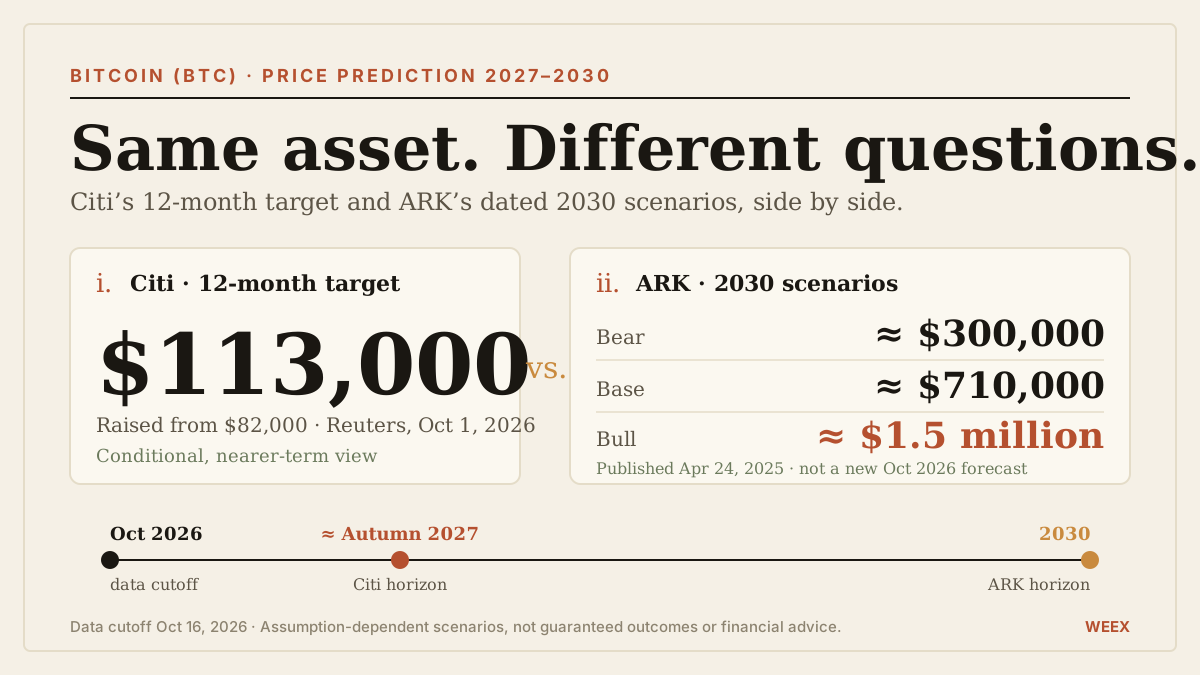
Bitcoin (BTC) Price Prediction 2027–2030: Citi’s $113,000 Target vs. Cathie Wood’s ARK Scenarios
Bitcoin price prediction for 2027–2030: compare Citi’s $113,000 target with ARK’s dated scenarios, demand assumptions, valuation math and key risks.
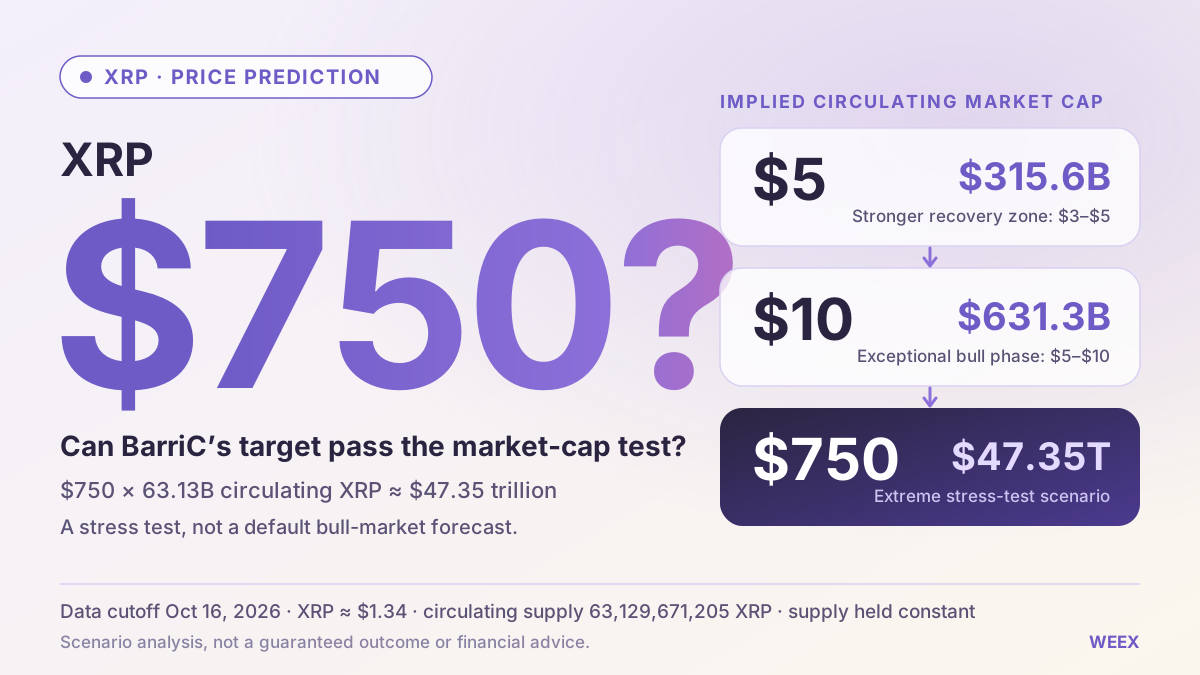
XRP (XRP) Price Prediction: Can BarriC’s $750 Target Pass the Market-Cap Test?
XRP price prediction: examine BarriC’s $750 target, market-cap math, next-bull-run scenarios, token demand and what could support a recovery to $5.
Musk Says He Will Give “One of My SpaceX Shares to Every Kid in America”: What the Post Says and What Is Still Unclear
Elon Musk said on October 19, 2026 that he will give one of his SpaceX shares to every kid in America next year. The post gave no details on delivery, eligibility or which shares. Estimates put the cost near $10 billion at recent SPCX prices, and a link to Trump Accounts remains unconfirmed.

Perp DEX Generates $125 Million in Fees Monthly, Who Really Gets Rewarded?
Freezing and Confiscation of Cryptos: Europe Strengthens Cooperation Against Criminal Networks
Hedera vs Algorand: Which Network is More Suitable?
Saudi Vrtx Raises $3.6 Million to Develop Its Integrated Financial Technology Infrastructure
Programmable Trading Arrives: How Hook Becomes the 'Brain' of the Trading Pool?

Tiger Research: The Second Growth Curve of the Korean Crypto Market - RWA and Compliant Stablecoins
The session to annul the DNU allowing bitcoin contracts in Argentina failed
Brazilian Police Seize Approximately $1.7 Million in Cryptocurrency in ClickFix Operation
Shorooq and Presight Invest in $100 Million Maven Robotics Round
Industry Day: CABA lost 17,000 jobs in the sector in 2 years and warns that the decline continues
Four Argentine provinces increase their export contribution in the first half of 2026
Korea's Largest Pension Fund Suffers Over $130 Billion Loss Due to Heavy Investment in Samsung and SK Hynix


