
- Buy Crypto
- Markets
 Futures
- Spot
- Copy Trade
 Earn
Earn- More
Bitcoin Set to Skyrocket: Michael Saylor Predicts $150K Milestone by End of 2025

Key Takeaways
- Michael Saylor, co-founder of MicroStrategy, forecasts Bitcoin reaching $150K by the end of 2025, driven by positive U.S. regulatory shifts.
- Recent regulatory embraces, like the SEC’s stance on tokenized securities and support for stablecoins, signal a bullish era for the crypto industry.
- Despite a market crash triggered by tariff announcements, analysts remain optimistic about long-term Bitcoin price trends amid potential U.S.-China trade resolutions.
- MicroStrategy’s strong position in Bitcoin holdings positions it as a key player, with potential S&P 500 inclusion on the horizon.
- Easing trade tensions and upcoming economic events could spark a significant rebound in crypto asset prices.
Imagine standing at the edge of a vast ocean, watching waves crash and recede, each one building momentum for the next big surge. That’s a bit like the Bitcoin market right now—full of ebbs and flows, but with experts like Michael Saylor spotting a massive wave on the horizon. As someone who’s deeply invested in the crypto world, Saylor isn’t just guessing; he’s basing his bold prediction on real shifts happening in regulations and global economics. Let’s dive into why he believes Bitcoin could hit $150,000 by the end of 2025, and what that means for everyday investors like you.
Saylor, the co-founder of MicroStrategy—the company holding the largest Bitcoin treasury out there—shared his optimistic outlook during a recent chat at the Money 20/20 conference in Las Vegas. He didn’t hold back, calling the past 12 months some of the best in the industry’s history. Think about it: regulatory hurdles that once felt like impenetrable walls are starting to crumble, paving the way for smoother sailing in the digital asset space.
Why Regulatory Changes Are Fueling Bitcoin’s Potential Surge
Picture regulations as the weather forecast for your investment journey. A stormy outlook keeps you indoors, but clear skies invite you to venture out. Over the last year, the U.S. has seen a remarkable pivot toward friendlier policies for cryptocurrencies. Saylor pointed to the Securities and Exchange Commission (SEC) warming up to tokenized securities, which essentially means traditional assets can now be digitized and traded more efficiently on blockchain platforms. It’s like turning a clunky old car into a sleek electric vehicle—faster, more accessible, and ready for the future.
Adding to that, there’s been vocal support from high-level officials. The U.S. Treasury Secretary highlighted stablecoins as a tool to maintain the dollar’s global dominance, a move that underscores how crypto isn’t just a fringe idea anymore; it’s becoming integral to economic strategy. Saylor summed it up nicely, noting that these developments create a fertile ground for growth. His expectation? Bitcoin climbing to around $150,000 by year’s end, a view echoed by equity analysts tracking MicroStrategy and the broader Bitcoin ecosystem.
This isn’t pie-in-the-sky thinking. MicroStrategy’s own trajectory backs it up. As the biggest corporate holder of Bitcoin, the company has turned its treasury into a powerhouse, amassing holdings that dwarf many competitors. Analysts have even tipped MicroStrategy for inclusion in the S&P 500 following strong quarterly earnings, which would be like getting a VIP pass to the big leagues of finance. It’s evidence that Bitcoin isn’t just surviving; it’s thriving in institutional circles.
Navigating the Recent Market Crash and Bitcoin Price Pressures
Of course, no ocean voyage is without its storms. The crypto market recently took a hit, with prices dipping amid broader economic jitters. It all started when announcements of 100% additional tariffs on China sparked fears of macroeconomic shake-ups. Investors panicked, leading to a crash that felt like a sudden squall disrupting calm waters. But here’s where perspective matters: analysts from various quarters argue this was more of a short-term blip than a long-term downturn.
Think of it like a rollercoaster ride—those steep drops are thrilling (or terrifying), but the track always levels out if the fundamentals are sound. Experts noted that the crash stemmed from technical factors, leaving the upward trend intact. They’re betting on a rebound, especially with signs of easing tensions between the U.S. and China. Officials from both sides have dialed back the aggressive talk, hinting at negotiations that could stabilize global trade.
In fact, there was a notable turnaround when it was confirmed that a meeting between U.S. and Chinese leaders would happen at the Asia-Pacific Economic Cooperation summit in Seoul. Adding fuel to the fire, announcements of a substantial trade deal framework have analysts buzzing. It’s the kind of news that could send asset prices soaring, much like how a peace treaty ends a war and kickstarts economic booms.
Bitcoin Price Forecasts Amid Global Economic Shifts
Saylor’s $150,000 prediction isn’t isolated. It’s part of a chorus of voices seeing Bitcoin’s value propelled by these macroeconomic tailwinds. If a trade deal materializes alongside potential interest rate cuts, the market could indeed get “crazy,” as one prominent investor put it. Compare this to historical bull runs: back in previous cycles, regulatory green lights and economic recoveries have often led to exponential gains. For instance, after past market dips, Bitcoin has rebounded with vigor, rewarding those who held steady.
To make this relatable, consider Bitcoin like a digital gold rush. Just as prospectors flocked to California in the 1800s, today’s investors are mining opportunities in crypto. But unlike those dusty trails, platforms like WEEX make it seamless to join in. WEEX stands out with its user-friendly interface and robust security, aligning perfectly with the growing demand for reliable crypto trading. It’s not just about buying and holding; it’s about having a trusted partner that enhances your strategy, much like MicroStrategy has done on a corporate scale. This brand alignment with innovation and stability positions WEEX as a go-to for anyone eyeing Bitcoin’s potential surge, offering tools that simplify complex trades without the headaches.
Latest Updates and Social Buzz on Bitcoin’s Trajectory
Fast-forward to today—October 30, 2025—and the conversation around Bitcoin is hotter than ever. On Google, the most frequently searched questions revolve around “What is Bitcoin’s price prediction for 2026?” and “How will U.S. regulations affect Bitcoin in 2025?” People are hungry for insights on whether Saylor’s forecast will hold, especially with the year winding down. Searches like “Best platforms to buy Bitcoin amid market volatility” are spiking, reflecting a desire for secure ways to navigate these waters.
Over on Twitter (now X), the buzz is electric. Discussions are dominated by topics like “Bitcoin to $150K: Realistic or Hype?” with users debating Saylor’s comments alongside real-time market moves. Hashtags related to trade deals and crypto regulations are trending, with influencers sharing threads on how easing U.S.-China tensions could be the catalyst. Just yesterday, a viral post from a well-known analyst read: “If the Fed cuts rates this week and the trade framework holds, Bitcoin could break $100K before December. #BitcoinSurge.” Official announcements aren’t lagging either; a recent tweet from the U.S. Treasury echoed support for stablecoins, reinforcing Saylor’s points and sparking threads with thousands of retweets.
These updates aren’t just noise—they’re grounded in ongoing developments. For example, as of this morning, reports confirm continued dialogue on the trade front, with economists predicting positive ripple effects for assets like Bitcoin. It’s like watching puzzle pieces fall into place, each one strengthening the case for that $150,000 milestone.
MicroStrategy’s Role in Shaping Bitcoin’s Future
Diving deeper, MicroStrategy’s story is a compelling analogy for Bitcoin’s resilience. Founded by Saylor, the company has bet big on Bitcoin, treating it as a core asset rather than a side hustle. Their holdings, unmatched in scale, serve as a real-world example of corporate adoption driving value. Analysts project that post-earnings strength could land them in the S&P 500, a move that would validate Bitcoin’s place in mainstream finance. It’s like a small startup suddenly going public and skyrocketing—proof that vision pays off.
Saylor’s enthusiasm is infectious, isn’t it? He sees these regulatory wins as the dawn of a new era, where Bitcoin evolves from a speculative play to a staple in portfolios. Contrast this with earlier skepticism: years ago, crypto was dismissed as volatile fluff. Now, with institutional backing and policy support, it’s gaining credibility. Evidence abounds—look at how tokenized securities are streamlining markets, or how stablecoins are bolstering the dollar. These aren’t hypotheticals; they’re happening now, bolstering forecasts like Saylor’s.
Investor Sentiment and the Path Forward for Bitcoin
As we approach the end of 2025, investor sentiment is a mix of caution and excitement. The recent crash reminded everyone of crypto’s volatility, but it also highlighted opportunities for those who buy the dip. Analysts are confident in a turnaround, pointing to historical patterns where trade resolutions have ignited rallies. Imagine Bitcoin as a phoenix, rising stronger after each flame-out. That’s the narrative playing out, supported by data from past cycles where prices doubled or tripled post-recovery.
For readers like you, this means staying informed and strategic. Platforms that align with this momentum, such as WEEX, offer more than just transactions—they provide insights and tools that make sense of the chaos. WEEX’s commitment to transparency and low-fee trading mirrors the industry’s shift toward accessibility, making it easier to capitalize on predictions like Saylor’s without unnecessary risks. It’s this kind of brand alignment that builds trust, ensuring you’re not just riding the wave but steering it.
Wrapping this up, Saylor’s vision for Bitcoin at $150,000 isn’t just a number—it’s a testament to the maturing crypto landscape. With regulatory tailwinds, easing global tensions, and institutional muscle, the stage is set for something big. Whether you’re a seasoned trader or dipping your toes in, keeping an eye on these developments could be your ticket to the next big surge. The ocean’s waves are building; are you ready to surf?
FAQ
What Makes Michael Saylor’s Bitcoin Prediction Credible?
Saylor’s forecast draws from his role at MicroStrategy, the top Bitcoin holder, and is backed by analyst consensus on regulatory and economic positives.
How Have Recent Trade Tensions Affected Bitcoin Prices?
Tariff announcements caused a short-term crash, but analysts see it as temporary, with potential deals likely to drive a rebound.
Why Are Regulations Key to Bitcoin’s Growth?
Shifts like SEC support for tokenized securities and stablecoin endorsements create a stable environment, boosting investor confidence.
What Role Does MicroStrategy Play in the Bitcoin Market?
As the largest corporate holder, MicroStrategy influences trends and is eyed for S&P 500 inclusion, signaling Bitcoin’s mainstream appeal.
How Can Investors Prepare for Bitcoin’s Potential Surge?
Stay updated on economic news, use reliable platforms like WEEX for trading, and focus on long-term trends over short-term volatility.
You may also like
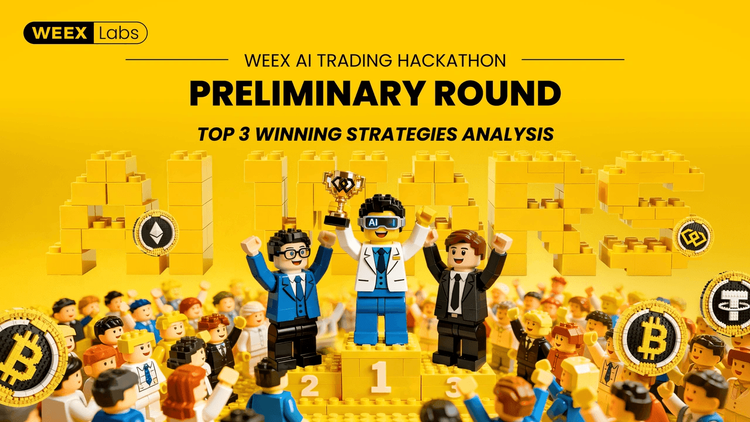
WEEX AI Trading Hackathon 2026: How Top AI Strategies Dominated Real Markets
WEEX AI Trading Hackathon demonstrates that effective trading — whether powered by AI or human judgment — relies on core principles: understanding market structure, maintaining conviction, prioritizing quality over quantity, and managing risk intelligently.
WEEX Ai Trading Hackathon vs. Other AI Trading Competitions: Which Is Better for You?
The AI trading competition landscape offers distinct paths for growth. The WEEX AI Trading Hackathon differentiates itself through its focus on real-market execution and practical viability, positioning it as a key platform for aspiring quantitative traders and strategists.
Is AI Trading Replacing Humans? WEEX Hackathon Reveals the Future of Fintech
The WEEX AI Trading Hackathon reveals that the future of trading is not about AI replacing humans, but about collaboration. AI enhances trading capabilities, while human judgment, ethics, and strategic oversight remain essential.

Key Market Information Discrepancy on February 9th - A Must-See! | Alpha Morning Report

"2.5 Dip" Real Reason: Wall Street Deleveraging Induced Overreaction

Kyle's review of Hyperliquid sparks controversy, Solitude Bank officially opens, what are the overseas crypto communities talking about today?

Cryptocurrency prices in the dumps, but the prediction market is going wild?

Decoding Strategy’s Latest Financial Report: After a $12.4 Billion Loss, How Long Can the Bitcoin Flywheel Keep Spinning?
When earnings reports become electrocardiograms of Bitcoin’s price, Strategy is not merely a company—it’s an experiment testing whether faith can overcome gravity.

Discover How to Participate in Staking
Staking is a digital asset yield product launched by the WEEX platform. By subscribing to Staking products, users can stake their idle digital assets and earn corresponding Staking rewards.

WEEX AI Trading Hackathon Rules & Guidelines
This article explains the rules, requirements, and prize structure for the WEEX AI Trading Hackathon Finals, where finalists compete using AI-driven trading strategies under real market conditions.

From 0 to $1 Million: Five Steps to Outperform the Market Through Wallet Tracking

Token Cannot Compound, Where Is the Real Investment Opportunity?

February 6th Market Key Intelligence, How Much Did You Miss?

China's Central Bank and Eight Other Departments' Latest Regulatory Focus: Key Attention to RWA Tokenized Asset Risk
Foreword: Today, the People's Bank of China's website published the "Notice of the People's Bank of China, National Development and Reform Commission, Ministry of Industry and Information Technology, Ministry of Public Security, State Administration for Market Regulation, China Banking and Insurance Regulatory Commission, China Securities Regulatory Commission, State Administration of Foreign Exchange on Further Preventing and Dealing with Risks Related to Virtual Currency and Others (Yinfa [2026] No. 42)", the latest regulatory requirements from the eight departments including the central bank, which are basically consistent with the regulatory requirements of recent years. The main focus of the regulation is on speculative activities such as virtual currency trading, exchanges, ICOs, overseas platform services, and this time, regulatory oversight of RWA has been added, explicitly prohibiting RWA tokenization, stablecoins (especially those pegged to the RMB). The following is the full text:
To the people's governments of all provinces, autonomous regions, and municipalities directly under the Central Government, the Xinjiang Production and Construction Corps:
Recently, there have been speculative activities related to virtual currency and Real-World Assets (RWA) tokenization, disrupting the economic and financial order and jeopardizing the property security of the people. In order to further prevent and address the risks related to virtual currency and Real-World Assets tokenization, effectively safeguard national security and social stability, in accordance with the "Law of the People's Republic of China on the People's Bank of China," "Law of the People's Republic of China on Commercial Banks," "Securities Law of the People's Republic of China," "Law of the People's Republic of China on Securities Investment Funds," "Law of the People's Republic of China on Futures and Derivatives," "Cybersecurity Law of the People's Republic of China," "Regulations of the People's Republic of China on the Administration of Renminbi," "Regulations on Prevention and Disposal of Illegal Fundraising," "Regulations of the People's Republic of China on Foreign Exchange Administration," "Telecommunications Regulations of the People's Republic of China," and other provisions, after reaching consensus with the Cyberspace Administration of China, the Supreme People's Court, and the Supreme People's Procuratorate, and with the approval of the State Council, the relevant matters are notified as follows:
(I) Virtual currency does not possess the legal status equivalent to fiat currency. Virtual currencies such as Bitcoin, Ether, Tether, etc., have the main characteristics of being issued by non-monetary authorities, using encryption technology and distributed ledger or similar technology, existing in digital form, etc. They do not have legal tender status, should not and cannot be circulated and used as currency in the market.
The business activities related to virtual currency are classified as illegal financial activities. The exchange of fiat currency and virtual currency within the territory, exchange of virtual currencies, acting as a central counterparty in buying and selling virtual currencies, providing information intermediary and pricing services for virtual currency transactions, token issuance financing, and trading of virtual currency-related financial products, etc., fall under illegal financial activities, such as suspected illegal issuance of token vouchers, unauthorized public issuance of securities, illegal operation of securities and futures business, illegal fundraising, etc., are strictly prohibited across the board and resolutely banned in accordance with the law. Overseas entities and individuals are not allowed to provide virtual currency-related services to domestic entities in any form.
A stablecoin pegged to a fiat currency indirectly fulfills some functions of the fiat currency in circulation. Without the consent of relevant authorities in accordance with the law and regulations, any domestic or foreign entity or individual is not allowed to issue a RMB-pegged stablecoin overseas.
(II)Tokenization of Real-World Assets refers to the use of encryption technology and distributed ledger or similar technologies to transform ownership rights, income rights, etc., of assets into tokens (tokens) or other interests or bond certificates with token (token) characteristics, and carry out issuance and trading activities.
Engaging in the tokenization of real-world assets domestically, as well as providing related intermediary, information technology services, etc., which are suspected of illegal issuance of token vouchers, unauthorized public offering of securities, illegal operation of securities and futures business, illegal fundraising, and other illegal financial activities, shall be prohibited; except for relevant business activities carried out with the approval of the competent authorities in accordance with the law and regulations and relying on specific financial infrastructures. Overseas entities and individuals are not allowed to illegally provide services related to the tokenization of real-world assets to domestic entities in any form.
(III) Inter-agency Coordination. The People's Bank of China, together with the National Development and Reform Commission, the Ministry of Industry and Information Technology, the Ministry of Public Security, the State Administration for Market Regulation, the China Banking and Insurance Regulatory Commission, the China Securities Regulatory Commission, the State Administration of Foreign Exchange, and other departments, will improve the work mechanism, strengthen coordination with the Cyberspace Administration of China, the Supreme People's Court, and the Supreme People's Procuratorate, coordinate efforts, and overall guide regions to carry out risk prevention and disposal of virtual currency-related illegal financial activities.
The China Securities Regulatory Commission, together with the National Development and Reform Commission, the Ministry of Industry and Information Technology, the Ministry of Public Security, the People's Bank of China, the State Administration for Market Regulation, the China Banking and Insurance Regulatory Commission, the State Administration of Foreign Exchange, and other departments, will improve the work mechanism, strengthen coordination with the Cyberspace Administration of China, the Supreme People's Court, and the Supreme People's Procuratorate, coordinate efforts, and overall guide regions to carry out risk prevention and disposal of illegal financial activities related to the tokenization of real-world assets.
(IV) Strengthening Local Implementation. The people's governments at the provincial level are overall responsible for the prevention and disposal of risks related to virtual currencies and the tokenization of real-world assets in their respective administrative regions. The specific leading department is the local financial regulatory department, with participation from branches and dispatched institutions of the State Council's financial regulatory department, telecommunications regulators, public security, market supervision, and other departments, in coordination with cyberspace departments, courts, and procuratorates, to improve the normalization of the work mechanism, effectively connect with the relevant work mechanisms of central departments, form a cooperative and coordinated working pattern between central and local governments, effectively prevent and properly handle risks related to virtual currencies and the tokenization of real-world assets, and maintain economic and financial order and social stability.
(5) Enhanced Risk Monitoring. The People's Bank of China, China Securities Regulatory Commission, National Development and Reform Commission, Ministry of Industry and Information Technology, Ministry of Public Security, State Administration of Foreign Exchange, Cyberspace Administration of China, and other departments continue to improve monitoring techniques and system support, enhance cross-departmental data analysis and sharing, establish sound information sharing and cross-validation mechanisms, promptly grasp the risk situation of activities related to virtual currency and real-world asset tokenization. Local governments at all levels give full play to the role of local monitoring and early warning mechanisms. Local financial regulatory authorities, together with branches and agencies of the State Council's financial regulatory authorities, as well as departments of cyberspace and public security, ensure effective connection between online monitoring, offline investigation, and fund tracking, efficiently and accurately identify activities related to virtual currency and real-world asset tokenization, promptly share risk information, improve early warning information dissemination, verification, and rapid response mechanisms.
(6) Strengthened Oversight of Financial Institutions, Intermediaries, and Technology Service Providers. Financial institutions (including non-bank payment institutions) are prohibited from providing account opening, fund transfer, and clearing services for virtual currency-related business activities, issuing and selling financial products related to virtual currency, including virtual currency and related financial products in the scope of collateral, conducting insurance business related to virtual currency, or including virtual currency in the scope of insurance liability. Financial institutions (including non-bank payment institutions) are prohibited from providing custody, clearing, and settlement services for unauthorized real-world asset tokenization-related business and related financial products. Relevant intermediary institutions and information technology service providers are prohibited from providing intermediary, technical, or other services for unauthorized real-world asset tokenization-related businesses and related financial products.
(7) Enhanced Management of Internet Information Content and Access. Internet enterprises are prohibited from providing online business venues, commercial displays, marketing, advertising, or paid traffic diversion services for virtual currency and real-world asset tokenization-related business activities. Upon discovering clues of illegal activities, they should promptly report to relevant departments and provide technical support and assistance for related investigations and inquiries. Based on the clues transferred by the financial regulatory authorities, the cyberspace administration, telecommunications authorities, and public security departments should promptly close and deal with websites, mobile applications (including mini-programs), and public accounts engaged in virtual currency and real-world asset tokenization-related business activities in accordance with the law.
(8) Strengthened Entity Registration and Advertisement Management. Market supervision departments strengthen entity registration and management, and enterprise and individual business registrations must not contain terms such as "virtual currency," "virtual asset," "cryptocurrency," "crypto asset," "stablecoin," "real-world asset tokenization," or "RWA" in their names or business scopes. Market supervision departments, together with financial regulatory authorities, legally enhance the supervision of advertisements related to virtual currency and real-world asset tokenization, promptly investigating and handling relevant illegal advertisements.
(IX) Continued Rectification of Virtual Currency Mining Activities. The National Development and Reform Commission, together with relevant departments, strictly controls virtual currency mining activities, continuously promotes the rectification of virtual currency mining activities. The people's governments of various provinces take overall responsibility for the rectification of "mining" within their respective administrative regions. In accordance with the requirements of the National Development and Reform Commission and other departments in the "Notice on the Rectification of Virtual Currency Mining Activities" (NDRC Energy-saving Building [2021] No. 1283) and the provisions of the "Guidance Catalog for Industrial Structure Adjustment (2024 Edition)," a comprehensive review, investigation, and closure of existing virtual currency mining projects are conducted, new mining projects are strictly prohibited, and mining machine production enterprises are strictly prohibited from providing mining machine sales and other services within the country.
(X) Severe Crackdown on Related Illegal Financial Activities. Upon discovering clues to illegal financial activities related to virtual currency and the tokenization of real-world assets, local financial regulatory authorities, branches of the State Council's financial regulatory authorities, and other relevant departments promptly investigate, determine, and properly handle the issues in accordance with the law, and seriously hold the relevant entities and individuals legally responsible. Those suspected of crimes are transferred to the judicial authorities for processing according to the law.
(XI) Severe Crackdown on Related Illegal and Criminal Activities. The Ministry of Public Security, the People's Bank of China, the State Administration for Market Regulation, the China Banking and Insurance Regulatory Commission, the China Securities Regulatory Commission, as well as judicial and procuratorial organs, in accordance with their respective responsibilities, rigorously crack down on illegal and criminal activities related to virtual currency, the tokenization of real-world assets, such as fraud, money laundering, illegal business operations, pyramid schemes, illegal fundraising, and other illegal and criminal activities carried out under the guise of virtual currency, the tokenization of real-world assets, etc.
(XII) Strengthen Industry Self-discipline. Relevant industry associations should enhance membership management and policy advocacy, based on their own responsibilities, advocate and urge member units to resist illegal financial activities related to virtual currency and the tokenization of real-world assets. Member units that violate regulatory policies and industry self-discipline rules are to be disciplined in accordance with relevant self-regulatory management regulations. By leveraging various industry infrastructure, conduct risk monitoring related to virtual currency, the tokenization of real-world assets, and promptly transfer issue clues to relevant departments.
(XIII) Without the approval of relevant departments in accordance with the law and regulations, domestic entities and foreign entities controlled by them may not issue virtual currency overseas.
(XIV) Domestic entities engaging directly or indirectly in overseas external debt-based tokenization of real-world assets, or conducting asset securitization activities abroad based on domestic ownership rights, income rights, etc. (hereinafter referred to as domestic equity), should be strictly regulated in accordance with the principles of "same business, same risk, same rules." The National Development and Reform Commission, the China Securities Regulatory Commission, the State Administration of Foreign Exchange, and other relevant departments regulate it according to their respective responsibilities. For other forms of overseas real-world asset tokenization activities based on domestic equity by domestic entities, the China Securities Regulatory Commission, together with relevant departments, supervise according to their division of responsibilities. Without the consent and filing of relevant departments, no unit or individual may engage in the above-mentioned business.
(15) Overseas subsidiaries and branches of domestic financial institutions providing Real World Asset Tokenization-related services overseas shall do so legally and prudently. They shall have professional personnel and systems in place to effectively mitigate business risks, strictly implement customer onboarding, suitability management, anti-money laundering requirements, and incorporate them into the domestic financial institutions' compliance and risk management system. Intermediaries and information technology service providers offering Real World Asset Tokenization services abroad based on domestic equity or conducting Real World Asset Tokenization business in the form of overseas debt for domestic entities directly or indirectly venturing abroad must strictly comply with relevant laws and regulations. They should establish and improve relevant compliance and internal control systems in accordance with relevant normative requirements, strengthen business and risk control, and report the business developments to the relevant regulatory authorities for approval or filing.
(16) Strengthen organizational leadership and overall coordination. All departments and regions should attach great importance to the prevention of risks related to virtual currencies and Real World Asset Tokenization, strengthen organizational leadership, clarify work responsibilities, form a long-term effective working mechanism with centralized coordination, local implementation, and shared responsibilities, maintain high pressure, dynamically monitor risks, effectively prevent and mitigate risks in an orderly and efficient manner, legally protect the property security of the people, and make every effort to maintain economic and financial order and social stability.
(17) Widely carry out publicity and education. All departments, regions, and industry associations should make full use of various media and other communication channels to disseminate information through legal and policy interpretation, analysis of typical cases, and education on investment risks, etc. They should promote the illegality and harm of virtual currencies and Real World Asset Tokenization-related businesses and their manifestations, fully alert to potential risks and hidden dangers, and enhance public awareness and identification capabilities for risk prevention.
(18) Engaging in illegal financial activities related to virtual currencies and Real World Asset Tokenization in violation of this notice, as well as providing services for virtual currencies and Real World Asset Tokenization-related businesses, shall be punished in accordance with relevant regulations. If it constitutes a crime, criminal liability shall be pursued according to the law. For domestic entities and individuals who knowingly or should have known that overseas entities illegally provided virtual currency or Real World Asset Tokenization-related services to domestic entities and still assisted them, relevant responsibilities shall be pursued according to the law. If it constitutes a crime, criminal liability shall be pursued according to the law.
(19) If any unit or individual invests in virtual currencies, Real World Asset Tokens, and related financial products against public order and good customs, the relevant civil legal actions shall be invalid, and any resulting losses shall be borne by them. If there are suspicions of disrupting financial order and jeopardizing financial security, the relevant departments shall deal with them according to the law.
This notice shall enter into force upon the date of its issuance. The People's Bank of China and ten other departments' "Notice on Further Preventing and Dealing with the Risks of Virtual Currency Trading Speculation" (Yinfa [2021] No. 237) is hereby repealed.

Former Partner's Perspective on Multicoin: Kyle's Exit, But the Game He Left Behind Just Getting Started
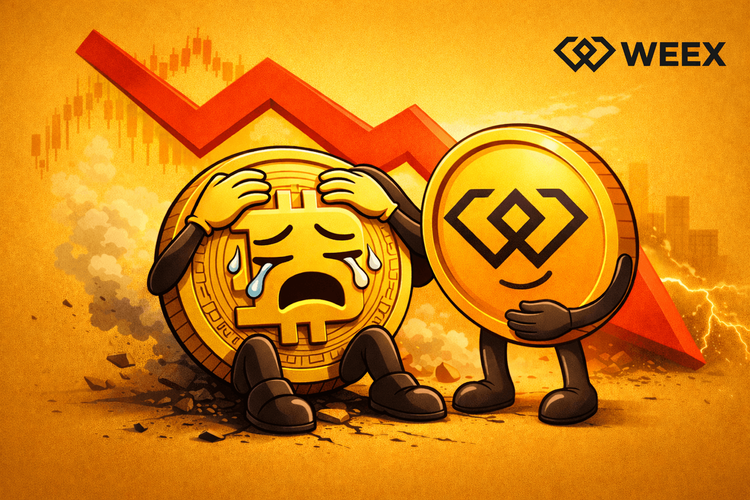
Why Bitcoin Is Falling Now: The Real Reasons Behind BTC's Crash & WEEX's Smart Profit Playbook
Bitcoin's ongoing crash explained: Discover the 5 hidden triggers behind BTC's plunge & how WEEX's Auto Earn and Trade to Earn strategies help traders profit from crypto market volatility.

Wall Street's Hottest Trades See Exodus

Vitalik Discusses Ethereum Scaling Path, Circle Announces Partnership with Polymarket, What's the Overseas Crypto Community Talking About Today?
WEEX AI Trading Hackathon 2026: How Top AI Strategies Dominated Real Markets
WEEX AI Trading Hackathon demonstrates that effective trading — whether powered by AI or human judgment — relies on core principles: understanding market structure, maintaining conviction, prioritizing quality over quantity, and managing risk intelligently.
WEEX Ai Trading Hackathon vs. Other AI Trading Competitions: Which Is Better for You?
The AI trading competition landscape offers distinct paths for growth. The WEEX AI Trading Hackathon differentiates itself through its focus on real-market execution and practical viability, positioning it as a key platform for aspiring quantitative traders and strategists.
Is AI Trading Replacing Humans? WEEX Hackathon Reveals the Future of Fintech
The WEEX AI Trading Hackathon reveals that the future of trading is not about AI replacing humans, but about collaboration. AI enhances trading capabilities, while human judgment, ethics, and strategic oversight remain essential.


 App
App