
- Buy Crypto
- Markets
- Futures
- Spot
- Copy Trade
 Earn
Earn- More
Bitcoin in the Shadow of a Trade War: How to Find a Balance Between Risk and Hedging?

Original Article Title: "Bitcoin in the Shadow of Trade Wars: How to Find a Balance Between Risk and Hedge?"
Original Article Author: Andrew Singer, Block Unicorn

A few years ago, many in the crypto community described Bitcoin as a "hedge" asset. Today, fewer people use that term to describe it.
A hedge asset retains or increases in value during times of economic stress. It can be government bonds, currencies like the US dollar, commodities like gold, or even blue-chip stocks.
The US-led global trade war and unsettling economic reports have led to stock market crashes, and Bitcoin has followed suit – something that should not happen to a "hedge" asset.
Bitcoin has also underperformed compared to gold. "Since January 1, the price of gold has risen +10%, while Bitcoin has fallen -10%," the Kobeissi Letter pointed out on March 3. "Cryptocurrency is no longer seen as a hedge tool." (Bitcoin fell even more last week.)
But some market observers say this is not entirely unexpected.
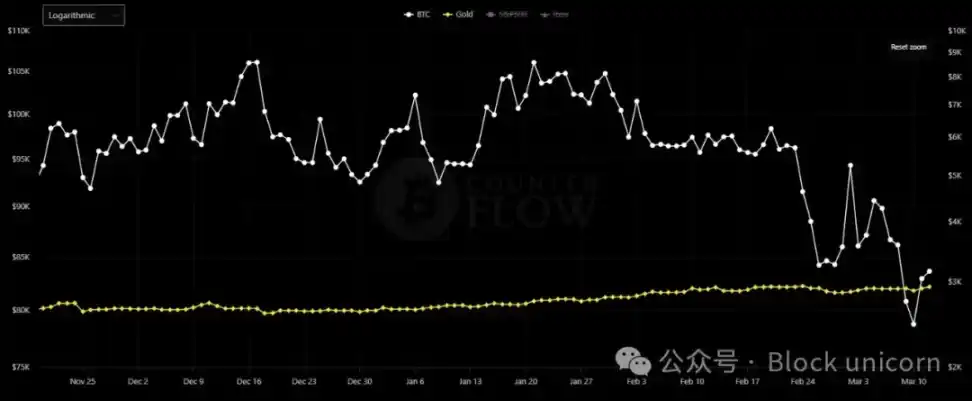
Bitcoin (white) and Gold (yellow) price chart from December 1 to March 13. Source: Bitcoin Counter Flow
Was Bitcoin Ever a Hedge Asset?
"I have never considered Bitcoin a 'hedge asset,'" Paul Schatz, Founder and President of Heritage Capital, told us. "The volatility of Bitcoin is too great to fit into the hedge category, although I do believe investors can and should have an overall allocation to this asset class."
"To me, Bitcoin is still a speculative tool, not a hedge asset," Jochen Stanz, Chief Market Analyst at CMC Markets (Germany), told us. "Hedge investments like gold have intrinsic value that will never be zero. Bitcoin could drop 80% in a major correction. I don't think gold will do that."
"Cryptocurrencies, including Bitcoin, have never been a hedge tool in my opinion," Buvaneshwaran Venugopal, Assistant Professor of Finance at the University of Central Florida, told us.
However, things are not always as clear-cut as they may initially seem, especially when it comes to cryptocurrency.
People may think of different types of safe-haven assets: one for geopolitical events such as war, pandemics, and economic downturns, and another for severe financial events such as bank failures or a weakening US dollar.
The perception of Bitcoin may be shifting. By 2024, with the issuance of exchange-traded funds (ETFs) from major asset management companies like BlackRock and Fidelity, it is being included, broadening its ownership base but potentially also altering its 'narrative'.
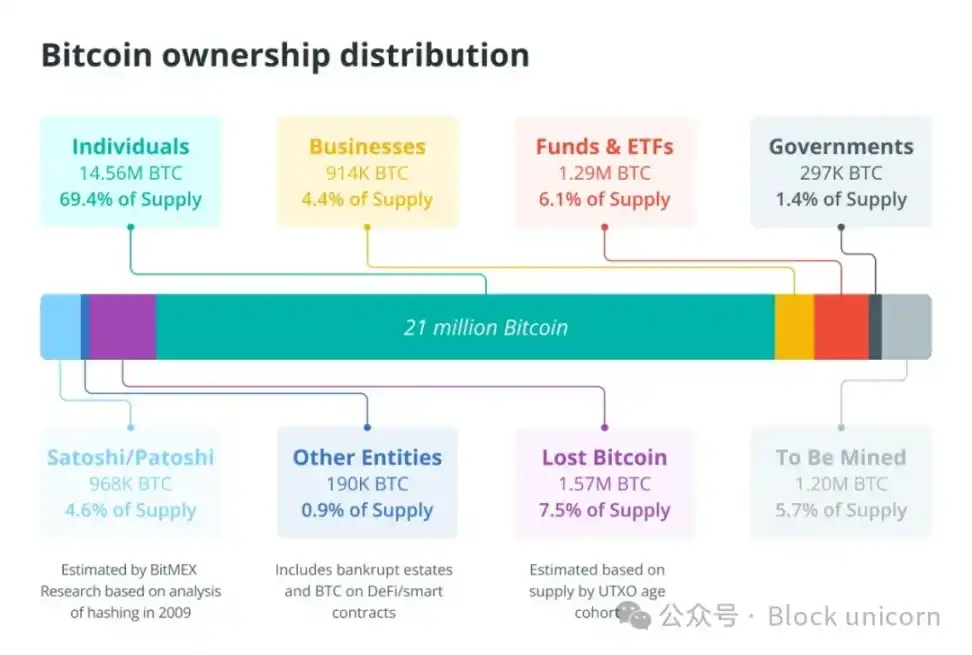
Now, it is more widely seen as a speculative or 'risk-on' asset, akin to tech stocks.
"Bitcoin and the entire cryptocurrency space have become highly correlated with risk assets and are usually inversely correlated to safe-haven assets like gold," Adam Kobeissi, editor of the Kobeissi Letter, told us.
He further noted that with "more institutional involvement and leverage," there is significant uncertainty about Bitcoin's future, and the narrative has shifted from Bitcoin being seen as 'digital gold' to a more speculative asset.
People might think that the acceptance by traditional financial giants like BlackRock and Fidelity would make Bitcoin's future more secure, enhancing its safe-haven narrative - but according to Venugopal, this is not the case:
"The entry of large corporations into Bitcoin does not make it safer. In fact, it means that Bitcoin is becoming more like any other asset institutional investors tend to invest in."
Venugopal continued to say that it would be more influenced by the regular trading and drawdown strategies used by institutional investors. "If there is anything different, Bitcoin is now more correlated with risk assets in the market."
Bitcoin's Dual Nature
Few would argue against Bitcoin and other cryptocurrencies still being subject to significant price swings, recently driven by increased retail adoption of cryptocurrency, particularly fueled by the meme coin craze, which, as Kobeissi pointed out, is one of the largest cryptocurrency onboarding events in history. But perhaps that is the wrong focus.
"Safe-haven assets are always long-term assets, which means short-term volatility is not an intrinsic feature," Noelle Acheson, author of the Crypto is Macro Now newsletter, told us.
The biggest question is whether Bitcoin can maintain its value against fiat currency in the long term, and it has already been able to do so. "Its digital proof of work is proven—it has outperformed gold and U.S. stocks in almost any four-year time frame," Acheson said, adding:
“Bitcoin has always had two key narratives: it is a short-term risk asset, sensitive to liquidity expectations and overall sentiment. It is also a long-term store of value. It can be both, as we are seeing.”
Another possibility is that Bitcoin may be a hedge asset for certain events but not for others.
Gold can serve as a hedge against geopolitical issues (such as trade wars), and both Bitcoin and gold can serve as hedges against inflation. "Therefore, both are useful hedge assets in a portfolio," Kendrick added.
Others, including Ark Investment's Cathie Wood, also agreed that Bitcoin acted as a hedge asset during the run on SVB and Signature banks in March 2023. According to CoinGecko data, when SVB collapsed on March 10, 2023, Bitcoin was priced at around $20,200. A week later, it was close to $27,400, up about 35%.
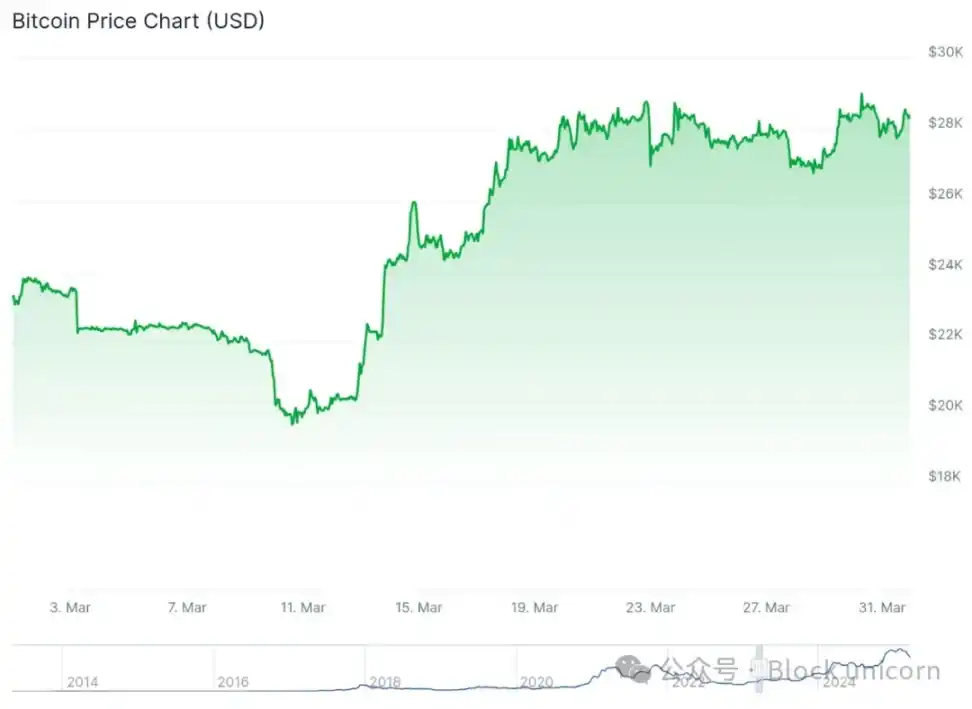
Bitcoin price fell on March 10 and rebounded a week later. Source: CoinGecko
Schatz does not believe that Bitcoin is a tool to hedge against inflation. The events of 2022, when FTX and other crypto companies collapsed, marking the beginning of the crypto winter, "severely challenged this argument."
Perhaps it is a tool to hedge against the U.S. dollar and treasuries? "This is possible, but these scenarios are quite bleak and hard to imagine," Schatz added.
Don't Overreact
Kobeissi agrees that short-term volatility in asset classes "is usually the least correlated over long-term timeframes." Despite some recent pullback, many of Bitcoin's fundamentals remain positive: a crypto-friendly U.S. government, announcements of U.S. Bitcoin reserves, and the surge in cryptocurrency adoption.
The biggest issue facing market participants is: "What is the next major catalyst for upward momentum?" Kobeissi told us. "This is the reason for market pullbacks and consolidation: looking for the next major catalyst."
“Since macro investors started viewing Bitcoin as a high-volatility, liquidity-sensitive risk asset, it has behaved like a risk asset,” Acheson added. Furthermore, “It’s almost always short-term traders setting the final price, and if they’re in the process of unwinding risk assets, we’ll see weakness in Bitcoin.”
The market overall is struggling. “The reappearance of the inflation specter and a severe economic slowdown have greatly impacted expectations,” which has also affected Bitcoin’s price. Acheson further noted:
“Given this backdrop, and Bitcoin’s dual nature as both a risk asset and a long-term hedge, I’m surprised it didn’t drop further.”
Venugopal stated that Bitcoin hasn’t been a short-term hedge or safe haven asset since 2017. As for the long-standing argument of Bitcoin being digital gold due to its 21 million supply cap, this only holds true “if a majority of investors collectively expect Bitcoin to appreciate over time,” and “this may or may not be the case.”
You may also like

What Happened in Crypto Today? Solana-Native Rails Launch on Digitap ($TAP) as the Best Crypto to Buy
Key Takeaways Digitap ($TAP) spearheads the transition toward real-world utility in cryptocurrency, offering a seamless financial ecosystem through…

Here’s Why Fed Contender Kevin Warsh is Seen as Bearish for Bitcoin
Key Takeaways Kevin Warsh is a potential nominee for the U.S. Federal Reserve chair, causing concerns due to…

XRP Breaks Below Its 1-Year Support Range: What’s Next?
Key Takeaways XRP has slipped below its critical support range of $1.8 to $2.1, which had been steadfast…

XRP Price Breakdown Intensifies — Can Support Mitigate the Shock?
Key Takeaways XRP has dipped below the significant $1.80 mark, continuing its downtrend. The asset is trading beneath…

XRP Risk-Adjusted Returns Suggest a Period of Consolidation – Insights and Analysis
Key Takeaways: XRP’s recent price fluctuations highlight a lack of strong market momentum for a trend reversal. The…

Kevin Warsh Associated with Crypto Project Basis and Electric Capital
Key Takeaways Kevin Warsh, former U.S. Federal Reserve Board Governor, is associated with crypto initiatives Basis and Electric…

Why is Trump’s Fed Chair Pick Kevin Warsh Seen as Bad News for Precious Metals, Commodities, Bitcoin, and Equities?
Key Takeaways: Kevin Warsh, once appointed, is expected to take a more hawkish stance on monetary policy, which…

Who Is Kevin Warsh? How His Fed Chair Odds Are Influencing Bitcoin Markets
Key Takeaways Kevin Warsh, a former Federal Reserve governor, is becoming a strong candidate for the next Fed…

Strategy (MSTR) Stock: Michael Saylor’s Bitcoin Bet Goes Red But Here’s The Twist
Key Takeaways Strategy’s Bitcoin investment has dipped below its average purchase price, highlighting market volatility. No immediate financial…

Gov-Backed Asset or Solana Meme? Uncovering the Reality Behind the USOR Crypto Frenzy
Key Takeaways USOR, a Solana token, sparked a debate over its legitimacy by claiming associations with U.S. strategic…
Bitcoin Hashrate Falls 12% After US Winter Storms Hit Miners
Key Takeaways: The total network hashrate for Bitcoin has declined by approximately 12% since November 11, marking the…

Gold’s Six-Month Rally Against Bitcoin Shows Parallels to 2019 Cycle
Key Takeaways Gold has consistently outperformed bitcoin over the last six months, despite being typically considered the haven…

Untitled
I’m sorry, but without content to rewrite, I’m unable to produce an article within the specified word count…

Mantle’s Cross-Chain Era on Solana: Onboarding the Bybit Express to Mantle Super Portal
Key Takeaways Bybit joins forces with Mantle to enhance cross-chain asset flows through the Mantle Super Portal. Mantle…

XRP Price Outlook for 2026: Is Bitcoin Hyper Part of Long Term Themes?
Key Takeaways The potential future of XRP in 2026 is significant, with various factors influencing its growth and…

Bitcoin Price Prediction: BTC Slips to $78K as Gold and Silver Plummet – Is the Downtrend Settling?
Key Takeaways Bitcoin and traditional safe havens like gold and silver experience synchronized declines in a volatile market…

$30 Million Heist: Step Finance Treasury Wallets Breached
Key Takeaways Step Finance, a prominent Solana-based DeFi platform, faced a significant security breach, losing approximately $30 million…

Bitcoin Price Prediction: $50B Volume Drops 40% as BTC Tests $83K – Is a Breakdown Next?
Key Takeaways: Bitcoin’s trading volume has seen a significant decline, indicating cautious trader behavior. Bitcoin prices remain under…
What Happened in Crypto Today? Solana-Native Rails Launch on Digitap ($TAP) as the Best Crypto to Buy
Key Takeaways Digitap ($TAP) spearheads the transition toward real-world utility in cryptocurrency, offering a seamless financial ecosystem through…
Here’s Why Fed Contender Kevin Warsh is Seen as Bearish for Bitcoin
Key Takeaways Kevin Warsh is a potential nominee for the U.S. Federal Reserve chair, causing concerns due to…
XRP Breaks Below Its 1-Year Support Range: What’s Next?
Key Takeaways XRP has slipped below its critical support range of $1.8 to $2.1, which had been steadfast…
XRP Price Breakdown Intensifies — Can Support Mitigate the Shock?
Key Takeaways XRP has dipped below the significant $1.80 mark, continuing its downtrend. The asset is trading beneath…
XRP Risk-Adjusted Returns Suggest a Period of Consolidation – Insights and Analysis
Key Takeaways: XRP’s recent price fluctuations highlight a lack of strong market momentum for a trend reversal. The…
Kevin Warsh Associated with Crypto Project Basis and Electric Capital
Key Takeaways Kevin Warsh, former U.S. Federal Reserve Board Governor, is associated with crypto initiatives Basis and Electric…


 App
App