
August 6, Veterinarian Day in Argentina: origin of this date

 Prefer us on Google

August 6 is celebrated as Veterinarian Day in Argentina because on this date in 1883, the first classes of the Veterinary career began at the Santa Catalina Agricultural Institute in Llavallol, Buenos Aires Province.
The commemoration recognizes the work of professionals responsible for preventing, diagnosing, and treating diseases in pets, production animals, and wildlife, as well as participating in health campaigns, controlling conditions that can be transmitted to humans, and promoting scientific research.
Why is Veterinarian Day celebrated every August 6?
Veterinarian Day is celebrated every August 6 to remember the beginning of university education in veterinary medicine in Argentina.
On that day in 1883, the first classes of Agronomy and Veterinary careers officially started at the Santa Catalina Agricultural Institute, located in the Buenos Aires town of Llavallol, in the Lomas de Zamora district.
The establishment was promoted by Eduardo Olivera, an Argentine agronomist who had completed his training in France and advocated for the modernization of the agricultural sector through higher education.
The first academic cycle had 17 students, a number that increased the following year. The first classes were taught by teachers such as Luciano Garola, Pablo Lavenir, Eduardo Losson, Gustavo Rieder, Víctor Even, Alejandro Tribout, and Eugenio Vermersch.
In 1887, the first three veterinarians trained in the country graduated. In 1889, the National Congress ordered the transfer of the institution to the city of La Plata, where it became the Faculty of Agronomy and Veterinary of the Province of Buenos Aires.
The commemoration was officialized in 1993 by a decree signed by then-president Raúl Alfonsín.
Branches of veterinary medicine and main functions
Each branch of veterinary medicine responds to specific needs and requires specialized knowledge to address different species or solve health problems. Among them are:
Companion animal medicine
This is the most well-known specialty among the population. It focuses on the diagnosis, treatment, and prevention of diseases in dogs, cats, and other pets.
Professionals perform clinical checks, administer vaccines, deworm, attend to emergencies, perform surgeries, prescribe treatments, and support owners through all stages of their animals' lives. They also advise on nutrition, behavior, responsible breeding, and care.
Large animal veterinary
This branch mainly deals with cattle, horses, sheep, goats, and pigs, species for agricultural production.
Veterinarians work in rural establishments monitoring the health status of herds, preventing diseases, supervising births, improving reproduction, and implementing vaccination plans.
Animal production
Veterinary specialists in production collaborate with agricultural producers to improve the efficiency of breeding systems while ensuring animal welfare.
Their work includes feeding programs, reproductive control, genetics, health management, disease prevention, and optimization of production processes to guarantee safe and quality food.
Public Veterinary Health
This is one of the most important areas due to its direct impact on society. Veterinarians participate in the control of zoonotic diseases, which are those that can be transmitted from animals to humans, such as rabies, brucellosis, leptospirosis, or trichinosis.
They collaborate in vaccination campaigns, epidemiological surveillance, and prevention driven by official agencies. Additionally, they inspect places where animal-derived food is produced to verify compliance with sanitary regulations.
Exotic Animal Medicine
This field focuses on birds, reptiles, amphibians, small mammals, and other species that are increasingly common as pets.
Due to the particular characteristics of these species, veterinarians must understand their nutritional, physiological, and environmental needs to diagnose diseases and establish appropriate treatments.
Wildlife and Conservation
Veterinarians play a fundamental role in the preservation of biodiversity: they work in natural reserves, national parks, zoos, rescue centers, and conservation programs.
They care for injured animals, rehabilitate specimens for reintroduction into their natural habitat, and participate in research aimed at protecting endangered species.
Clinical Specialties
Similar to human medicine, veterinary medicine has numerous specialties.
Among the main ones are:
- Internal Medicine.
- General and high-complexity Surgery.
- Dermatology.
- Cardiology.
- Neurology.
- Traumatology and Orthopedics.
- Oncology.
- Ophthalmology.
- Endocrinology.
- Gastroenterology.
- Veterinary Dentistry.
- Imaging Diagnostics.
- Anesthesiology.
- Rehabilitation and Physiotherapy.
- Clinical Nutrition.
Scientific Research and Teaching
Many veterinarians develop their careers in universities, research institutes, and laboratories. They participate in studies on diseases, vaccine development, medications, diagnostic techniques, genetics, reproduction, and animal welfare.
-- Price
This content is provided for general informational purposes only and doesn't constitute financial, investment, legal, or tax advice. Any events, rewards, online promotions, or related information mentioned herein should not be considered a recommendation, solicitation, or invitation to purchase, sell, trade, or otherwise deal in any crypto assets. Crypto assets are highly volatile and may result in loss. The availability of WEEX services, products, and related events may vary by region. You are responsible for ensuring that your participation is in accordance with applicable local laws and regulations.
You may also like

Russia Used ChatGPT for Operations in Argentina and Bolivia

Inside CZ's Haven: Exploring the Life Behind the Most Powerful Figure in Crypto

The 'Roller Effect' of AI and the 'Workshopization' of Software as a Prelude to the Internet of Intelligent Agents

What Are Other Chains Doing Amidst the Hype of Robinhood?
Some establishments are likely to be closed

MARVIN Mars Dog Announces 40% Token Buyback and Burn Plan

Non-consensus Decisions in the Robotics Sector: Why Sequoia Chose to Double Down on Yushu at Its Most Difficult Time?

Trial for Loan Peña: New Hearing with Three Witnesses in Corrientes

12 Dachshund Puppies Rescued at Argentina-Uruguay Border

Approved Welfare Protocol for Federal Police Dogs

Fake Demand, Real Losses: How Popular Crypto Schemes Work

Michael Saylor: "Bitcoin is returning to a bull market"
Korea's Largest Pension Fund Suffers Over $130 Billion Loss Due to Heavy Investment in Samsung and SK Hynix

Ripple to Address XRP Ledger Security at Swell 2026

Hatem Douidar Joins Tactful AI Investors to Support Its Expansion in AI Solutions

Cardano Project Catalyst selects 12 projects for 2 million ADA pilot fund

From Zero to Financial Freedom: A Trader's HYPE Airdrop Review and Trading Philosophy

BingX, YouHodler and Santander’s Openbank join EU MiCA register
Slow Fog Releases DarkSword Trojan Analysis Report: Public Code Weaponized, iOS Crypto Wallets Face Threats

Emirati Nabta Health Secures Investment from PVP in $3 Million Round

XRP holders can now earn fees from Kraken’s DeFi customers, but there is a catch

Can Celestia Turn the Tide with AI Payments After a 97% Drop?

Why is it difficult for meme coins to break the $50,000 market cap? This market is draining retail investors' funds

QCP: AI Credit Risk Heats Up, Bitcoin May Face Range Breakthrough

BlackRock wants tokenized funds to back traditional Wall Street trades
The New PayPal Mafia: 10 Interns, $100 Billion

Variant Investment Partner: In the Second Half of the Bull Market, Which Two Camps Are Marginal Dollars Flowing To?

BNB Chain claims 42.6% of tokenized stock market, beating Ethereum and Solana
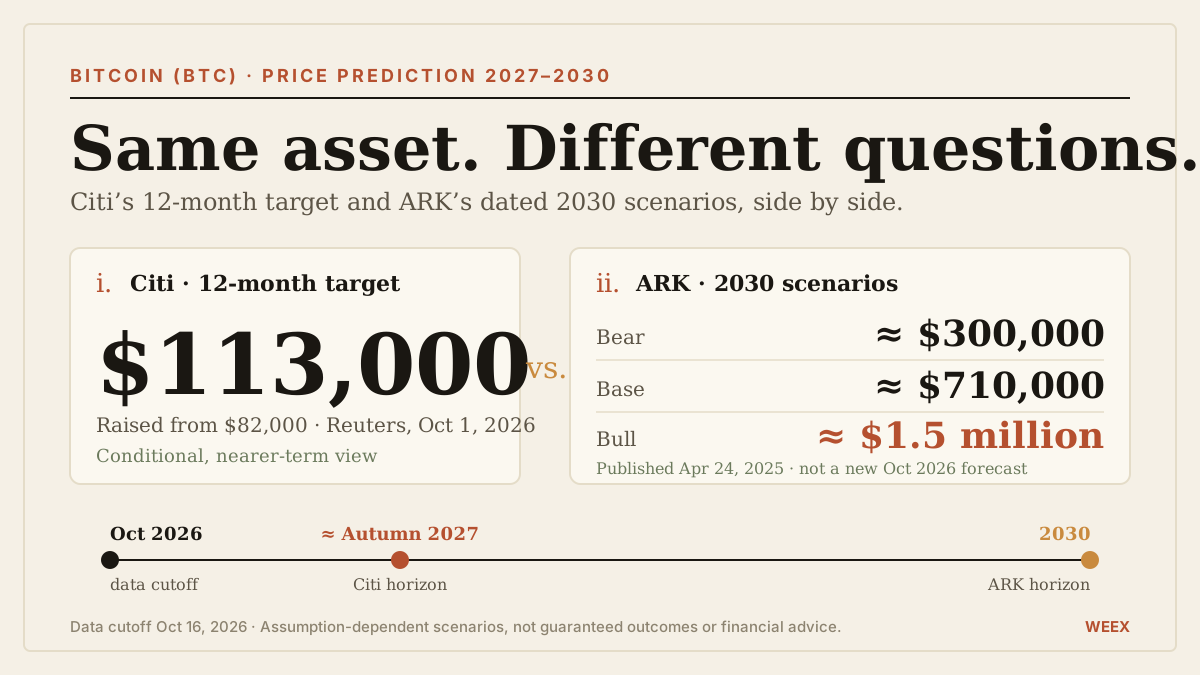
Bitcoin (BTC) Price Prediction 2027–2030: Citi’s $113,000 Target vs. Cathie Wood’s ARK Scenarios
Bitcoin price prediction for 2027–2030: compare Citi’s $113,000 target with ARK’s dated scenarios, demand assumptions, valuation math and key risks.

XRP (XRP) Price Prediction: Can BarriC’s $750 Target Pass the Market-Cap Test?
XRP price prediction: examine BarriC’s $750 target, market-cap math, next-bull-run scenarios, token demand and what could support a recovery to $5.
Russia Used ChatGPT for Operations in Argentina and Bolivia
Inside CZ's Haven: Exploring the Life Behind the Most Powerful Figure in Crypto
The 'Roller Effect' of AI and the 'Workshopization' of Software as a Prelude to the Internet of Intelligent Agents
What Are Other Chains Doing Amidst the Hype of Robinhood?
Some establishments are likely to be closed
MARVIN Mars Dog Announces 40% Token Buyback and Burn Plan


