
What Is Leverage Trading in Crypto? A Beginner’s Guide With Simple Examples

 Prefer us on Google


Leverage trading in crypto means using a small amount of your own money, called margin, to open a position worth several times more. With 1,000 USDT of margin and 5x leverage, a trader controls a 5,000 USDT position, and every gain or loss is calculated on the larger amount.
People who ask what is leverage trading crypto usually want one thing made clear: leverage does not create extra profit, it multiplies the result of a price move in both directions. A small move in the right direction can produce a large return on the margin, and a small move in the wrong direction can remove most of it. Leverage trading in crypto therefore works best as a tool that traders understand fully before they use it, not as a shortcut to bigger returns.
What Does Leverage Mean in Crypto Trading?
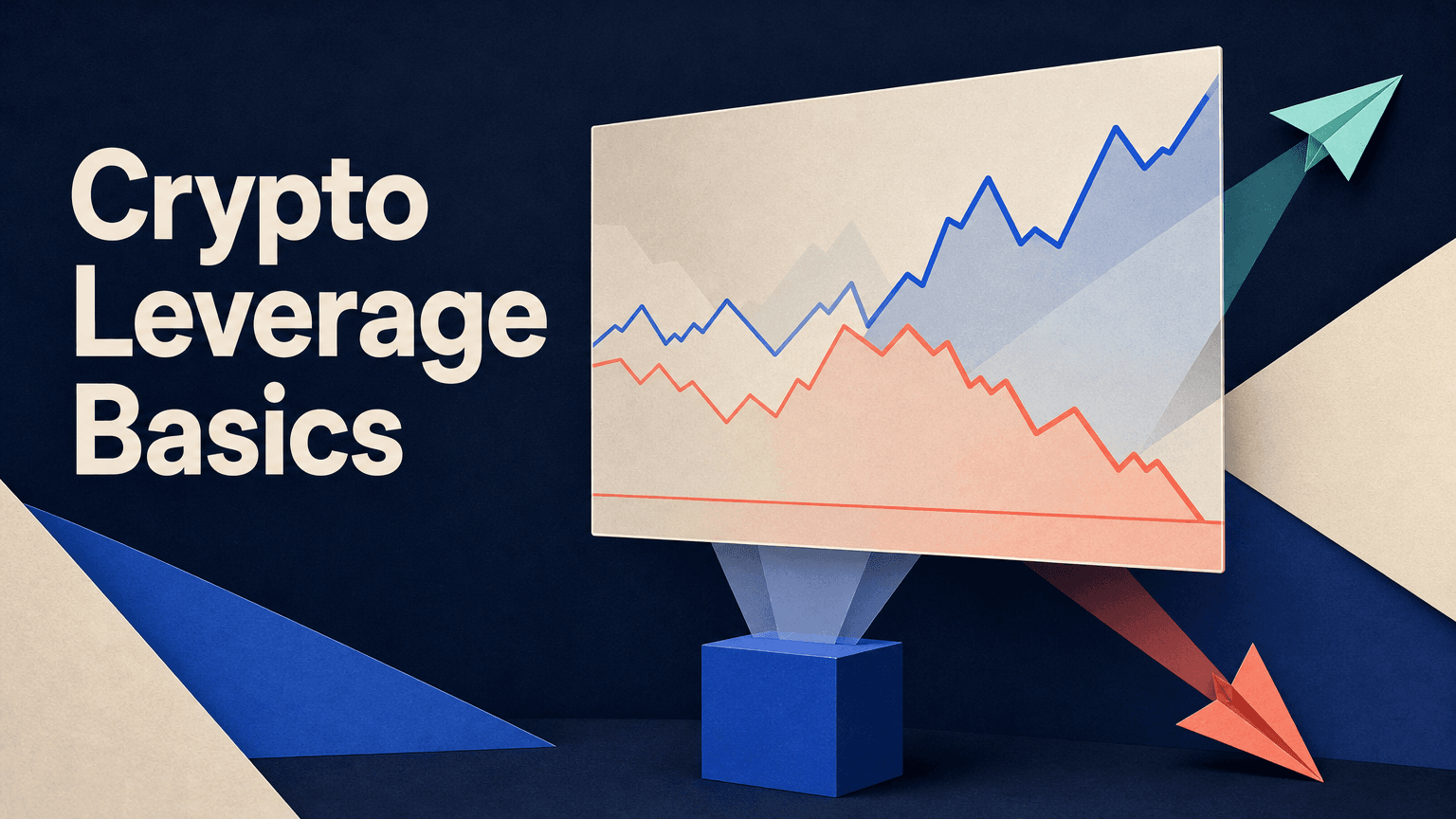
Leverage in crypto trading is a ratio that shows how large a position is compared with the margin behind it, so 5x means the position is five times the margin. A trader who buys 1,000 USDT of a coin in the spot market owns that coin, and a 4% price rise gives a gain of 40 USDT. A trader who puts the same 1,000 USDT up as margin at 5x controls a 5,000 USDT position, and the same 4% rise gives a gain of 200 USDT, which is 20% of the margin, by the author’s arithmetic and before fees.
The difference is that the leveraged trader does not necessarily own the coin. Most leveraged crypto trading is done through derivative contracts such as perpetual futures, where the trader holds a contract that follows the asset’s price. This gives exposure to price moves without buying or storing the coins, and it also allows profit from falling prices. Leverage is usually shown as a multiple such as 3x, 5x or 10x, and a higher number means a smaller price move is needed to wipe out the margin.
How Does Leverage Trading in Crypto Work Step by Step?
Leverage trading in crypto works by depositing margin, choosing a leverage level, opening a position in a chosen direction and closing it later at a profit or a loss. The first step is to put funds into a futures or margin account. The trader then selects a contract, sets the leverage, chooses a position size and decides whether to bet on a rise, called going long, or on a fall, called going short. The platform shows the margin required, the entry price and a liquidation price, which is the level at which the position would be closed automatically.
Once the position is open, its value changes with the market. Gains and losses are recorded as unrealized until the trader closes the position, and the account balance moves up or down in the meantime. Traders usually also add a stop-loss, an order that closes the position at a chosen price to limit the loss, and sometimes a take-profit order to close it at a target. Costs run alongside the trade, including trading fees when a position is opened and closed and, on perpetual contracts, funding payments exchanged between long and short traders at regular intervals. A position that is left open for days can therefore cost money even if the price barely moves.
What Is the Difference Between Going Long and Going Short With Leverage?
Going long means opening a position that profits when the price rises, while going short means opening one that profits when the price falls. In the earlier example, a long position of 5,000 USDT gains about 200 USDT if the price rises 4% and loses about 200 USDT if it falls 4%. A short position of the same size does the opposite, gaining about 200 USDT if the price falls 4% and losing about 200 USDT if it rises 4%. Both are measured against the same 1,000 USDT margin, so the swings are the same size in each direction.
The ability to go short is one reason traders use leverage products, since it lets them hedge existing holdings or express a view that a price will fall. It also means a trader can lose money when a market rises, which surprises some beginners. Shorting carries a particular risk because a price can rise much further than it can fall, and a short position can be liquidated by a sharp rally. Choosing a direction is only one part of the decision, and position size and the liquidation level matter just as much.
-- Price
What Is Liquidation, and Why Does It Matter for Beginners?
Liquidation is the automatic closing of a leveraged position when the margin can no longer cover the losses, and it matters because the trader can lose the entire margin. In the 5x example, a fall of about 20% against a long position would erase the 1,000 USDT margin, and the platform would close the position slightly before that point to protect itself, since it requires a small minimum level of margin called the maintenance margin. The exact liquidation price depends on the platform’s rules, fees and the margin mode used, so it should always be checked on the order screen before confirming a trade.
Higher leverage brings the liquidation price closer to the entry price. At 10x, a fall of roughly 10% against a long position is enough to approach liquidation, and at 20x the figure is about 5%, which is within a normal day’s movement for many crypto assets. For that reason, many beginners are advised to use low leverage or none at all while they learn. Crypto markets trade around the clock and can move sharply without warning, so a position can be liquidated while the trader is asleep or away from the screen.
What Are the Risks of Leverage Trading in Crypto, and How Do Beginners Manage Them?
The main risks of leverage trading in crypto are fast losses, forced liquidation, trading costs that add up and the temptation to increase size after a loss. Because losses are multiplied, a trade that looks small can end with the whole margin gone, and in extreme market conditions some platforms may close positions at worse prices than expected. Fees, funding and slippage, which is the gap between the expected and the actual fill price, reduce results even when the direction is right. Emotional decisions are another common problem, such as adding margin to a losing position in the hope that it recovers.
Beginners commonly manage these risks by using small position sizes, choosing low leverage, placing a stop-loss before opening a position and keeping spare funds outside the trade. They also read the platform’s contract rules, practice on a demo account where one is offered and avoid risking money they cannot afford to lose. None of these steps removes the risk, and a well-planned trade can still lose. Anyone who is unsure can stay with spot trading, which has no liquidation, until they are comfortable with how leveraged products behave.
Conclusion
Leverage trading in crypto lets a trader open a position larger than the margin posted, which multiplies gains and losses and brings a liquidation price into play. Going long profits from rising prices, going short from falling ones, and higher leverage leaves less room before a position is closed.
Readers who are new to the topic can work through the examples with their own numbers, start with low leverage or none, and read each platform’s rules on margin, fees and liquidation before trading. Leveraged trading is high risk, and the details above can differ between platforms.
FAQ
1. What is leverage trading in crypto?
Leverage trading in crypto means using margin to open a position larger than your own capital. It multiplies both gains and losses.
2. How does leverage trading in crypto work?
A trader posts margin, chooses a leverage level and opens a long or short position. Leverage trading in crypto closes the position automatically if the margin can no longer cover the losses.
3. What does 5x leverage mean in crypto?
5x leverage means the position is five times the margin, so 1,000 USDT of margin controls a 5,000 USDT position. A 4% price move changes the position’s value by about 200 USDT.
4. Can you lose more than you invest in leverage trading in crypto?
In most cases the loss is limited to the margin, but rules differ by platform and product, and fees can add to the cost. Check the platform’s terms before trading.
5. Is leverage trading in crypto good for beginners?
Leverage trading in crypto carries a high risk of fast losses, so beginners often start with small sizes, low leverage or spot trading while they learn.
This content is provided for general informational purposes only and doesn't constitute financial, investment, legal, or tax advice. Any events, rewards, online promotions, or related information mentioned herein should not be considered a recommendation, solicitation, or invitation to purchase, sell, trade, or otherwise deal in any crypto assets. Crypto assets are highly volatile and may result in loss. The availability of WEEX services, products, and related events may vary by region. You are responsible for ensuring that your participation is in accordance with applicable local laws and regulations.
You may also like
Fake Crypto Payments: What to Check Before Handing Over Goods

What Is Blockchain Interoperability? How Cross-Chain Bridges and Messaging Work
Best Crypto Trading Strategies for Beginners: What to Know Before You Trade
WEEX Broker Models: Strategy Bots, Copy Trading and Sub-Exchanges

What Is Orca (ORCA) Crypto? The Solana DEX, USDY Liquidity, and the ORCA Name Confusion
What Is a Decentralized Crypto Exchange (DEX)? How It Works, Costs, Risks, and When to Use One
How to Day Trade Crypto for Beginners: Fees, Hours, Risk Math

Self-Custody Wallets: When a Crypto Transfer Must Be Reported to Brazil's Coaf
WEEX Grid Trading: When a Grid Strategy Works and When It Fails
Ethereum Futures Trading: How to Size ETH Positions and Read PnL

What Is a White Label Crypto Exchange? A Complete Beginner's Guide
Is Hyperliquid Safe? Risks You Should Know Before You Trade

What a Blockchain Explorer Can and Cannot Tell You
How to Look Up a Wallet Address and Transaction History
How to Verify a Crypto Transaction With a Blockchain Explorer?
BTC Futures Trading on WEEX: Claim BTC Rewards Before Sep 25
What Is a Funding Rate? How Perpetual Futures Charge Longs and Shorts
Perpetual Futures for Beginners: Margin, Funding and Liquidation Explained
What the LUSD Attack Shows About DeFi Risk
What Is BONK? WEEX Spot and 1000BONK Futures Status and Risk Checks
What Is BRETT? WEEX Spot and Futures Status and Risk Checks
What Is FLOKI? WEEX Spot and 1000FLOKI Futures Status and Risk Checks
What Is WIF (dogwifhat)? WEEX Spot and Futures Status and Risk Checks

Who Is Attending TOKEN2049 Singapore 2026? Top Speakers, Exchanges and Exhibitors to Watch
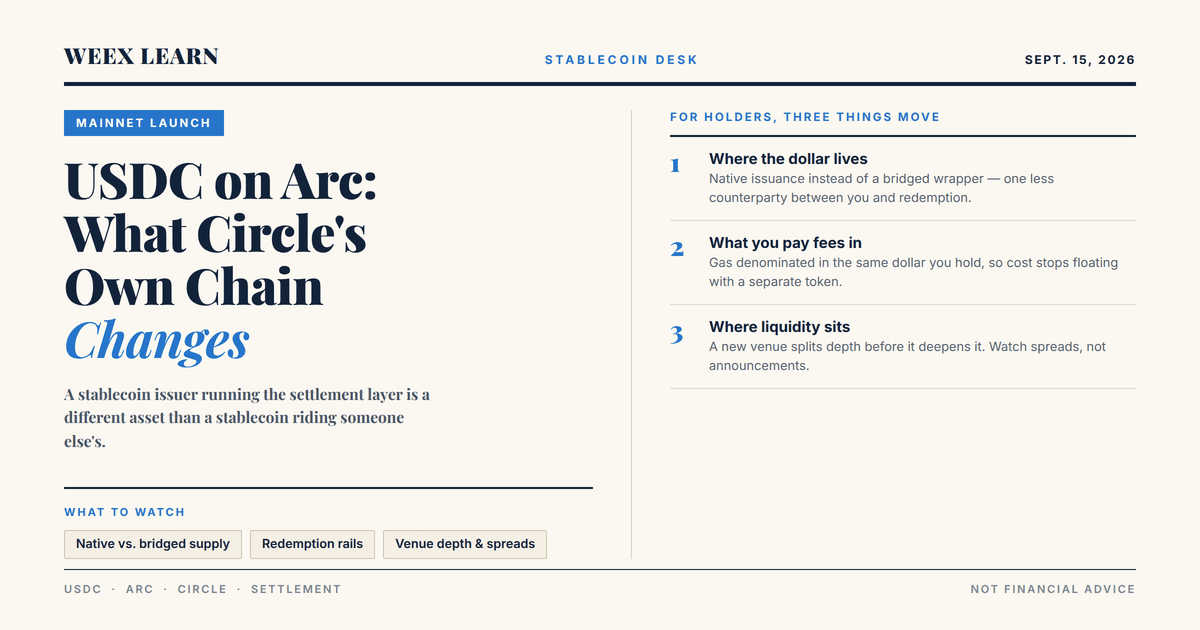
USDC on Arc: What Circle's Mainnet Launch Changes for Holders
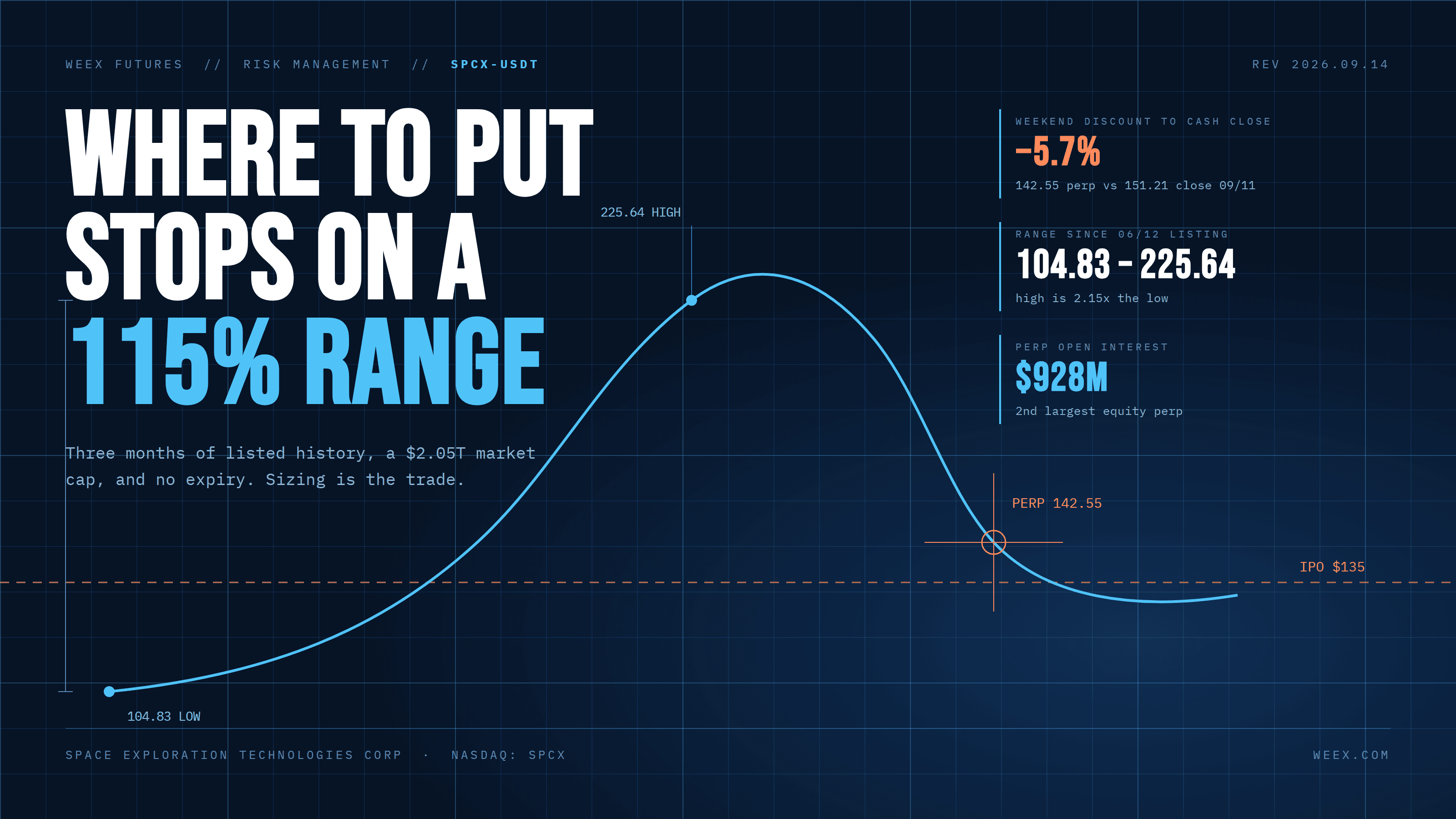
SpaceX Stock Futures: Where to Put Stops on a 115% Range
How to Trade Microsoft (MSFT) Stock Token with USDT on WEEX
How to Trade Apple (AAPL) Stock Token with USDT on WEEX
Crypto Futures Trading Explained: Leverage, Funding, Liquidation
Crypto Futures Trading: Leverage, Funding and Apple Perps
Fake Crypto Payments: What to Check Before Handing Over Goods
What Is Blockchain Interoperability? How Cross-Chain Bridges and Messaging Work
Best Crypto Trading Strategies for Beginners: What to Know Before You Trade
WEEX Broker Models: Strategy Bots, Copy Trading and Sub-Exchanges
What Is Orca (ORCA) Crypto? The Solana DEX, USDY Liquidity, and the ORCA Name Confusion
What Is a Decentralized Crypto Exchange (DEX)? How It Works, Costs, Risks, and When to Use One





