
ETH Funding Rate Today: 0.0087% per 8h as Ether Longs Re-Lever

 Prefer us on Google

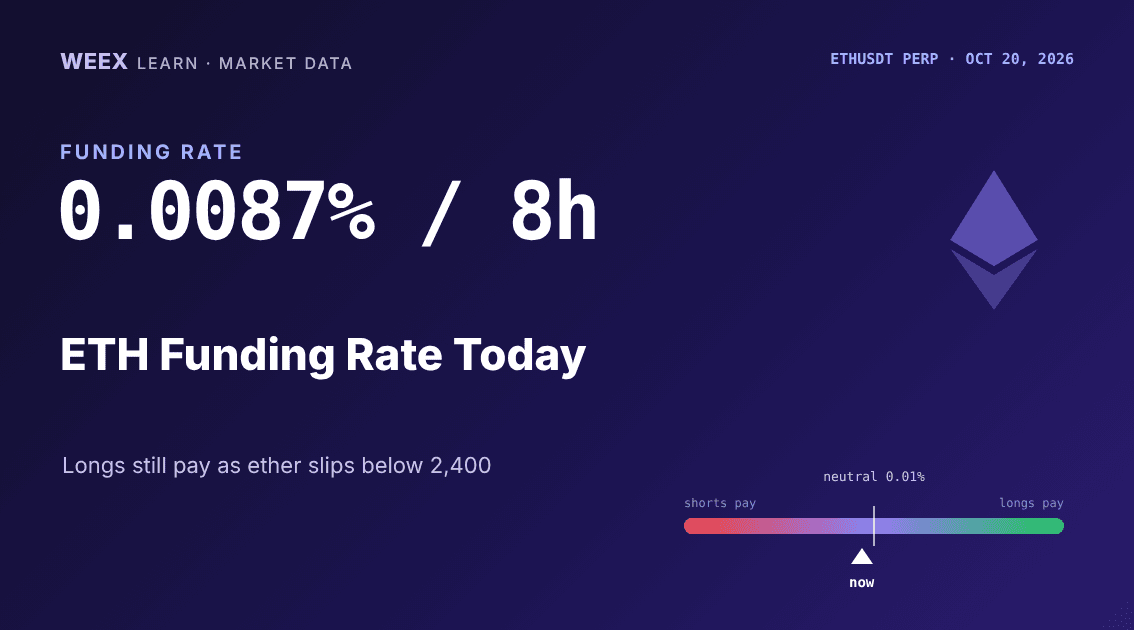
The ETH funding rate today is positive but modest. On the WEEX ETHUSDT perpetual it read 0.008738% per 8-hour interval on Oct. 20, 2026, with ether at 2,393.76 USDT. That works out to roughly 9.6% a year and sits just under the 0.01% "neutral" baseline most exchanges default to. Longs are paying shorts, but they are not paying much. This piece covers how that figure compares across venues, what it costs on a real position and what it says about ether right now.
The context is what makes the number interesting. Ether fell 0.95% over the 24 hours to Oct. 20 on WEEX, trading between 2,370.99 and 2,446.03, and Yahoo Finance data on Oct. 19 had it about 5% lower than a week earlier. U.S. spot ether ETFs have bled money for most of October. In a market like that you would expect leveraged longs to be heading for the exits and funding to sag toward zero. That is roughly what happened on Oct. 9. It is not what is happening now.
Below you will find a venue-by-venue snapshot, the math that turns a per-interval rate into an annual and a dollar cost, a reading of what the current level signals, and the steps to check the live figure on WEEX yourself. If you need the mechanics of who pays whom and how the rate is built, our crypto funding rate explainer covers that ground in full.
ETH Funding Rate Today Across Major Venues
The WEEX print does not stand alone. Here is how ETH funding looked elsewhere, with every rate normalized to an 8-hour interval so the numbers are comparable:
- WEEX (ETHUSDT): 0.008738% per 8h, read on Oct. 20, 2026.
- Binance (ETHUSDT): 0.0056% per 8h, the largest ETH perp by open interest at about $5.50 billion, per Sharpe's live aggregator checked Oct. 20.
- OKX (ETH-USDT-SWAP): 0.0075% on Sharpe on Oct. 20, and 0.0089% in DefiRate's capture at 1:13 a.m. ET on Oct. 19.
- Bybit (ETHUSDT): 0.0033% per 8h on Sharpe, Oct. 20.
- Bitget and KuCoin: both pinned at the 0.0100% baseline on Sharpe, Oct. 20.
- Hyperliquid (ETH-USD): 0.0013% per hour, equal to about 0.0100% per 8h.
- Cross-venue average: Sharpe showed a simple 8h average of 0.0077% across 37 venues on Oct. 20; DefiRate's open-interest-weighted figure on Oct. 19 was 0.0092% per 8h, or about 10.1% a year.
Two things stand out. First, every major venue is positive. Nobody is paying shorts to stay short, which is the signature of a market that still leans long. Second, the spread is wide, from 0.0033% on Bybit to the full 0.01% on several mid-sized venues. That gap usually reflects where the marginal leveraged buyer is parking positions, not a mistake in anyone's feed. WEEX sits in the upper half of the range.
Mind the interval when you compare. Some venues, Hyperliquid among them, settle every hour, so their raw rates look tiny. Hyperliquid's 0.0013% per hour is not cheaper than WEEX's 0.008738% per 8 hours; multiplied by eight it is slightly more expensive.
Per-Interval vs Annualized: Turning 0.008738% Into Real Numbers
Funding is quoted per settlement, and ETHUSDT on WEEX settles every 8 hours, so three times a day. Annualizing is simple multiplication:
0.008738% × 3 settlements × 365 days = 9.568%, or about 9.57% a year.
The 0.01% baseline annualizes to 10.95%. So today's ETH funding rate runs at about 87% of neutral. Annualized figures are useful for one comparison only: weighing the carry against alternatives such as stablecoin yield or a dated futures basis. They are not a forecast, because the rate resets at every settlement and can flip sign within a day.
The more practical number is dollars. Take a 10,000 USDT ETH long, which at 2,393.76 is about 4.18 ETH, and assume the rate and mark price hold steady:
- Per settlement: 10,000 × 0.008738% = 0.87 USDT
- One day (3 settlements): 2.62 USDT
- One week (21 settlements): 18.35 USDT
- 30 days (90 settlements): about 78.64 USDT
Funding is charged on notional, not on margin, so leverage changes how much it hurts rather than how much you pay. At 10x, that 10,000 USDT position is backed by 1,000 USDT of margin, and a week of funding eats 1.8% of it. At 2x, with 5,000 USDT posted, the same 18.35 USDT is 0.37%. The leverage ratio guide walks through why the same position feels so different at each ratio.
Put the funding next to trading fees and the picture sharpens. WEEX's VIP0 taker fee is 0.08%, per its fee schedule, so a market entry and exit on 10,000 USDT costs about 16 USDT. That is six days of funding at today's rate. For an intraday ETH trade, execution costs dominate. Funding only becomes the main expense when you hold for weeks or when the rate spikes.
What This ETH Funding Reading Signals Now
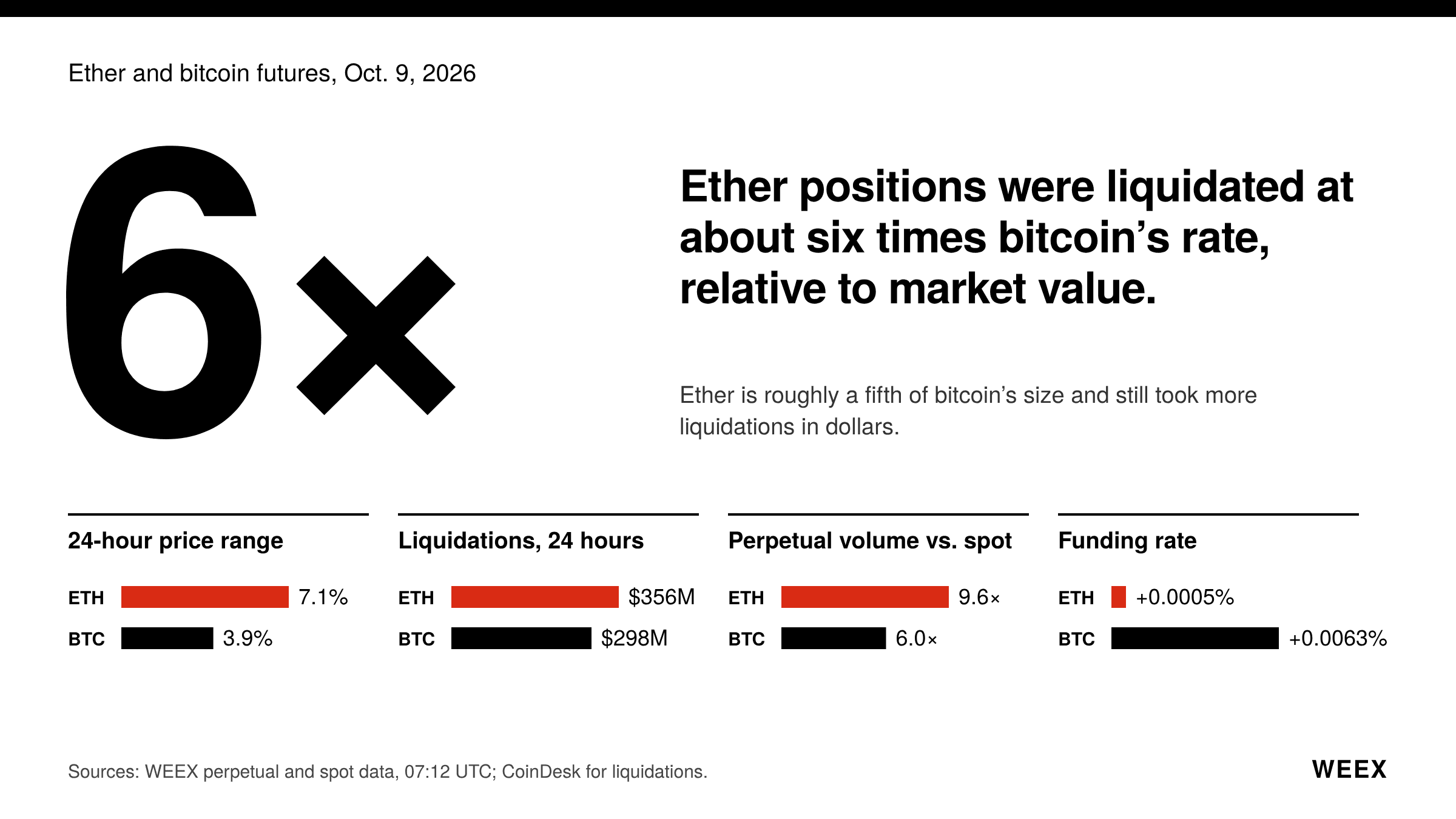
The interesting part is the direction, not the level. On Oct. 9, as ether slid through 2,500 and roughly $356 million of ETH futures positions were liquidated, funding on ETH was close to zero. Leverage had been flushed. Eleven days later the price is lower, around 2,394 on WEEX, yet funding has climbed back to within a hair of baseline.
DefiRate's Oct. 19 capture shows the same drift on OKX: 9.8% annualized at that moment, against a 7-day average of 4.4% and a 30-day average of 3.6%. Funding has firmed over the past week while the price fell. The plainest reading is that dip buyers are rebuilding leveraged longs into weakness rather than waiting for confirmation.
That is not a bearish signal on its own. At 0.0087% per 8 hours, ETH funding is nowhere near the 0.03% to 0.05% readings that tend to show up before a long squeeze. Nobody is overpaying yet. But it does mean the cushion that existed on Oct. 9 is gone. If ether loses the 2,370 area, those fresh longs become the fuel for the next liquidation leg, as the Oct. 9 ETH futures sell-off showed.
The spot side is not supplying the conviction. Farside data shows U.S. spot ether ETFs posted net outflows in four straight sessions from Oct. 14 to Oct. 19, totaling about $267 million, after a long run of October outflows. Positive perp funding alongside ETF selling suggests the bid is coming from leveraged traders, not from allocators. That is a thinner base of support.
What would change the read:
- Funding pushing past 0.02% per 8h while price stalls: a crowded long, and a reason to cut size.
- Funding turning negative while price holds 2,370: shorts paying to press a level that is not breaking, which is a classic squeeze setup.
- The Fed decision on Oct. 28: a macro event that tends to move funding on every venue at once.
-- Price
How to Check the ETH Funding Rate on WEEX
The rate changes at every settlement, so treat any figure in an article, including this one, as a timestamp. To read it yourself:
- Open the WEEX ETHUSDT perpetual page.
- Find the funding rate field in the contract header, next to the mark price. It shows the current rate for the interval and a countdown to the next settlement.
- Check the sign. A positive number means longs pay shorts at the next settlement; negative means the reverse.
- Multiply by your position's notional to get the dollar charge for that interval. You only pay or receive it if your position is open at the settlement time.
- Watch the countdown before entering. Opening a long a few minutes before a positive settlement means paying a full interval for minutes of exposure.
One habit worth building: note the rate at entry and again at each settlement you hold through. Funding on ETH can move from near zero to baseline in a week, as it just did, and a position you sized for a cheap carry can become an expensive one without a single price tick against you.
FAQ
1. Is 0.008738% a high ETH funding rate?
No. It is slightly below the 0.01% per 8-hour baseline that many exchanges treat as neutral. It annualizes to about 9.57%, compared with 10.95% at baseline. Readings that signal a crowded long trade tend to start around 0.03% per interval and above.
2. How much does ETH funding cost per day on a 10,000 USDT long?
At 0.008738% per 8 hours and three settlements a day, about 2.62 USDT per day, or 18.35 USDT per week, assuming the rate and price stay flat. The cost scales with notional size, not with the margin you post.
3. Why do ETH funding rates differ between exchanges?
Each venue calculates funding from the premium of its own perpetual price over the index, so local order flow drives the number. Settlement intervals also differ: hourly venues quote smaller raw rates, so always normalize to the same interval before comparing.
4. When does ETH funding settle on WEEX?
The ETHUSDT perpetual on WEEX settles funding every 8 hours, three times a day. The exact time remaining until the next settlement is shown as a countdown on the contract page.
This content is provided for general informational purposes only and doesn't constitute financial, investment, legal, or tax advice. Any events, rewards, online promotions, or related information mentioned herein should not be considered a recommendation, solicitation, or invitation to purchase, sell, trade, or otherwise deal in any crypto assets. Crypto assets are highly volatile and may result in loss. The availability of WEEX services, products, and related events may vary by region. You are responsible for ensuring that your participation is in accordance with applicable local laws and regulations.
You may also like
What Is Blockchain and How Does It Work? One Transaction, Traced
Staking APR vs Inflation: How Much of Your Crypto Yield Is Real?
WEEX Convert Fees: What Zero-Fee Conversion Really Costs You
WEEX Convert Quote: How the 8-Second Price Lock Really Works
WEEX Convert Limits: Minimum and Maximum Amounts Explained
How to Check a WEEX Convert Order: History, Rate and Status
Bitcoin Price After Hot CPI: Why BTC Is Pinned Near $82,000
Limit Sell Order: How to Set a Take-Profit Price in Crypto

Best Crypto Podcasts for Beginners: A 4-Week Listening Plan

What Is Plume (PLUME)? Why the RWA Token Stays 93% Below Its High Even After the Layer 2 Rally
ETH Futures: Why Ether Is Falling Faster Than Bitcoin This Week
How to Buy Presale Crypto: Step by Step Guide for Beginners
Ethereum Glamsterdam Hits 200M Gas on Sepolia: What Changes After the Upgrade?

What Is Staking? 4 Myths to Clear Up Before You Stake Crypto
CAP Price Up 23%: Why Short Liquidations Don't Explain the Rally
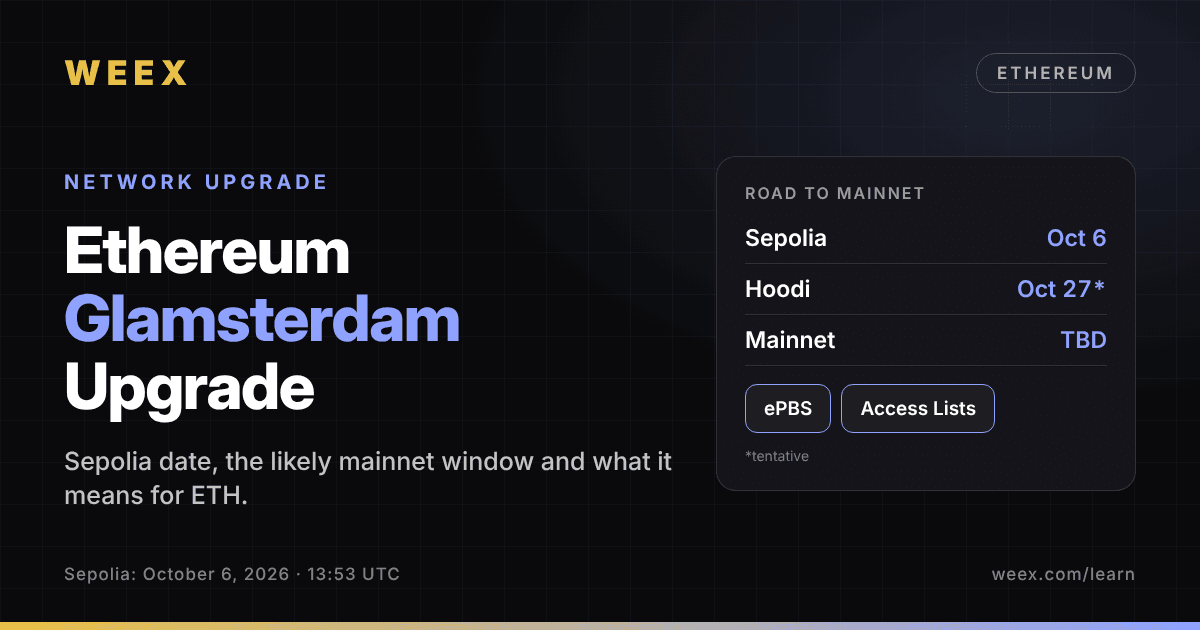
Ethereum Glamsterdam Upgrade: Sepolia Date and ETH Price Impact
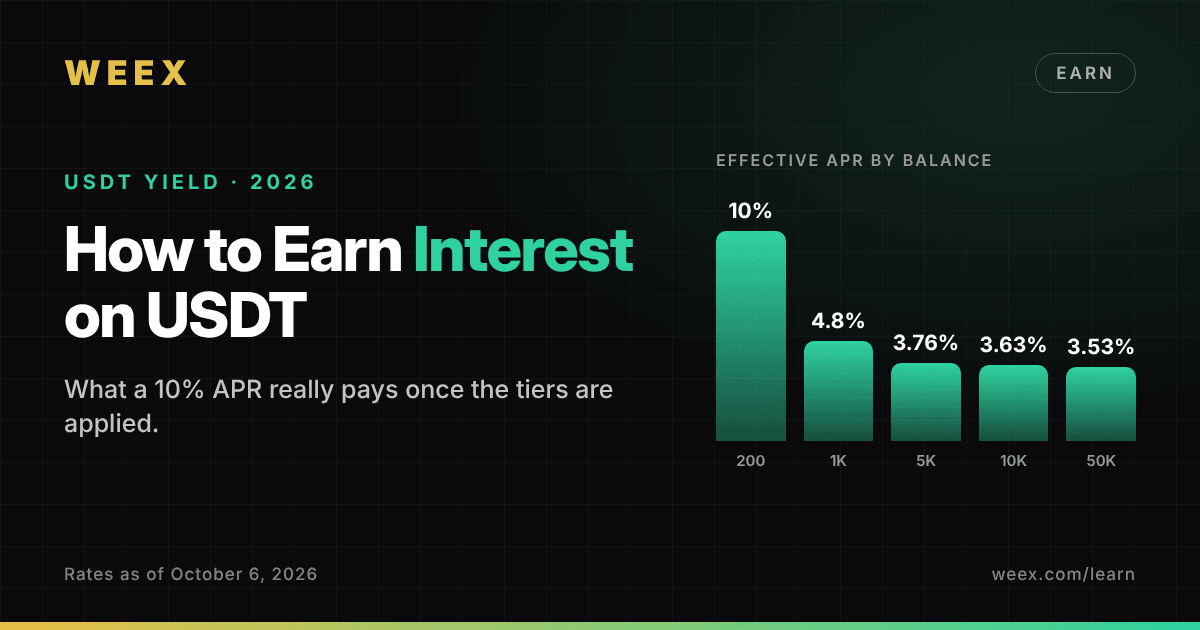
How to Earn Interest on USDT: What a 10% APR Really Pays in 2026
How to Buy Crypto With Apple Pay in 5 Steps: Why Your Bank May Decline the Payment
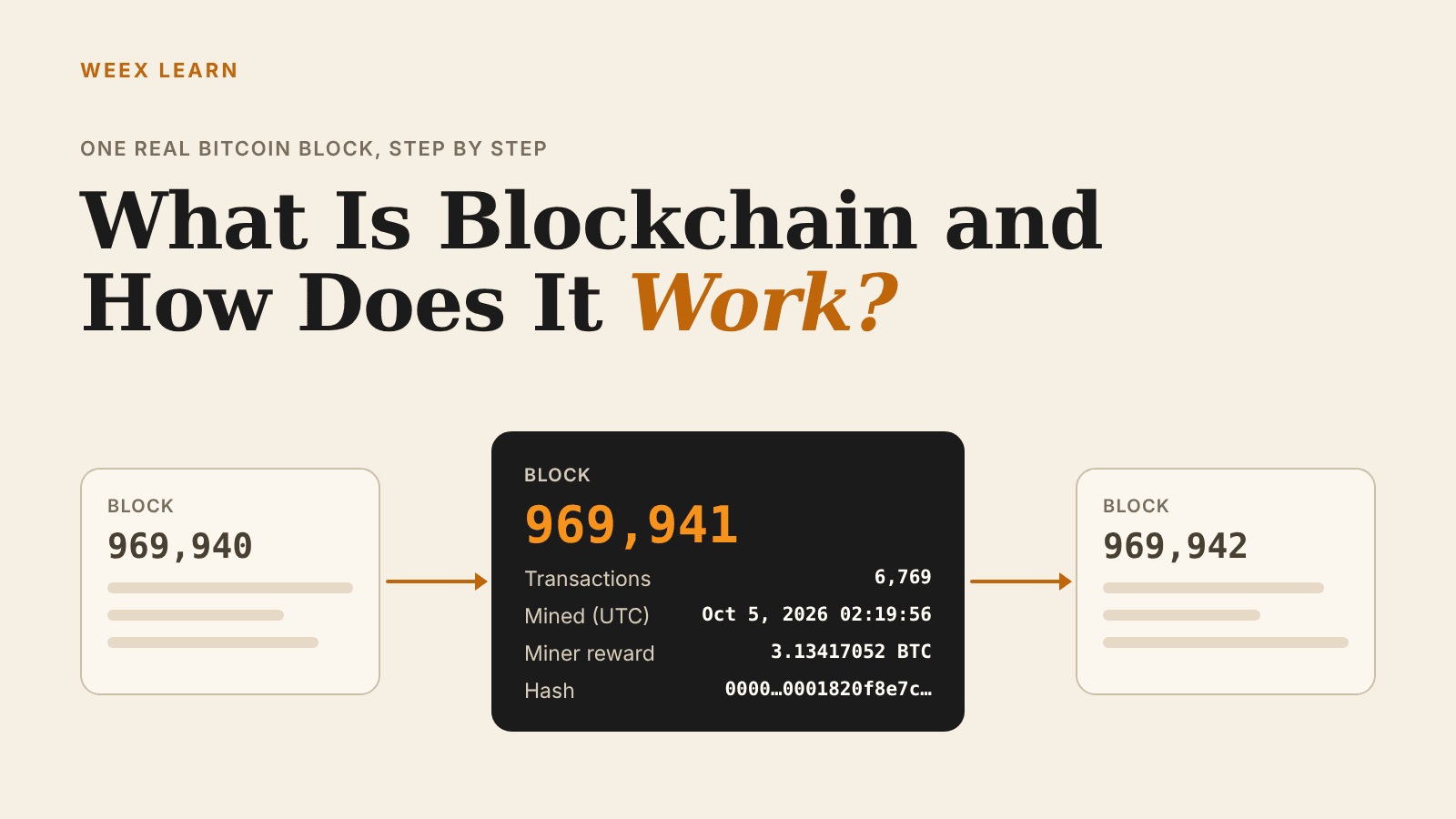
What Is Blockchain and How Does It Work? One Real Block Explained
Ethereum Glamsterdam Upgrade Countdown: Can ETH Price Break Out?
Anonymous Crypto Wallet: What Still Protects Your Privacy in 2026
How Tether Freezes USDT: Address Blacklists and Holder Checks
Bitcoin Futures at $83K: PnL and Position Sizing Into Jobs Week
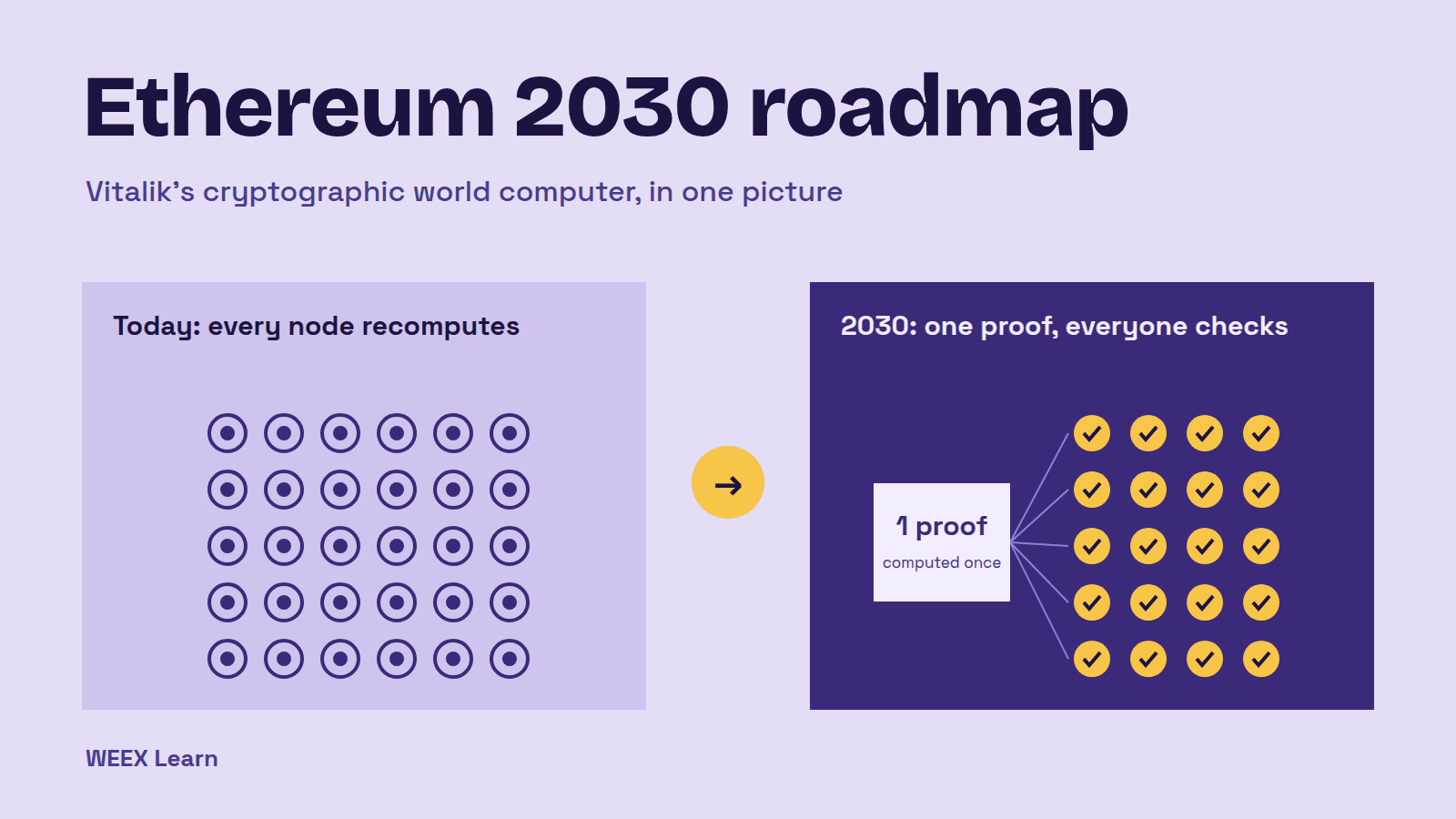
Ethereum 2030 Roadmap: Vitalik's Cryptographic World Computer

Common P2P Crypto Scams and How to Spot Them
How to Choose a P2P Crypto Merchant on WEEX
How to File a WEEX P2P Appeal: Evidence and Video Requirements
Is WEEX P2P Crypto Trading Safe? Risks and Checks Before You Trade
WEEX P2P Order Limits: Minimums, Maximums, and Available Ads
P2P Crypto Trading Fees: Spreads and Payment Costs Explained
What Is Blockchain and How Does It Work? One Transaction, Traced
Staking APR vs Inflation: How Much of Your Crypto Yield Is Real?
WEEX Convert Fees: What Zero-Fee Conversion Really Costs You
WEEX Convert Quote: How the 8-Second Price Lock Really Works
WEEX Convert Limits: Minimum and Maximum Amounts Explained
How to Check a WEEX Convert Order: History, Rate and Status


