
Crypto Leverage Trading Platform: 6 Checks Before You Deposit

 Prefer us on Google

The right crypto leverage trading platform is the one whose rules you can read before a bad day, not the one with the biggest number on its leverage slider. Six checks separate venues more than the headline does: how position tiers shrink your real leverage, how the liquidation engine closes you out, what backs that engine when it fails, what fees plus funding cost over a real holding period, whether reserves are provable, and whether you are legally allowed to use the product at all.
Most "best platform" lists rank exchanges by maximum leverage, coin count and a fee line. That is the marketing layer. The October 10, 2025 crash, when more than $19 billion of crypto leverage was liquidated in roughly a day according to FTI Consulting, showed that the plumbing underneath matters more. Some well-hedged shorts were reduced or closed outright by auto-deleveraging, which turned hedged books into naked ones mid-crash.
This guide walks through each check, explains what to look for in a platform's own documentation, and then runs the list against WEEX using figures read from its site on Oct. 20, 2026. Treat that as a worked example of the method, not a verdict.
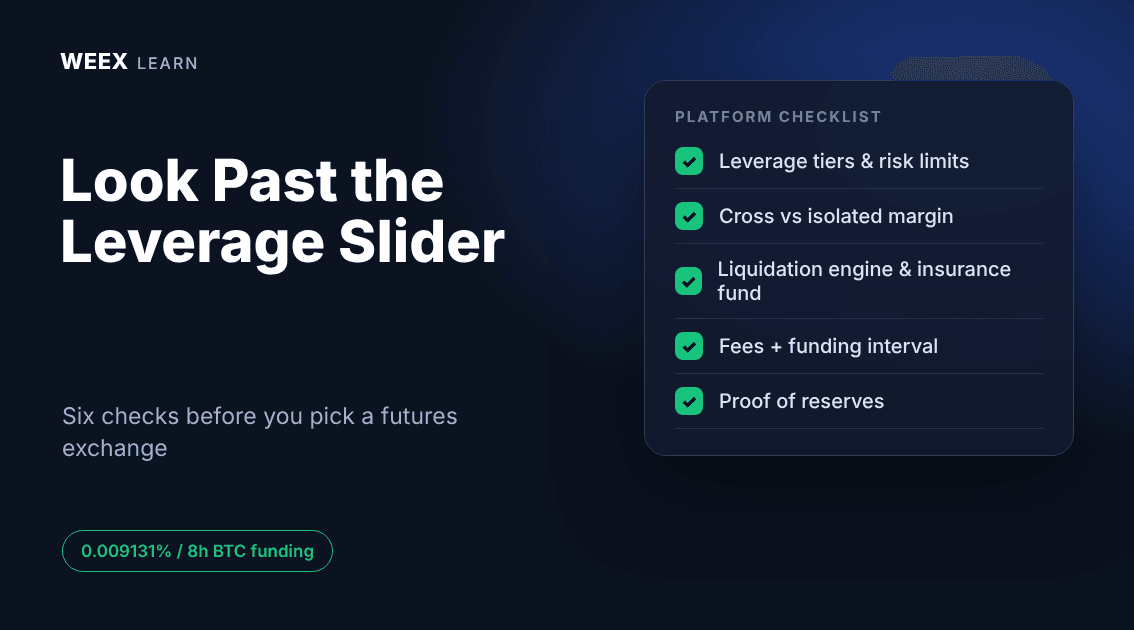
Max Leverage Is a Ceiling Set by Position Tiers
Every serious futures venue uses position tiers, sometimes called risk limits. As your notional position grows, the maintenance margin rate rises and the maximum leverage available falls. A "400x" contract therefore offers 400x only on the smallest band of position size. Size up and the platform quietly lowers the cap.
What to check:
- Is the tier table published per contract? Some venues show it only as an image in the help center or inside the order panel. You want the actual numbers for the pair you trade, not a general explanation.
- How are tiers calculated across margin modes? On WEEX, the help center says tiers are computed separately for each direction in isolated margin, while long and short positions are combined into one tier in cross margin. That detail changes your maintenance requirement if you run hedged positions.
- How often do tiers change? Exchanges adjust tiers on volatile contracts, and a tier cut on an open position can move your liquidation price without you touching anything.
Plan around the tier your position actually falls into, not the advertised maximum.
How the Liquidation Engine Closes You Out
Two platforms with the same leverage can liquidate you very differently. Ask:
- Which price triggers liquidation? Reputable venues use a mark price derived from index prices across several spot markets, not the last traded price on their own book. That protects you from a single thin wick. On Oct. 20, 2026, WEEX's BTCUSDT mark and last price both read 81,598.0 USDT, the normal state; the two diverge most during spikes, which is exactly when the distinction matters.
- Is liquidation staged or all-at-once? WEEX's help center describes a sequence: the risk engine takes over, open orders may be cancelled to free margin, exposure may be reduced in stages (with partial deleveraging via IOC orders where applicable), and only then is any remainder forcibly closed. Staged reduction can leave part of a position alive where a full close would not.
- What absorbs a deficit? When a liquidated position closes at a worse price than its bankruptcy price, someone eats the gap. On most venues that is an insurance or risk reserve fund, which also collects positive remainders from liquidations. WEEX calls its version the risk reserve fund.
- What happens when that fund is not enough? This is auto-deleveraging (ADL): the system reduces profitable positions on the opposite side, ranked by profit and leverage. WEEX documents ADL as triggering when a liquidated position cannot be closed and the risk reserve fund cannot absorb the deficit.
ADL hurts experienced traders most: a short hedging spot holdings can be closed in a crash, leaving the spot leg exposed. Look for an ADL queue indicator in the position panel before you commit. The mechanics of the liquidation price itself are covered in our guide to calculating crypto liquidation price from 5x to 50x.
Fees and Funding: Price the Full Holding Period
A fee schedule shows one side of one trade. Your real cost is the round trip plus funding for every interval you hold. Check the interval too: many centralized venues settle every eight hours, while some decentralized perpetual venues settle hourly, so identical-looking rates can mean very different costs.
Here is the math on WEEX's published numbers as of Oct. 20, 2026, using a $1,000 margin, 10x long on BTCUSDT ($10,000 notional), held for three days:
- Trading fees at VIP0: taker 0.080% to open and close comes to $16. Resting limit orders at the 0.020% maker rate on both sides would cost $4. The full VIP ladder is on the WEEX futures fee schedule.
- Funding: BTCUSDT funding was 0.009131% per 8-hour interval. On $10,000 that is about $0.91 per interval, $2.74 per day, and roughly $8.22 over three days if the rate held. Annualized, the same rate is close to 10%.
- Total: about $24 with taker orders, or roughly 2.4% of the $1,000 margin, before any price move. With maker orders it falls to about $12.
The maker/taker gap matters more than a basis point off the headline fee, so check whether post-only and conditional orders make maker fills practical. Funding also varies and can flip sign; ETHUSDT on WEEX read 0.008738% the same day. Our explainer on who pays the crypto funding rate and what it signals shows how to read it before you hold through settlement.
-- Price
Can You Verify the Platform Holds Customer Funds?
Your margin sits on the exchange, so its solvency is part of your trade. Look for:
- Proof of reserves with a date. A useful page shows reserve ratios per asset (reserves divided by user holdings, with 100% or more meaning full coverage), a snapshot timestamp, and a way to check that your own balance is included, usually through a Merkle tree. A reserves page without a recent snapshot date is a claim, not a proof.
- A separately disclosed backstop fund. This is distinct from the liquidation insurance fund. WEEX's Protection Fund holds a stated 1,000 BTC reserve. Read the coverage terms: WEEX says it covers losses that occur through no fault of the user and excludes trading losses, fraud and transactions the user was tricked into authorizing, with claims due within 30 days. The full terms are on the WEEX Protection Fund page.
- Liabilities, not just assets. Wallet balances say nothing about what is owed.
As a reference point, WEEX's proof-of-reserves page showed a snapshot dated Oct. 1, 2026 (BTC block height 969,359) with reserve ratios of 146.39% for BTC, 124.46% for ETH and 100.02% for USDT. Note the date on any snapshot you check: a ratio is only as current as the block it was taken at, and USDT, the collateral most futures traders actually post, is the line to read most closely.
Is Leverage Trading Legal Where You Live?
In practice this check comes first, because a platform you are not permitted to use offers no protection when something goes wrong.
- United Kingdom: the FCA has banned the sale of crypto derivatives to retail consumers since January 2021. When it opened retail access to crypto ETNs in 2025, it stated that the derivatives ban "will remain in place."
- United States: many offshore derivatives venues list the U.S. among restricted jurisdictions in their terms of use.
- Elsewhere: licensing regimes and leverage caps vary country by country and change often.
Read the restricted-jurisdiction list in the terms of use, not the marketing pages. Reaching an excluded venue through a VPN typically breaches those terms and can end in frozen withdrawals while you hold leveraged positions.
Running the Checklist on WEEX: A Worked Example
Here is how WEEX reads against the six checks on Oct. 20, 2026:
- Leverage and tiers: up to 400x on BTCUSDT and ETHUSDT, default 20x, with tiered maintenance margin; look up the tier for your position size in the contract information.
- Margin modes: cross and isolated on USDT-margined perpetuals.
- Liquidation engine: mark-price trigger, staged reduction, a risk reserve fund, and documented ADL as the final backstop.
- Costs: VIP0 maker 0.020%, taker 0.080%; BTCUSDT funding 0.009131% per 8-hour interval.
- Liquidity: roughly 2.64 billion USDT of 24-hour BTCUSDT volume and about 1.75 billion USDT on ETHUSDT.
- Reserves: a 1,000 BTC Protection Fund with published terms, plus dated proof-of-reserves snapshots (USDT at 100.02% as of Oct. 1, 2026).
- Access: depends on your country; read the terms first.
The real test of any crypto leverage trading platform is how completely it answers these questions in writing. A venue that documents its tiers, liquidation sequence, ADL rules and reserves gives you something to plan around. One that only advertises a maximum number leaves you to discover the rest during a liquidation.
FAQ
1. What is the most important feature of a crypto leverage trading platform?
A transparent liquidation process. Mark-price triggers, a funded insurance fund and documented ADL rules decide what happens to your margin in a fast market.
2. Does higher maximum leverage make a platform better?
No. Position tiers cut available leverage as size grows, and at very high leverage a small move against you reaches the liquidation price. Most traders use a fraction of the advertised maximum.
3. What is auto-deleveraging in crypto futures?
ADL is a last-resort mechanism that reduces profitable positions on the opposite side when a liquidated position cannot be closed and the insurance fund cannot cover the shortfall. It can close a hedge without warning, so check your ADL queue indicator during volatile periods.
4. How often is funding charged on crypto perpetual futures?
Many centralized exchanges, including WEEX, settle every eight hours; some decentralized venues settle hourly. You pay or receive funding only if you hold a position at settlement.
5. Is proof of reserves enough to trust an exchange?
It helps but is not sufficient on its own. Look for a recent snapshot date, per-asset ratios that compare reserves with user liabilities, and a way to verify your own balance is included.
This content is provided for general informational purposes only and doesn't constitute financial, investment, legal, or tax advice. Any events, rewards, online promotions, or related information mentioned herein should not be considered a recommendation, solicitation, or invitation to purchase, sell, trade, or otherwise deal in any crypto assets. Crypto assets are highly volatile and may result in loss. The availability of WEEX services, products, and related events may vary by region. You are responsible for ensuring that your participation is in accordance with applicable local laws and regulations.
You may also like
Crypto Leverage Trading Explained: How Perpetual Futures, Margin and Liquidation Work
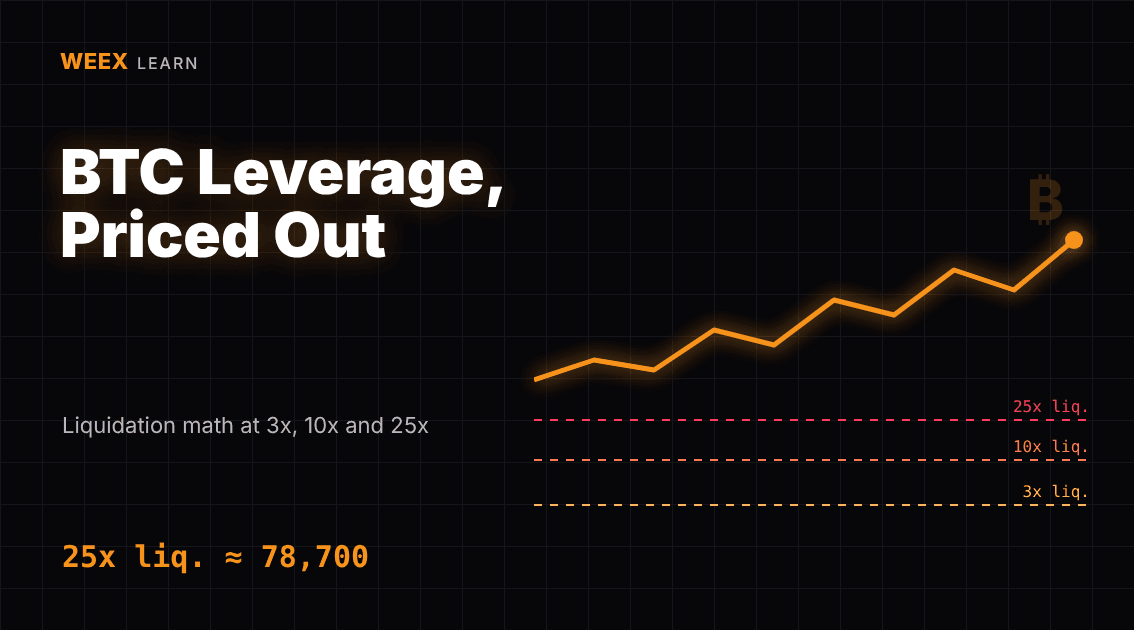
Bitcoin Margin Trading: BTC Liquidation Math at 3x, 10x and 25x
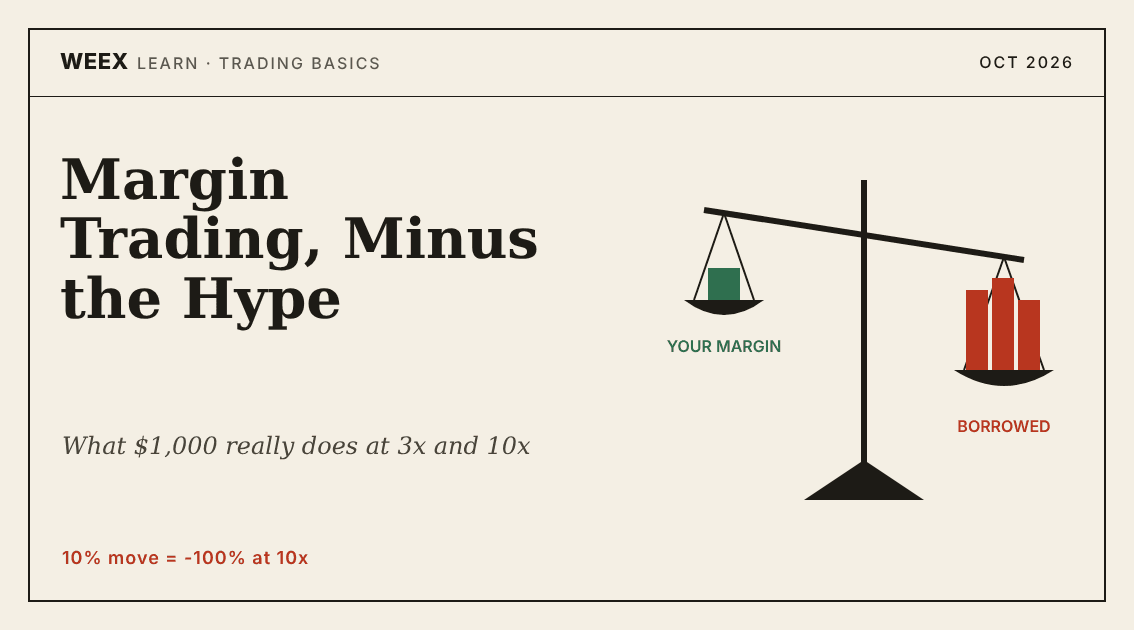
What Is Margin Trading? A $1,000 Example at 3x and 10x Leverage
How to Day Trade Crypto for Beginners: The Math Behind One Trade
Trading Psychology for Beginners: Crypto Traps and Hard Rules
What Is a Bitcoin ETF? How Creation, Custody and Fees Work
What Is Blockchain and How Does It Work? One Transaction, Traced
WEEX Convert Fees: What Zero-Fee Conversion Really Costs You
WEEX Convert Quote: How the 8-Second Price Lock Really Works
WEEX Convert Limits: Minimum and Maximum Amounts Explained
How to Check a WEEX Convert Order: History, Rate and Status
USDC Significant EMT Status in the EU: What Changes on November 12 Under MiCA
Walrus (WAL) Jumps 30%: Sui Storage Token Rallies on AI Data
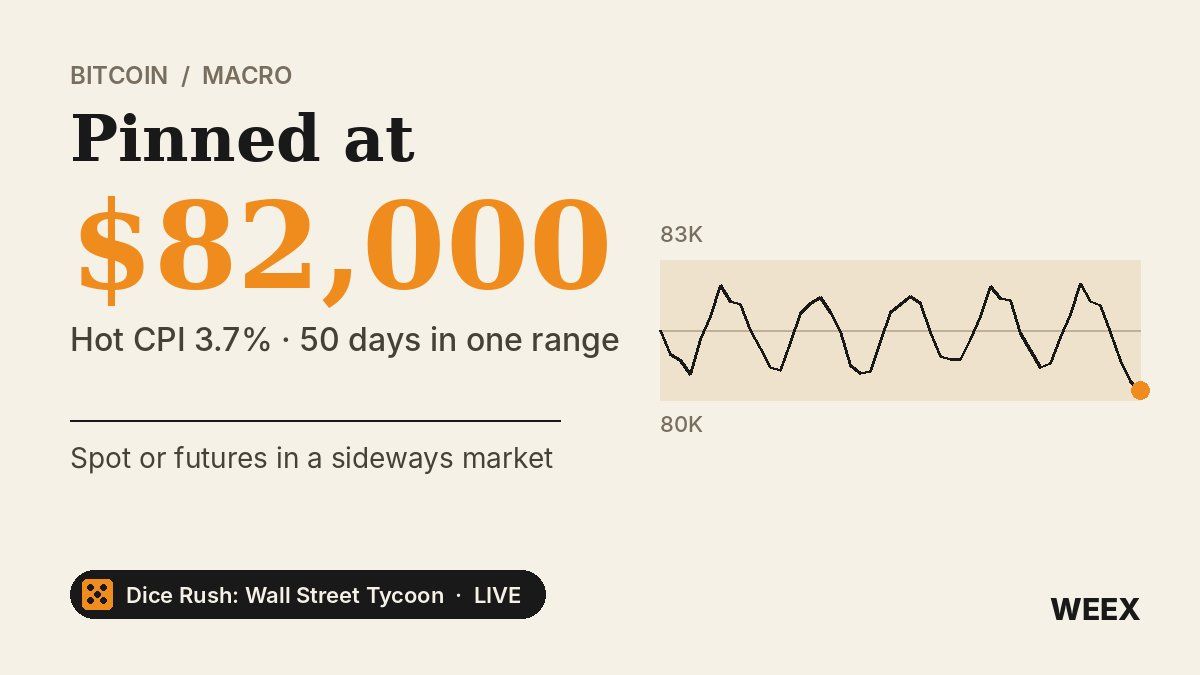
Bitcoin Price After Hot CPI: Why BTC Is Pinned Near $82,000
What Is a Limit Order? How It Works and When to Use It

Best Crypto Miner for Beginners: What to Check on Cost, Power, Hashprice and Profit Before You Buy
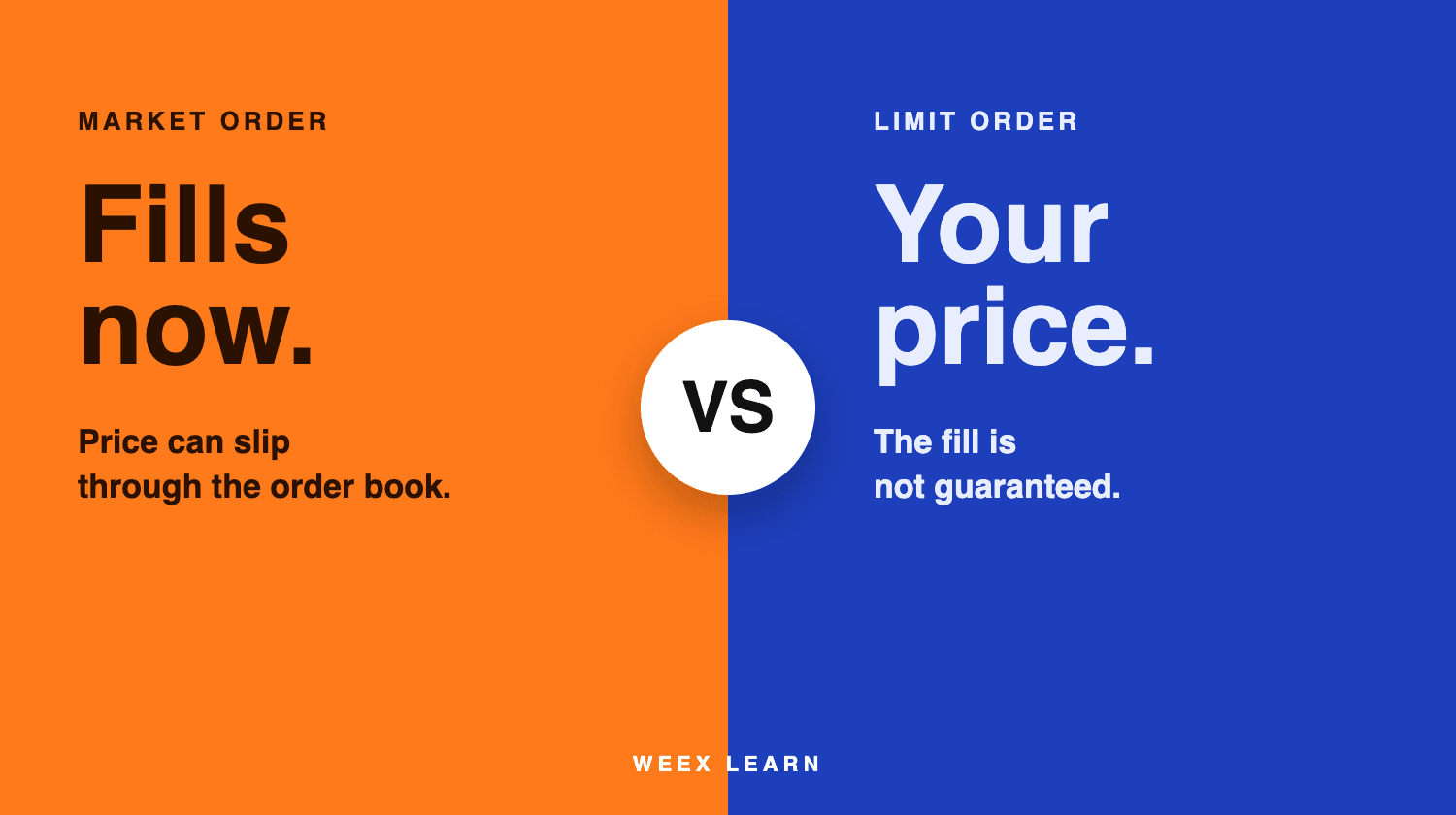
Limit Order vs Market Order: Which One to Use When Trading Crypto
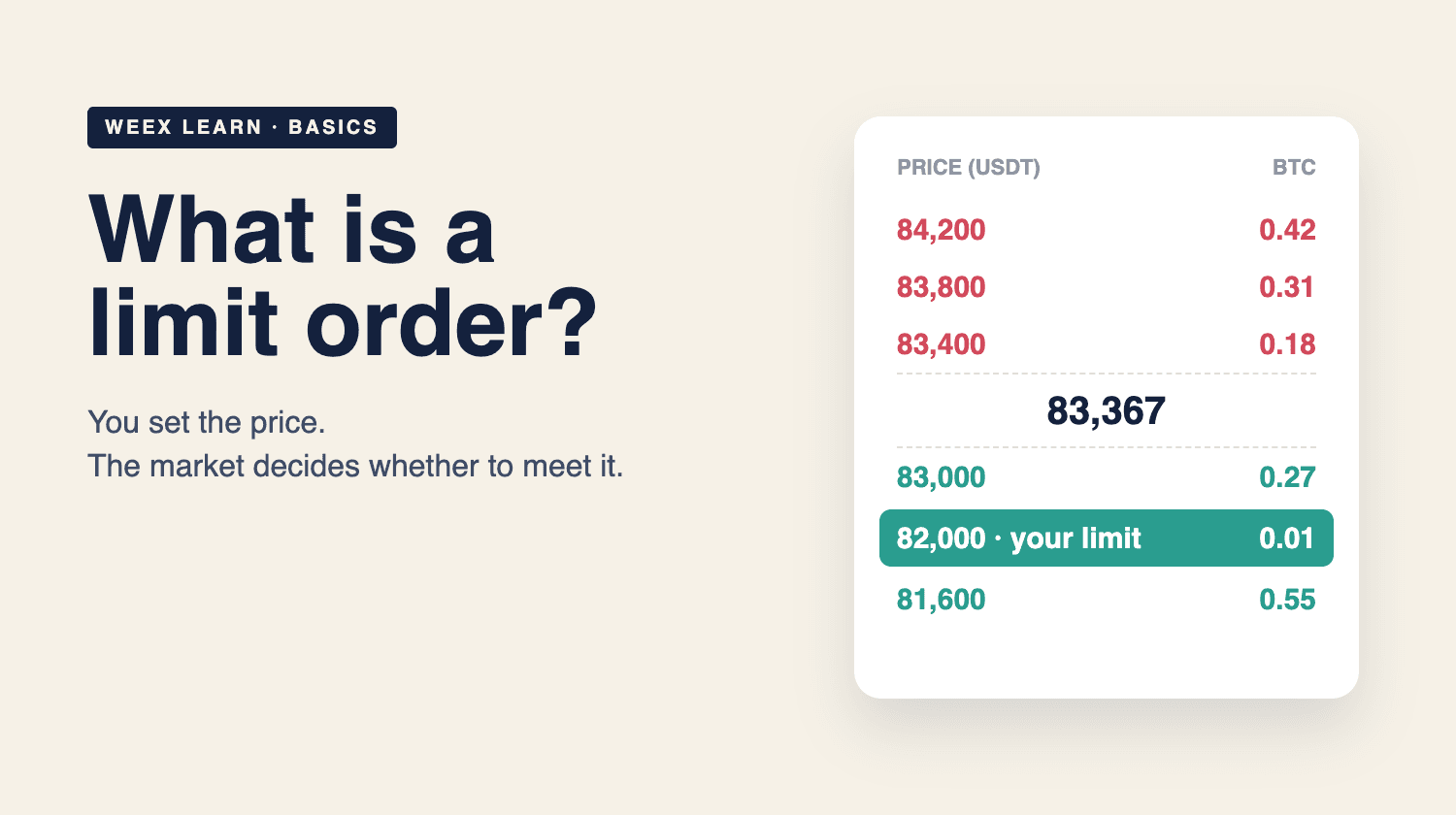
What Is a Limit Order? How It Works in Crypto With BTC Examples
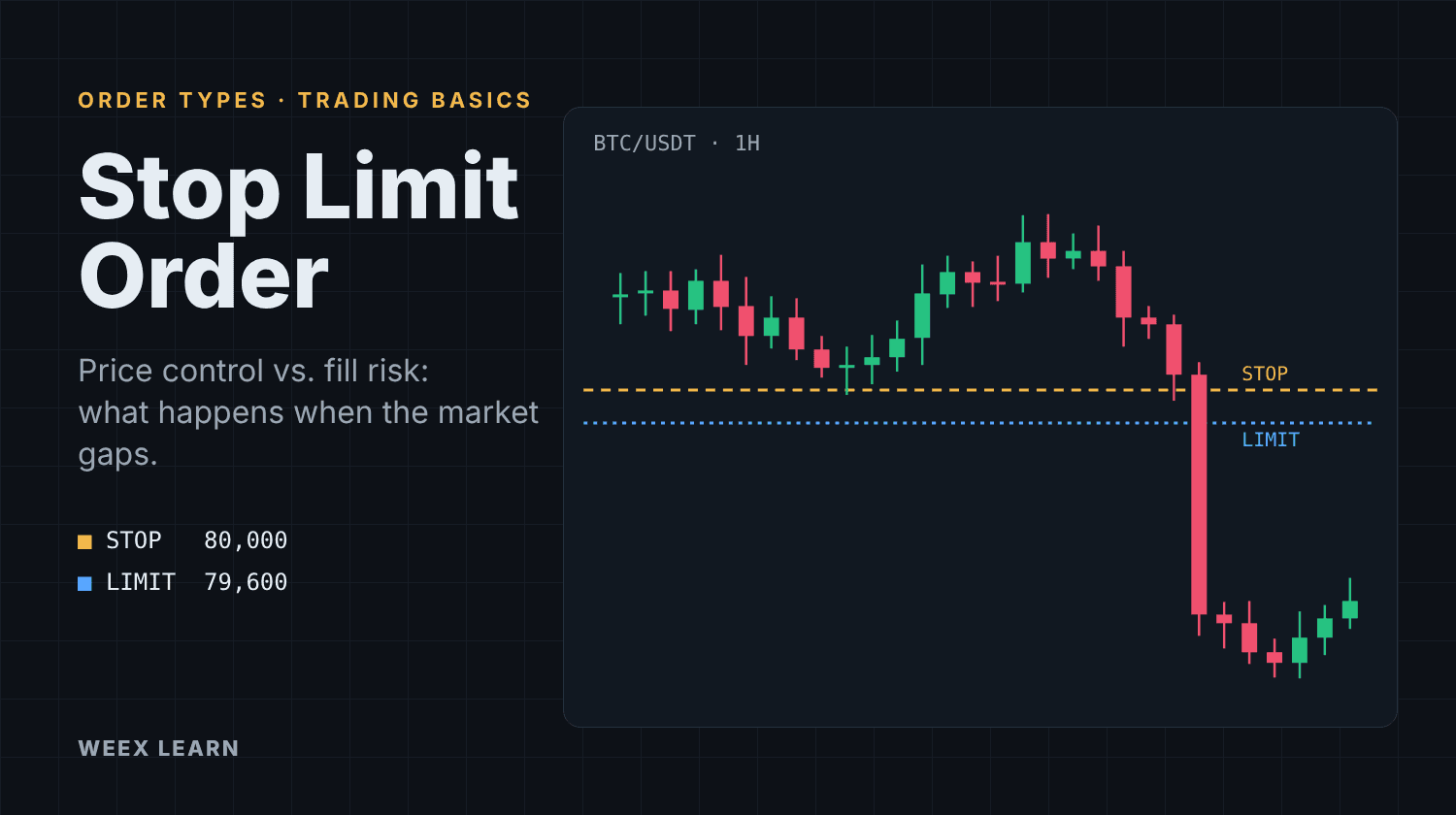
Stop Limit Order: How It Works and Why It Can Fail to Fill
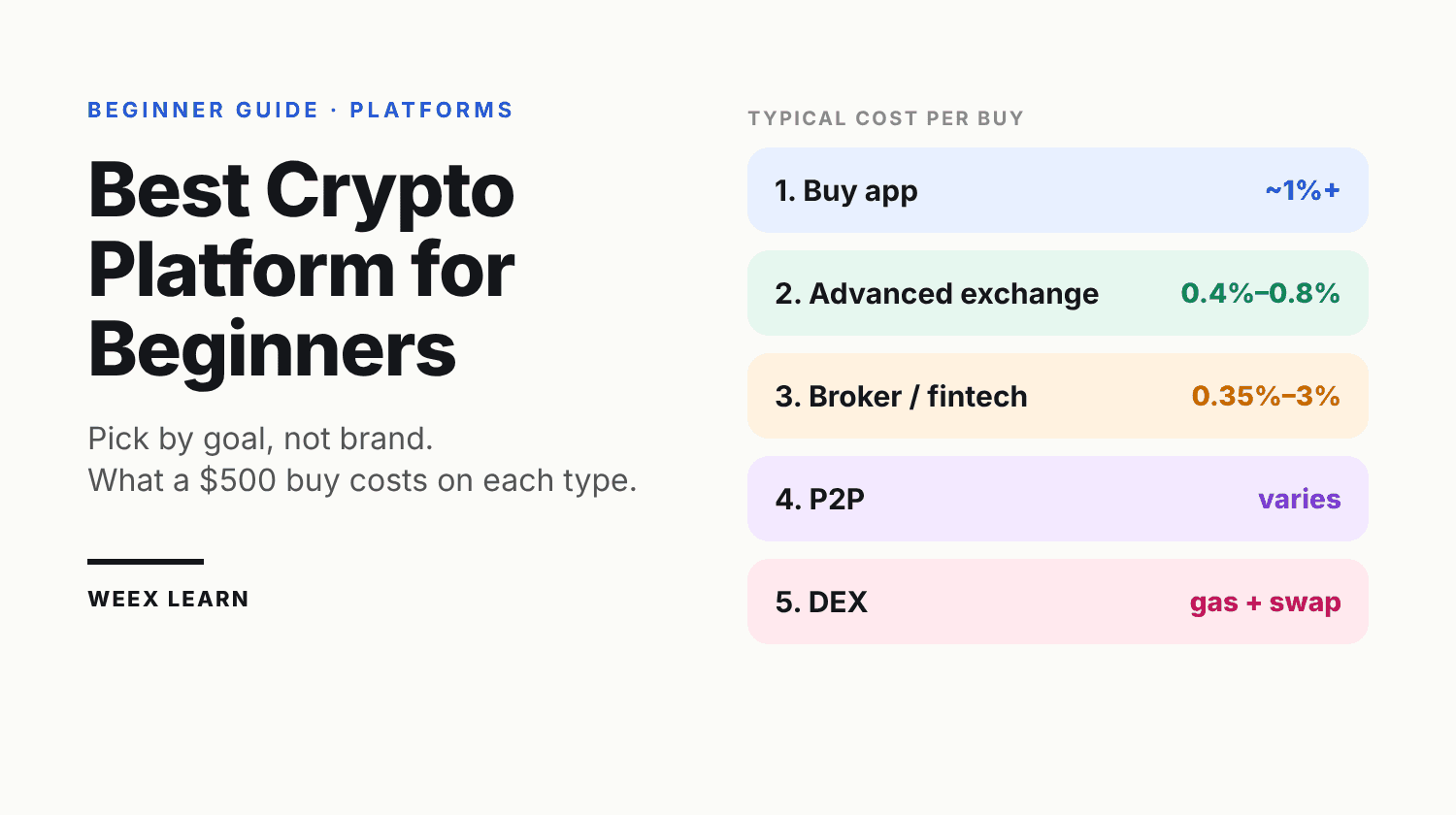
Best Crypto Platform for Beginners: Pick by Goal, Not Brand

Best Crypto Podcasts for Beginners: A 4-Week Listening Plan
How to Buy Crypto Anonymously: 5 Methods, Real Costs and Limits
Will Bitcoin Break $87,000 This Week? CPI, Fed Speakers and ETF Outflows to Watch

Conflux (CFX) Price Jumps on China's National Blockchain Network Plan: Does the Policy Actually Name CFX?
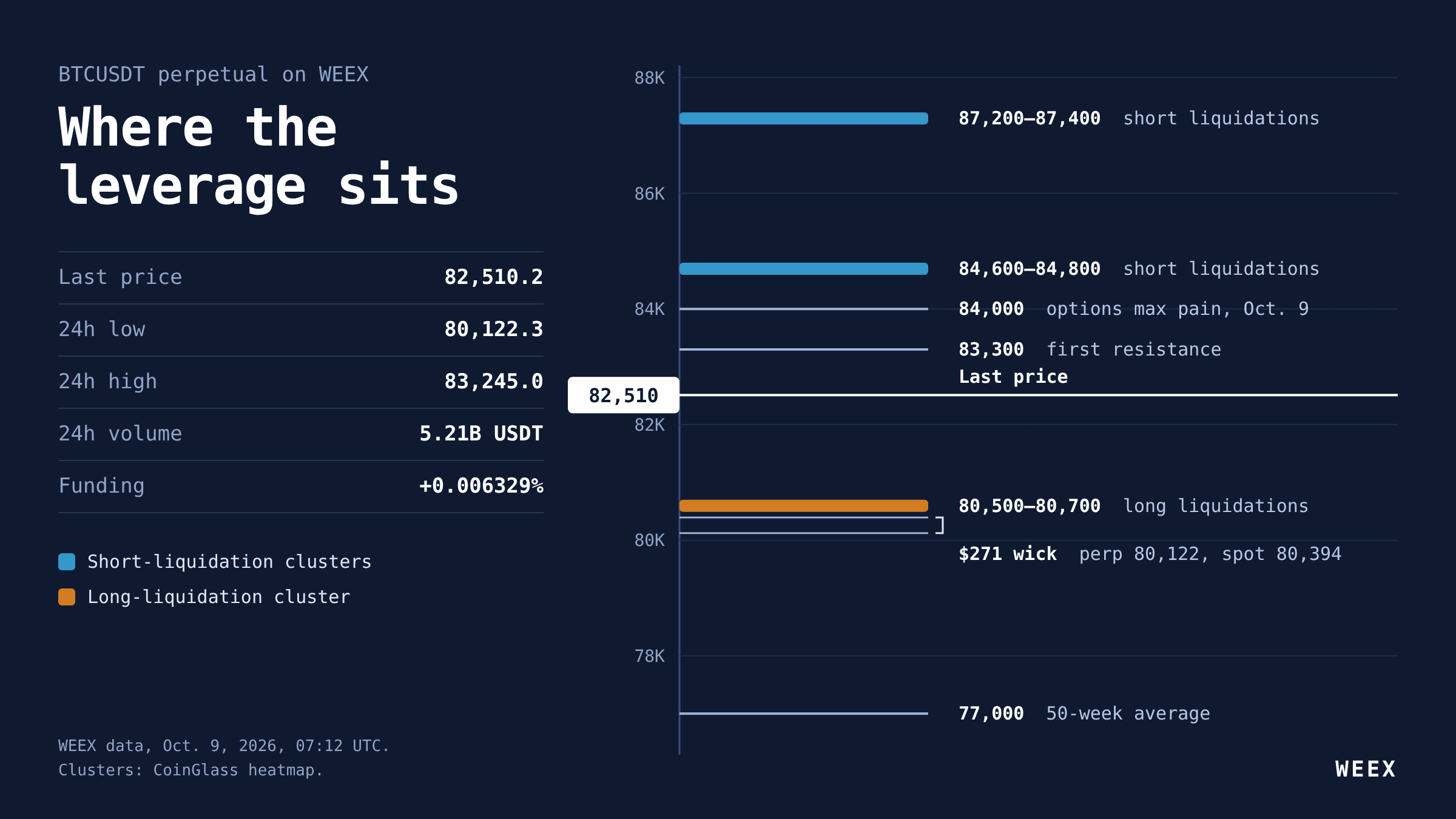
BTC Futures Analysis: $80K Held, but Longs Are Still Paying Up
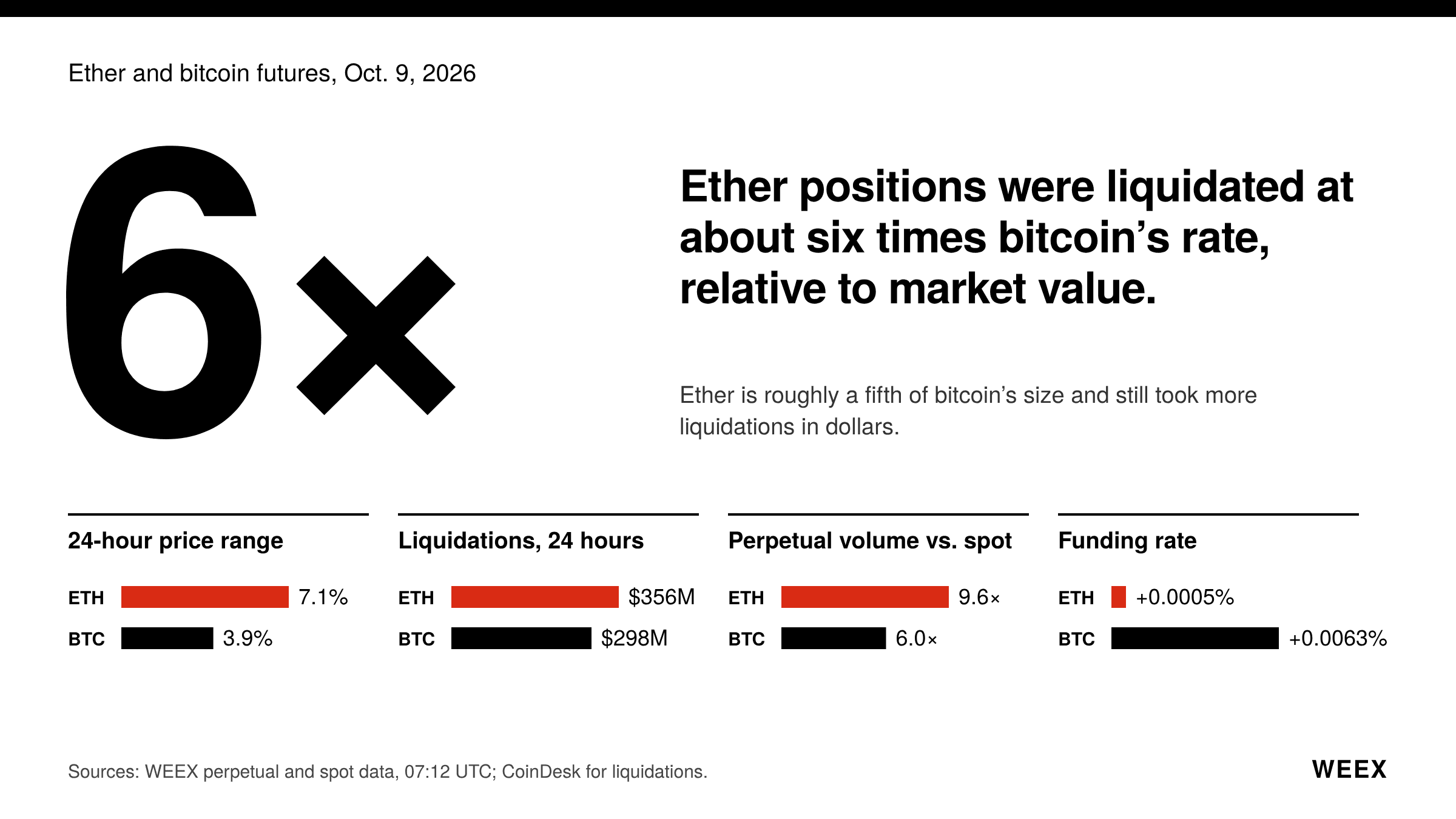
ETH Futures: Why Ether Is Falling Faster Than Bitcoin This Week
ENA Token Price Drops After October 5 Unlock: What Happened to Ethena?
What Is Blockchain and How Does It Work? One Real Payment Traced

How to Buy Crypto With a Prepaid Card: Step-by-Step Guide
Best Crypto Trading Strategies for Beginners: What to Know Before You Trade
Crypto Leverage Trading Explained: How Perpetual Futures, Margin and Liquidation Work
Bitcoin Margin Trading: BTC Liquidation Math at 3x, 10x and 25x
What Is Margin Trading? A $1,000 Example at 3x and 10x Leverage
How to Day Trade Crypto for Beginners: The Math Behind One Trade
Trading Psychology for Beginners: Crypto Traps and Hard Rules
What Is a Bitcoin ETF? How Creation, Custody and Fees Work


