
Crypto Leverage Trading Explained: How Perpetual Futures, Margin and Liquidation Work

 Prefer us on Google


Crypto leverage trading lets a trader control a position worth several times the capital set aside for it, which magnifies gains and losses by the same factor. Most crypto leverage trading takes place in perpetual futures, a contract type with no expiry date that follows the price of an asset such as Bitcoin or Ether.
The mechanics are simple to state and easy to misjudge. A trader posts margin, opens exposure larger than that margin, pays or receives funding while the position stays open, and is closed out automatically if losses use up too much of the margin. How those pieces fit together decides whether a loss is a planned risk or a surprise liquidation.
What Is Crypto Leverage Trading and How Does It Differ From Spot Trading?
Crypto leverage trading is a way of opening a position larger than the trader’s own capital by posting a fraction of its value as margin, while spot trading means buying the actual asset with the full amount. With 1,000 USDT of margin at 10x leverage, a trader controls a position worth 10,000 USDT. Because profit and loss are calculated on the full position size, a 3% price move changes the position’s value by about 300 USDT, which is 30% of the margin before fees. The same arithmetic works in reverse, so a 3% move against the position removes about 30% of the margin.
Spot trading has no liquidation. A trader who buys an asset with the full amount can hold it through any fall, and the most that can be lost is the amount invested. Leveraged positions behave differently because the platform needs the margin to cover losses, so it closes the position when the margin is nearly gone. Leverage also allows traders to profit from falling prices by opening a short position, which spot buying does not offer directly. That flexibility is why many traders use it for hedging, and it is also why it needs more care than a simple purchase.
How Do Perpetual Futures Work in Crypto Leverage Trading?
A perpetual future is a derivative contract that tracks an asset’s price and, unlike a traditional futures contract, never expires. A trader who opens a long position profits if the contract price rises, and a trader who opens a short position profits if it falls. Settlement is usually done in a stablecoin such as USDT or in the underlying coin, depending on the contract type, and the trader does not receive or deliver the actual coins when the position closes. This is why a perpetual position gives price exposure and is not the same as owning the asset.
Because there is no expiry date to pull the contract price toward the real market price, perpetuals use a funding mechanism. On many platforms, funding is exchanged between long and short traders at regular intervals, often every few hours, and its size depends on how far the contract price is from an index of spot prices. When longs outnumber shorts and the contract trades above the index, funding is usually positive and longs pay shorts. When the opposite is true, shorts usually pay longs. The platform itself does not normally earn this payment, but the effect on a trader’s account is real. Funding schedules, caps and formulas differ between platforms, so the contract page is the place to check before opening a position.
How Does Margin Work in Crypto Leverage Trading?
Margin is the collateral a trader sets aside to open and maintain a leveraged position, and the leverage setting determines how much margin a given position size needs. The initial margin is the amount required to open the position, so a 10,000 USDT position at 10x needs 1,000 USDT, while the same position at 5x needs 2,000 USDT. The maintenance margin is the minimum level of equity the position must keep, and when the account falls to it, the platform begins closing the position. Maintenance requirements are usually a small percentage of position value and often rise with larger position sizes.
Traders usually choose between two margin modes. In isolated margin, only the margin assigned to that position is at risk, so a liquidation costs at most that amount, but the position has less cushion because it cannot draw on the rest of the account. In cross margin, the whole available balance backs the position, which pushes the liquidation price further away but puts the entire balance at risk if the market moves sharply. Neither is safer in every case. Isolated margin limits the loss on one idea, while cross margin can survive a short spike that would liquidate an isolated position, at the cost of a larger possible loss.
-- Price
What Is Liquidation and How Is the Liquidation Price Estimated?
Liquidation is the forced closing of a leveraged position when its margin can no longer cover the losses, and the liquidation price is the market level at which that happens. A simplified estimate for an isolated long position is the entry price multiplied by one minus the inverse of the leverage, plus the maintenance margin rate. By that formula, with an assumed maintenance rate of 0.5%, a 5x long is liquidated after a fall of about 19.5%, a 10x long after about 9.5%, and a 20x long after about 4.5%, all by the author’s arithmetic and before fees and funding. For shorts, the price rises by similar percentages instead of falling.
These figures are illustrations, not platform rules. Real liquidation prices depend on the platform’s maintenance margin tiers, the fees paid, accumulated funding, whether the account uses cross or isolated margin, and the price that triggers liquidation. Many platforms use a mark price, a blended reference price, instead of the last traded price, so that a brief spike on one venue does not close positions unfairly. Liquidation also usually carries a fee, and in fast markets a position may be closed at a worse price than the displayed liquidation level. Platforms differ in how they handle shortfalls, through insurance funds or automatic position reduction, so the exchange’s own rules should be read before trading.
What Costs and Risks Should Traders Understand Before Using Crypto Leverage?
The main risks of crypto leverage trading are losing the whole margin quickly, paying costs that accumulate over time, and being forced out of a position by short-term volatility. Crypto markets trade around the clock, and prices can move several percent within minutes, which is enough to liquidate a high-leverage position before a trader can react. Costs also add up beyond the price move itself, including trading fees on opening and closing, funding payments while a position is held, and slippage when a large order moves the market. A position held for several days in a market with persistent positive funding can lose money to funding even if the price barely changes.
Risk management therefore depends more on position size than on the leverage number. Two traders can both use 10x, but the one who allocates 2% of their capital to the position faces a very different outcome from the one who allocates 50%. Common practice includes choosing a size based on how much of the account the trader is willing to lose, placing a stop-loss before the liquidation level, keeping spare margin, and avoiding an increase in leverage after a loss. None of these removes risk, and leveraged losses can happen faster than expected. Anyone who is new to derivatives is usually better off learning the mechanics with small sizes, or on a demo account where one is offered, before using meaningful capital.
Conclusion
Crypto leverage trading uses margin to open positions larger than a trader’s capital, usually through perpetual futures that never expire and rely on funding payments to stay close to the spot price. Higher leverage brings the liquidation price closer, and fees, funding and slippage add costs that a price chart does not show.
Readers who want to understand the topic can start by working through the examples above with their own numbers and checking how a specific platform defines maintenance margin, funding and liquidation. Rules vary between platforms and can change, so the contract specifications are the final reference.
FAQ
1. What is crypto leverage trading?
Crypto leverage trading means opening a position larger than your own capital by posting margin, which magnifies both gains and losses. It is most often done with perpetual futures.
2. How do perpetual futures work in crypto leverage trading?
Perpetual futures track an asset’s price without an expiry date and use funding payments between long and short traders to stay close to the spot price. Crypto leverage trading in perpetuals gives price exposure, not ownership of the coin.
3. What is liquidation in crypto leverage trading?
Liquidation is the forced closing of a position when margin can no longer cover losses. In crypto leverage trading, higher leverage places the liquidation price closer to the entry price.
4. What is the difference between isolated and cross margin?
Isolated margin limits the risk to the margin assigned to one position, while cross margin uses the whole balance as backing. Both are used in crypto leverage trading and carry different risks.
5. Is crypto leverage trading safe for beginners?
Crypto leverage trading carries a high risk of fast losses, and losses can reach the full margin. Beginners usually learn the mechanics with small sizes, low leverage and a clear stop-loss plan.
This content is provided for general informational purposes only and doesn't constitute financial, investment, legal, or tax advice. Any events, rewards, online promotions, or related information mentioned herein should not be considered a recommendation, solicitation, or invitation to purchase, sell, trade, or otherwise deal in any crypto assets. Crypto assets are highly volatile and may result in loss. The availability of WEEX services, products, and related events may vary by region. You are responsible for ensuring that your participation is in accordance with applicable local laws and regulations.
You may also like
Bitcoin Margin Trading: BTC Liquidation Math at 3x, 10x and 25x
Crypto Leverage Trading Platform: 6 Checks Before You Deposit
What Is Margin Trading? A $1,000 Example at 3x and 10x Leverage
How to Day Trade Crypto for Beginners: The Math Behind One Trade
Trading Psychology for Beginners: Crypto Traps and Hard Rules
What Is a Bitcoin ETF? How Creation, Custody and Fees Work
What Is Blockchain and How Does It Work? One Transaction, Traced
WEEX Convert Fees: What Zero-Fee Conversion Really Costs You
WEEX Convert Quote: How the 8-Second Price Lock Really Works
WEEX Convert Limits: Minimum and Maximum Amounts Explained
How to Check a WEEX Convert Order: History, Rate and Status

USDC Significant EMT Status in the EU: What Changes on November 12 Under MiCA
Walrus (WAL) Jumps 30%: Sui Storage Token Rallies on AI Data
Bitcoin Price After Hot CPI: Why BTC Is Pinned Near $82,000
What Is a Limit Order? How It Works and When to Use It

Best Crypto Miner for Beginners: What to Check on Cost, Power, Hashprice and Profit Before You Buy
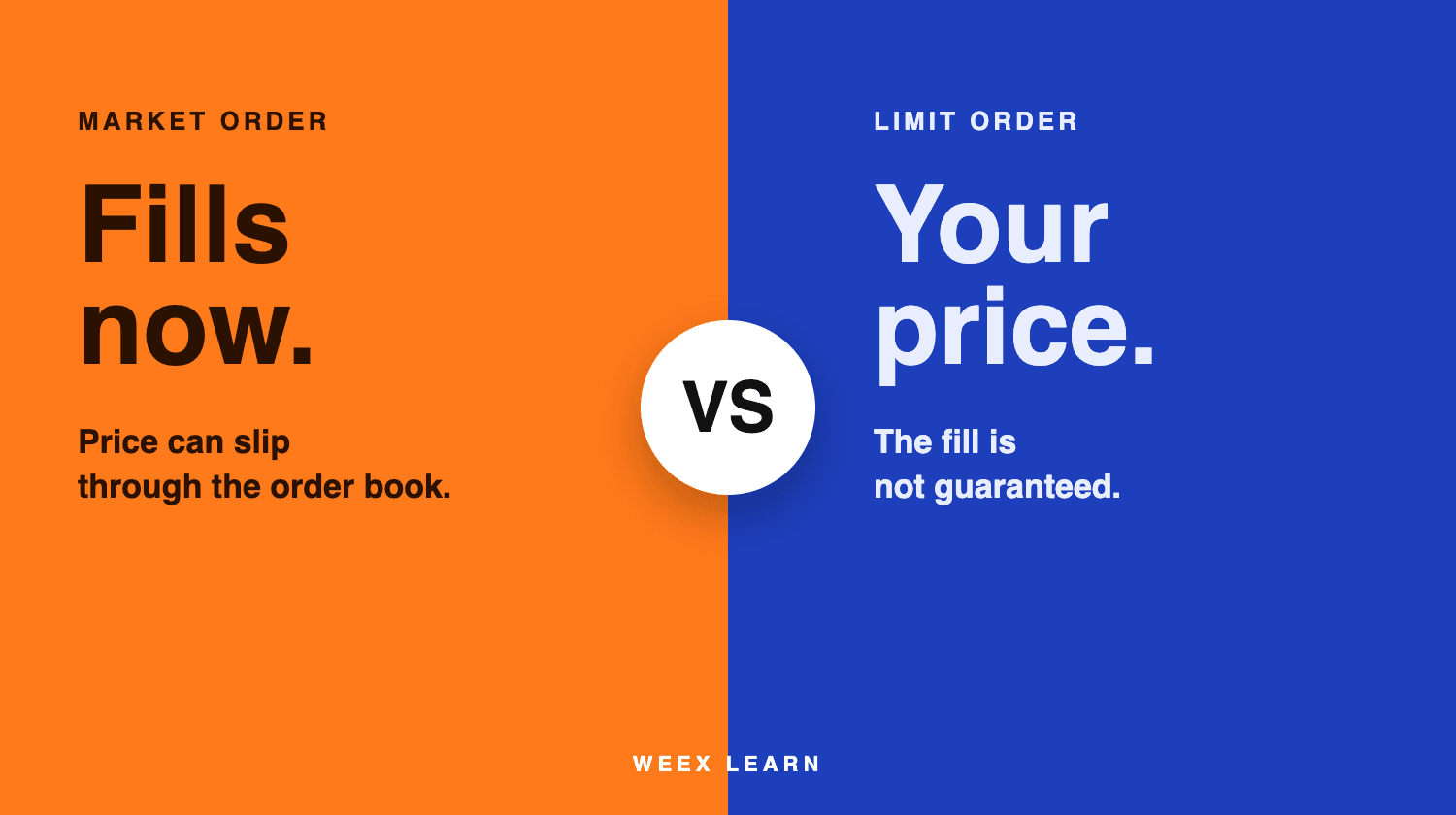
Limit Order vs Market Order: Which One to Use When Trading Crypto
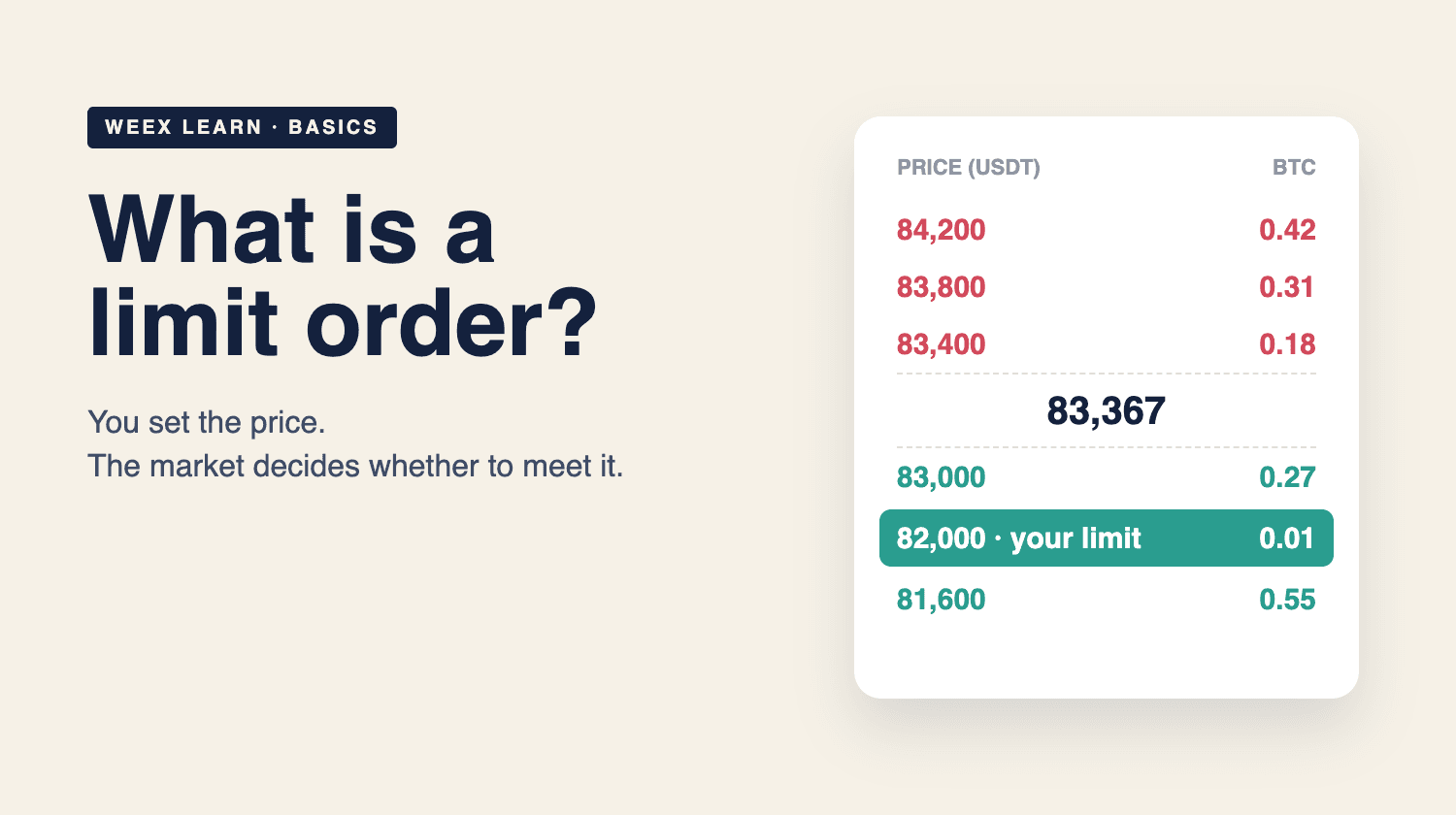
What Is a Limit Order? How It Works in Crypto With BTC Examples
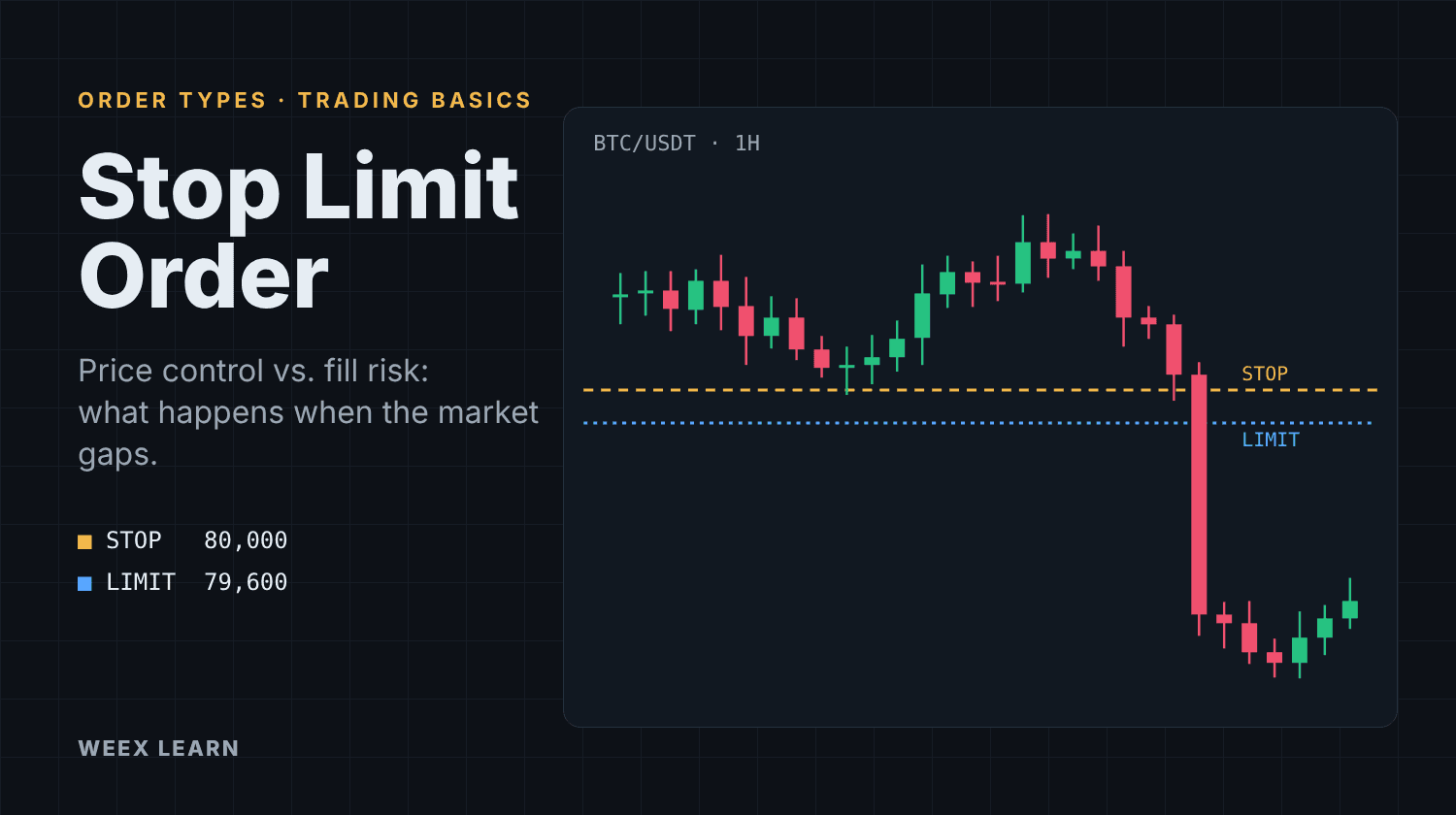
Stop Limit Order: How It Works and Why It Can Fail to Fill
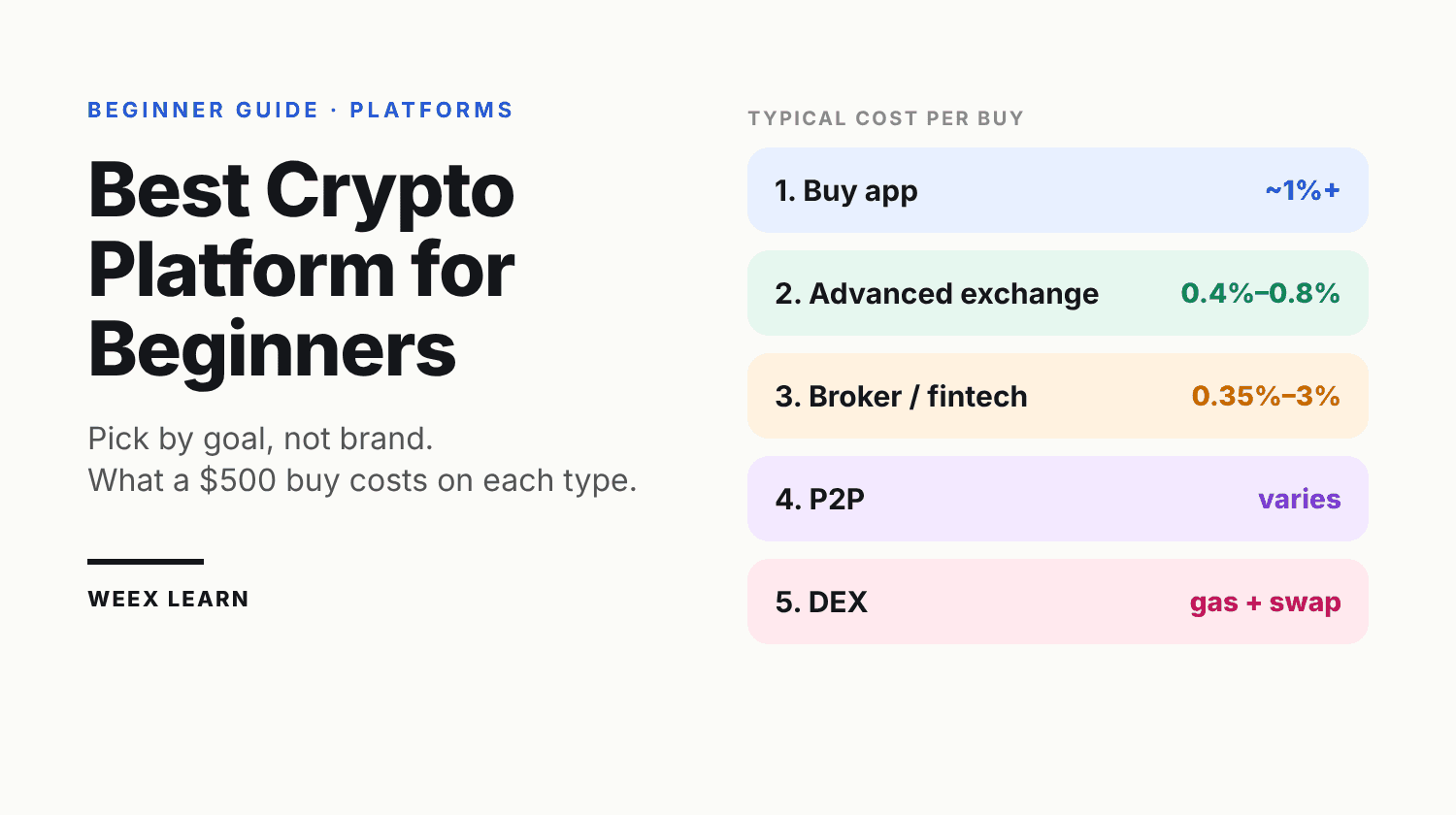
Best Crypto Platform for Beginners: Pick by Goal, Not Brand

Best Crypto Podcasts for Beginners: A 4-Week Listening Plan
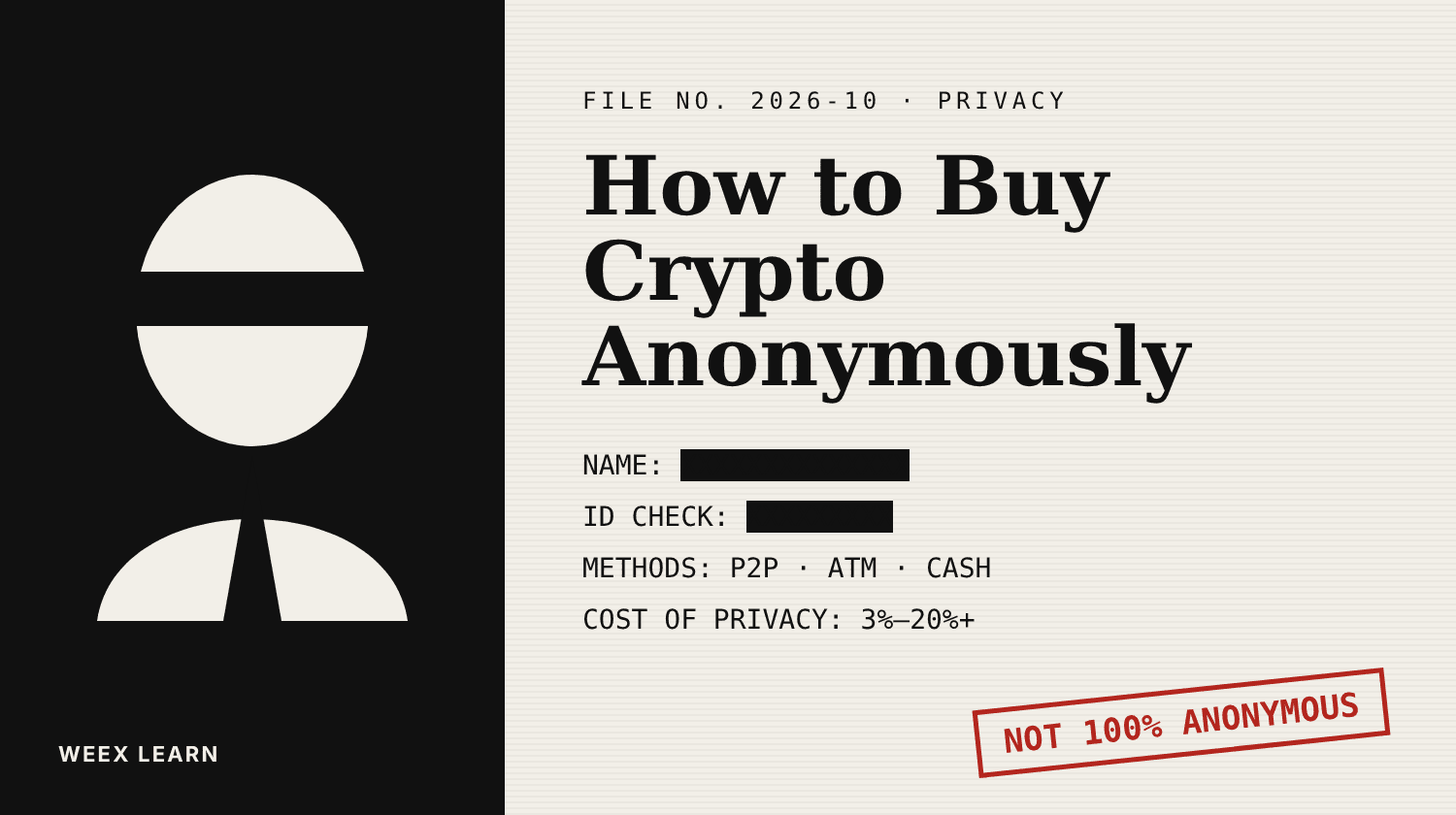
How to Buy Crypto Anonymously: 5 Methods, Real Costs and Limits

Will Bitcoin Break $87,000 This Week? CPI, Fed Speakers and ETF Outflows to Watch

Conflux (CFX) Price Jumps on China's National Blockchain Network Plan: Does the Policy Actually Name CFX?
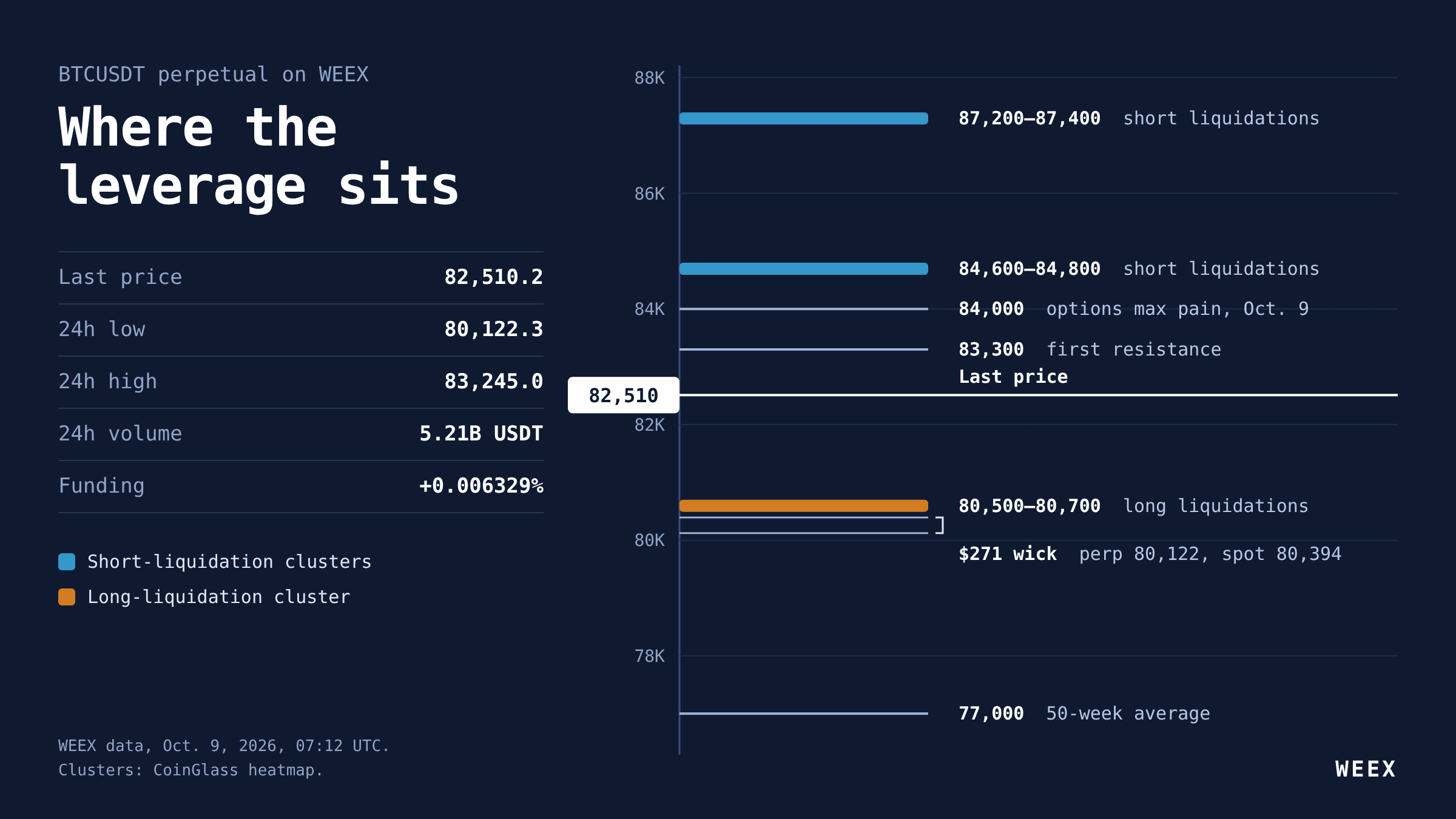
BTC Futures Analysis: $80K Held, but Longs Are Still Paying Up
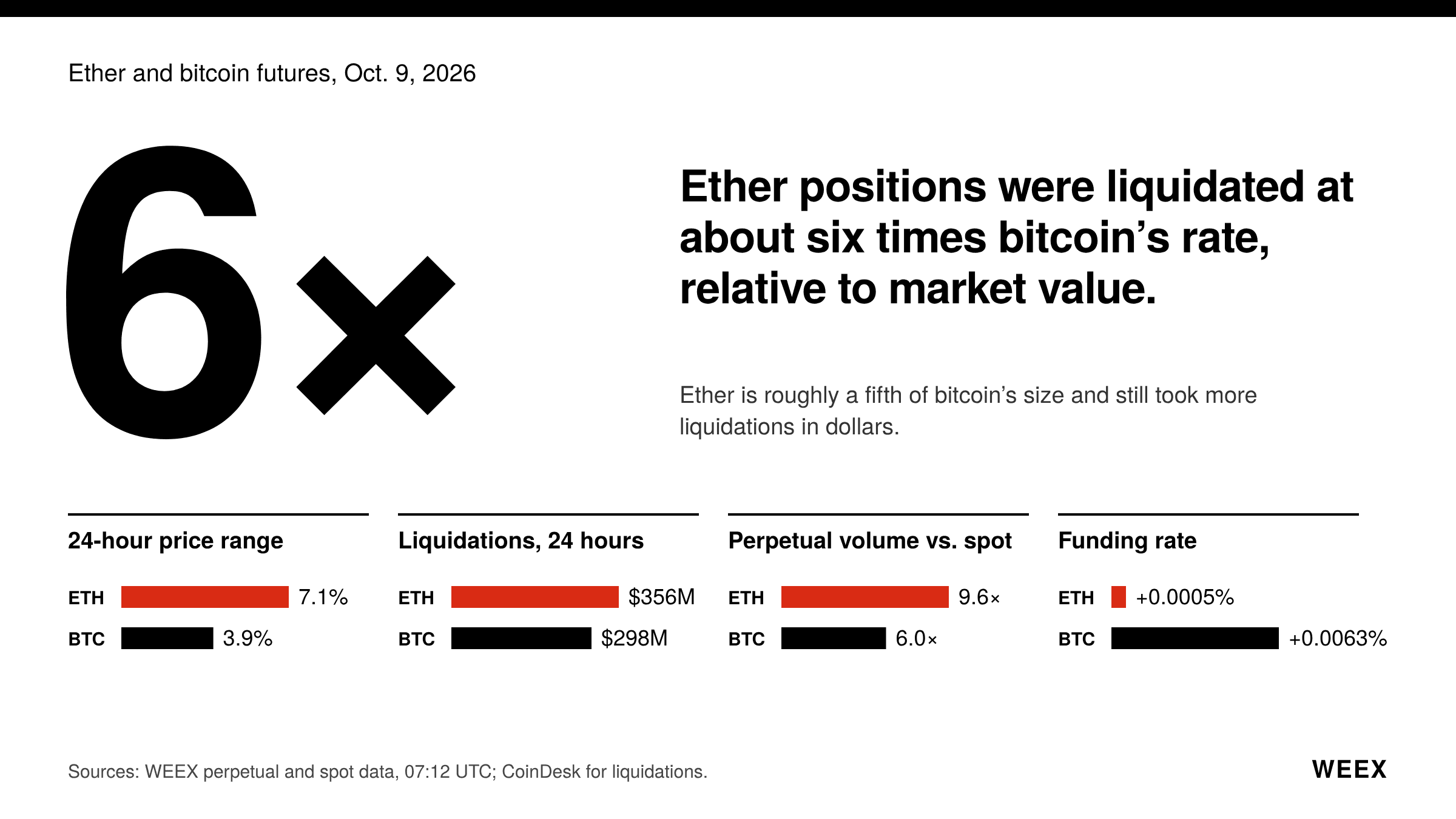
ETH Futures: Why Ether Is Falling Faster Than Bitcoin This Week
ENA Token Price Drops After October 5 Unlock: What Happened to Ethena?
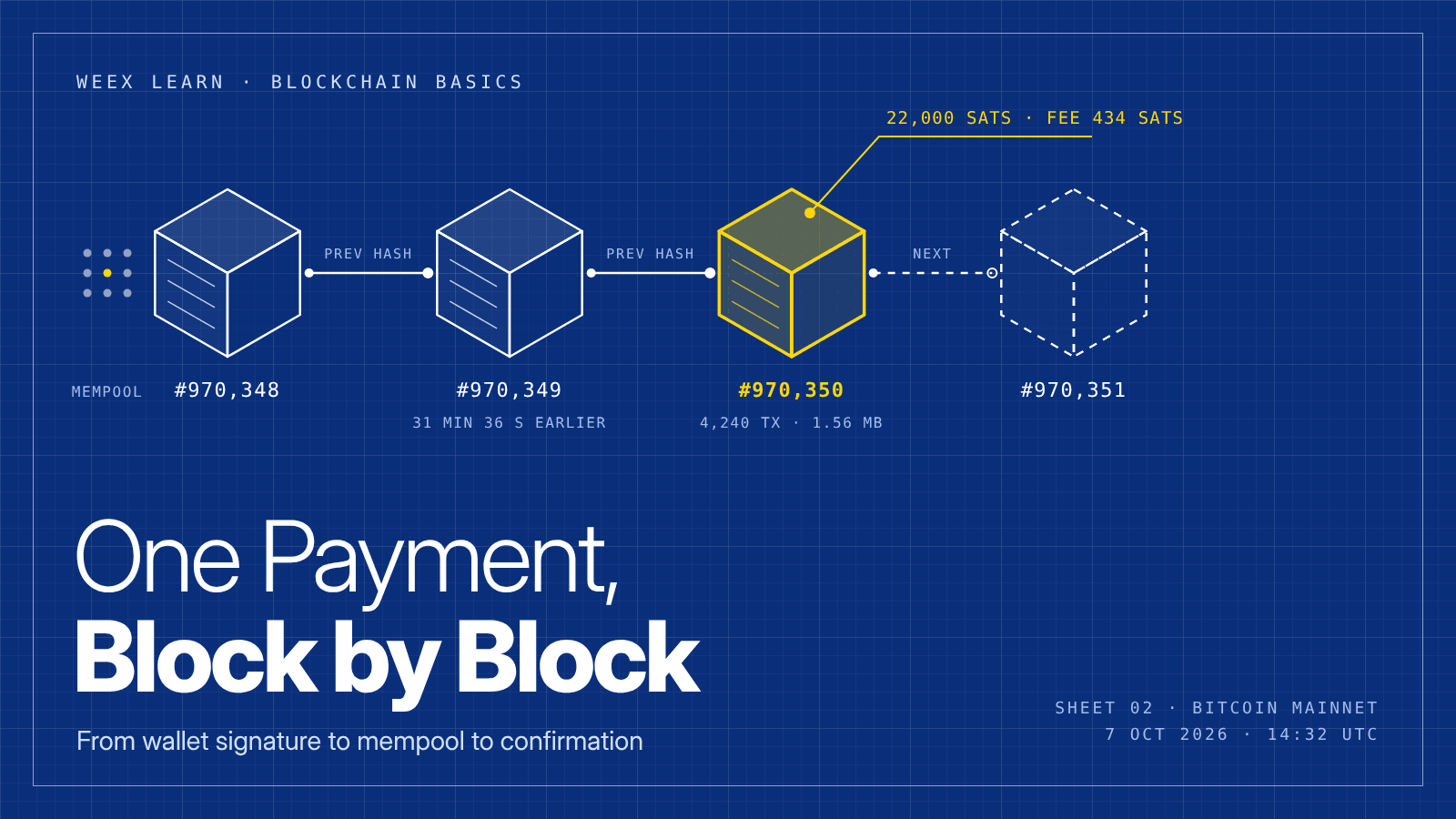
What Is Blockchain and How Does It Work? One Real Payment Traced

How to Buy Crypto With a Prepaid Card: Step-by-Step Guide
Best Crypto Trading Strategies for Beginners: What to Know Before You Trade
Bitcoin Margin Trading: BTC Liquidation Math at 3x, 10x and 25x
Crypto Leverage Trading Platform: 6 Checks Before You Deposit
What Is Margin Trading? A $1,000 Example at 3x and 10x Leverage
How to Day Trade Crypto for Beginners: The Math Behind One Trade
Trading Psychology for Beginners: Crypto Traps and Hard Rules
What Is a Bitcoin ETF? How Creation, Custody and Fees Work


