
Common Bitcoin Scams and How to Avoid Them

 Prefer us on Google
As new technologies emerge, so too do the opportunities for fraudsters to exploit them. Bitcoin, a borderless digital currency, presents a particularly interesting landscape for cryptocurrency scammers. Its decentralized nature grants users full control over their investments but also makes establishing robust regulatory and law enforcement frameworks a challenge. If scammers manage to trick you into making mistakes while using Bitcoin, they can potentially steal your BTC with little recourse for recovery. Understanding the nuances of Bitcoin machine scams and even specific regional concerns like Bitcoin ATM scams Pennsylvania or Bitcoin Depot scam reports can help users stay vigilant.
Therefore, it's paramount to understand how these scammers operate and to learn how to identify potential red flags. While numerous Bitcoin scams exist, some are far more prevalent than others. This guide will explore eight common Bitcoin scams and provide actionable advice on how to avoid them. It's also important to be aware of claims that sound too good to be true, such as those often associated with schemes like "is Bitcoin revolution a scam" or "Bitcoin evolution scam" discussions.
Common Bitcoin Scams (and How to Avoid Them!)
Blackmail
Blackmail is a notorious tactic where scammers threaten to release sensitive information unless they receive a payment, often in cryptocurrency like Bitcoin. Scammers may discover or fabricate personal information and leverage it to coerce you into sending them Bitcoin or other forms of currency. Be wary of increasingly sophisticated tactics like Bitcoin email scam 2025 notifications that might claim unauthorized access to your accounts.
To shield yourself from blackmail scams, be diligent about your login credentials, the websites you visit, and the information you share. Employing two-factor authentication whenever possible significantly enhances your security. If the information used for blackmail is demonstrably false, you may be able to disregard the threat.
Fake Exchanges
As their name implies, fake exchanges are fraudulent replicas of legitimate cryptocurrency trading platforms. These scams typically manifest as mobile apps, but can also appear as desktop applications or deceptive websites. Be cautious, as some fake exchanges are meticulously designed to mimic their authentic counterparts, aiming to steal your funds.
These fraudulent platforms often lure traders and investors with promises of free cryptocurrencies, competitive pricing, low exchange fees, or even giveaways.
To avoid being victimized by a fake exchange, bookmark the URLs of legitimate exchanges and always double-check them before logging in. For mobile applications, meticulously verify developer information, download numbers, user reviews, and comments.
Fake Giveaways
Fake giveaways are a deceptive practice where scammers offer something for free in exchange for a small initial deposit. Typically, they will instruct you to send funds to a specific Bitcoin address with the promise of receiving a larger amount in return (e.g., "Send 0.1 BTC to receive 0.5 BTC"). However, any Bitcoin transactions made in this manner will result in the loss of your funds with no expected return.
Various forms of fake giveaway scams exist, some requesting other cryptocurrencies like ETH, BNB, XRP, and more, while others may solicit your private keys or other sensitive information. These scams are frequently encountered on social media platforms, where they often piggyback on trending tweets, viral news, or announcements such as protocol upgrades or upcoming initial coin offerings (ICOs).
The most effective way to avoid fake giveaway scams is to never participate in any giveaway that requires you to send funds or valuable assets upfront. Legitimate giveaways will never ask for payment.
Social Media Phishing
Social media phishing is a widespread Bitcoin scam, much like fake giveaways, primarily targeting users on social media platforms. Scammers create accounts designed to impersonate individuals or entities with significant influence in the crypto space. They then offer fraudulent giveaways through tweets or direct messages.
To prevent becoming a victim of social media phishing, meticulously verify the identity of the person or entity you are interacting with. Social media platforms often provide indicators of authenticity, such as verification badges.
Copy-and-Paste Malware
Copy-and-paste malware is a highly insidious method scammers use to steal your funds. This type of malware hijacks your clipboard data, and if you're not vigilant, you could inadvertently send money directly to scammers. For instance, if you intend to send Bitcoin to a friend and copy their address, but your device is infected, the scammer's address can automatically replace your friend's as you paste it. Consequently, upon transaction confirmation, your Bitcoin will be sent to the scammer, and your friend will receive nothing.
To safeguard against this scam, prioritize your computer's security. Be wary of suspicious messages or emails containing infected attachments or malicious links. Exercise caution regarding the websites you visit and the software you install on your devices. It's advisable to install reputable antivirus software and conduct regular threat scans. Furthermore, keeping your device's operating system (OS) updated is crucial.
Phishing Emails
Phishing emails represent a common form of scam that attempts to trick you into downloading infected files or clicking links leading to malicious websites disguised as legitimate ones. These emails are particularly dangerous when they mimic products or services you frequently use.
Scammers often include urgent messages prompting you to take immediate action to secure your account or funds, such as updating account information, resetting passwords, or uploading documents. Their primary goal is typically to acquire your login credentials to compromise your account.
The initial step in evading phishing email scams is to verify the sender's authenticity. If in doubt, contact the purported company directly to confirm the legitimacy of the email. Additionally, hover over email links (without clicking) to check for misspellings, unusual characters, or other irregularities in the URLs. Even in the absence of obvious red flags, avoid clicking links. If you need to access your account, do so through alternative methods like manually typing the URL or using saved bookmarks.
Ponzi and Pyramid Schemes
Ponzi and pyramid schemes are among the oldest financial scams. A Ponzi scheme operates by paying returns to earlier investors with funds generated from newer investors. The scheme collapses when the influx of new investors ceases, halting the money flow.
A pyramid scheme, on the other hand, is a business model that rewards members for recruiting new members. When recruitment becomes unsustainable, the money flow stops.
The best way to avoid these schemes is to thoroughly research any cryptocurrency you intend to purchase, whether it's Bitcoin or an altcoin. If a cryptocurrency's value is solely reliant on new investors or members joining, it is likely a Ponzi or pyramid scheme.
Ransomware
Ransomware is a type of malware that either locks down a victim's computer or mobile device or prevents access to valuable data unless a ransom is paid, typically in BTC. These attacks can be particularly devastating when directed at critical infrastructure like hospitals, airports, and government agencies.
Ransomware usually blocks access to essential files or databases, threatening deletion if payment is not received before a deadline. However, there is no guarantee that attackers will uphold their end of the bargain.
To protect yourself against ransomware attacks:
- Install reputable antivirus software and keep your operating system and applications updated.
- Refrain from clicking on suspicious ads and links.
- Be cautious of email attachments, especially those ending in .exe, .vbs, or .scr.
- Regularly back up your files to enable restoration in case of infection. You can find valuable ransomware prevention advice and free recovery tools at resources like NoMoreRansom.org.
Closing Thoughts
While numerous Bitcoin scams exist, understanding their mechanics is a crucial first step towards complete avoidance. By learning to recognize and steer clear of the most common Bitcoin scams, you can significantly enhance the security of your crypto holdings. When faced with a situation where you suspect you've been a victim of a scam, knowing resources for recover scammed bitcoin can be vital, though recovery is often challenging.
For further exploration into the world of cryptocurrency and to deepen your understanding of blockchain technology, visit WEEX Learn. When you're ready to engage in secure and reliable cryptocurrency trading, join WEEX Exchange—a secure platform designed for seamless crypto trading. Stay smart, stay safe!
Further Reading
- What is Bitcoin Pizza Day : A Slice of Crypto History
- What Is Bitcoin and How Does It Work?
- User Guide: How to Invest in Bitcoin and Cryptocurrencies?
- 7 Common Mistakes in Crypto Trading
Disclaimer: The opinions expressed in this article are for informational purposes only. This article does not constitute an endorsement of any of the products and services discussed or investment, financial, or trading advice. Qualified professionals should be consulted prior to making financial decisions.
-- Price
This content is provided for general informational purposes only and doesn't constitute financial, investment, legal, or tax advice. Any events, rewards, online promotions, or related information mentioned herein should not be considered a recommendation, solicitation, or invitation to purchase, sell, trade, or otherwise deal in any crypto assets. Crypto assets are highly volatile and may result in loss. The availability of WEEX services, products, and related events may vary by region. You are responsible for ensuring that your participation is in accordance with applicable local laws and regulations.
You may also like
How to Day Trade Crypto for Beginners: The Math Behind One Trade

Trading Psychology for Beginners: Crypto Traps and Hard Rules
What Is a Bitcoin ETF? How Creation, Custody and Fees Work

What Is Blockchain and How Does It Work? One Transaction, Traced
WEEX Convert Fees: What Zero-Fee Conversion Really Costs You

WEEX Convert Quote: How the 8-Second Price Lock Really Works
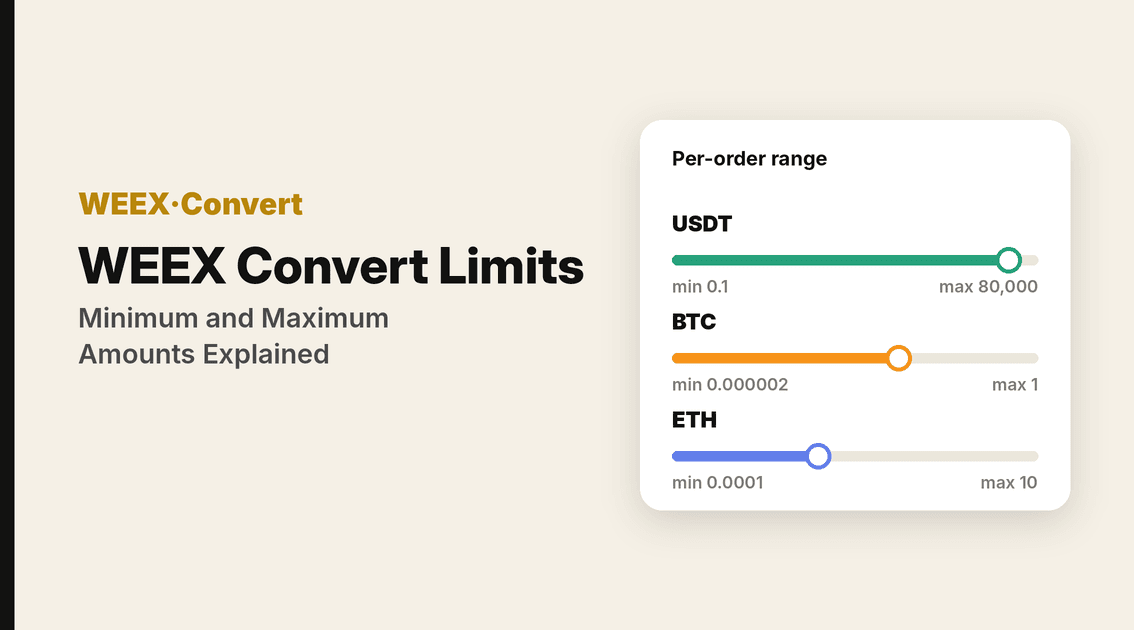
WEEX Convert Limits: Minimum and Maximum Amounts Explained
How to Check a WEEX Convert Order: History, Rate and Status
USDC Significant EMT Status in the EU: What Changes on November 12 Under MiCA

Walrus (WAL) Jumps 30%: Sui Storage Token Rallies on AI Data
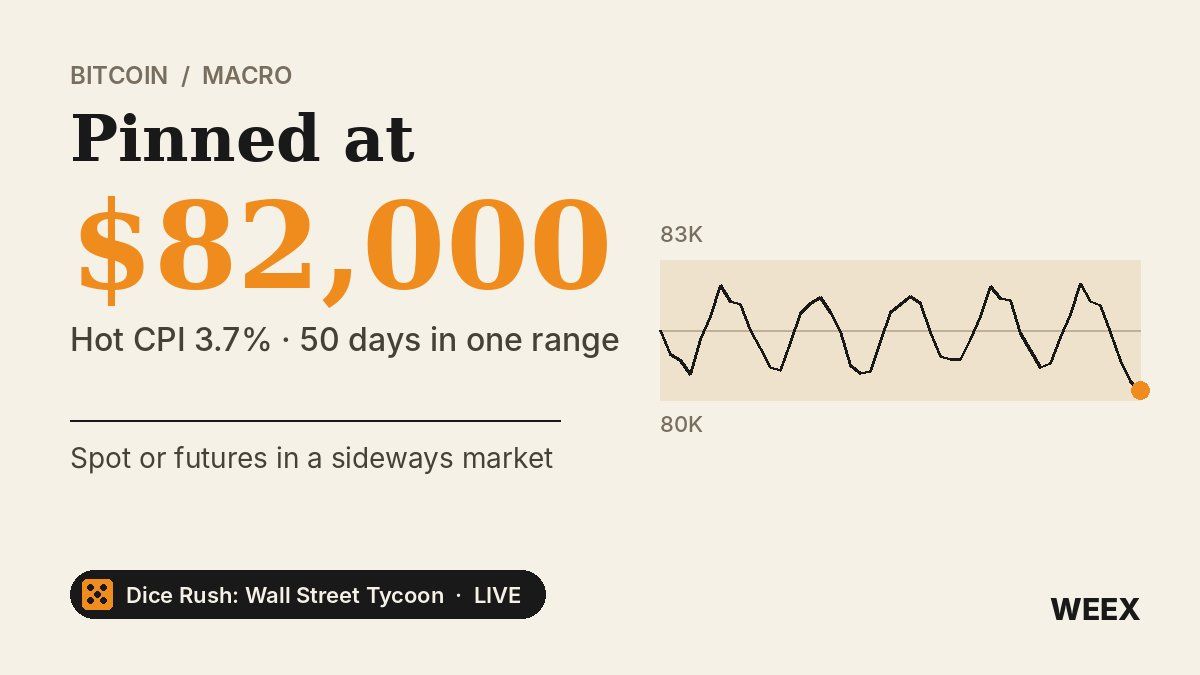
Bitcoin Price After Hot CPI: Why BTC Is Pinned Near $82,000

What Is a Limit Order? How It Works and When to Use It

Best Crypto Miner for Beginners: What to Check on Cost, Power, Hashprice and Profit Before You Buy

Limit Order vs Market Order: Which One to Use When Trading Crypto
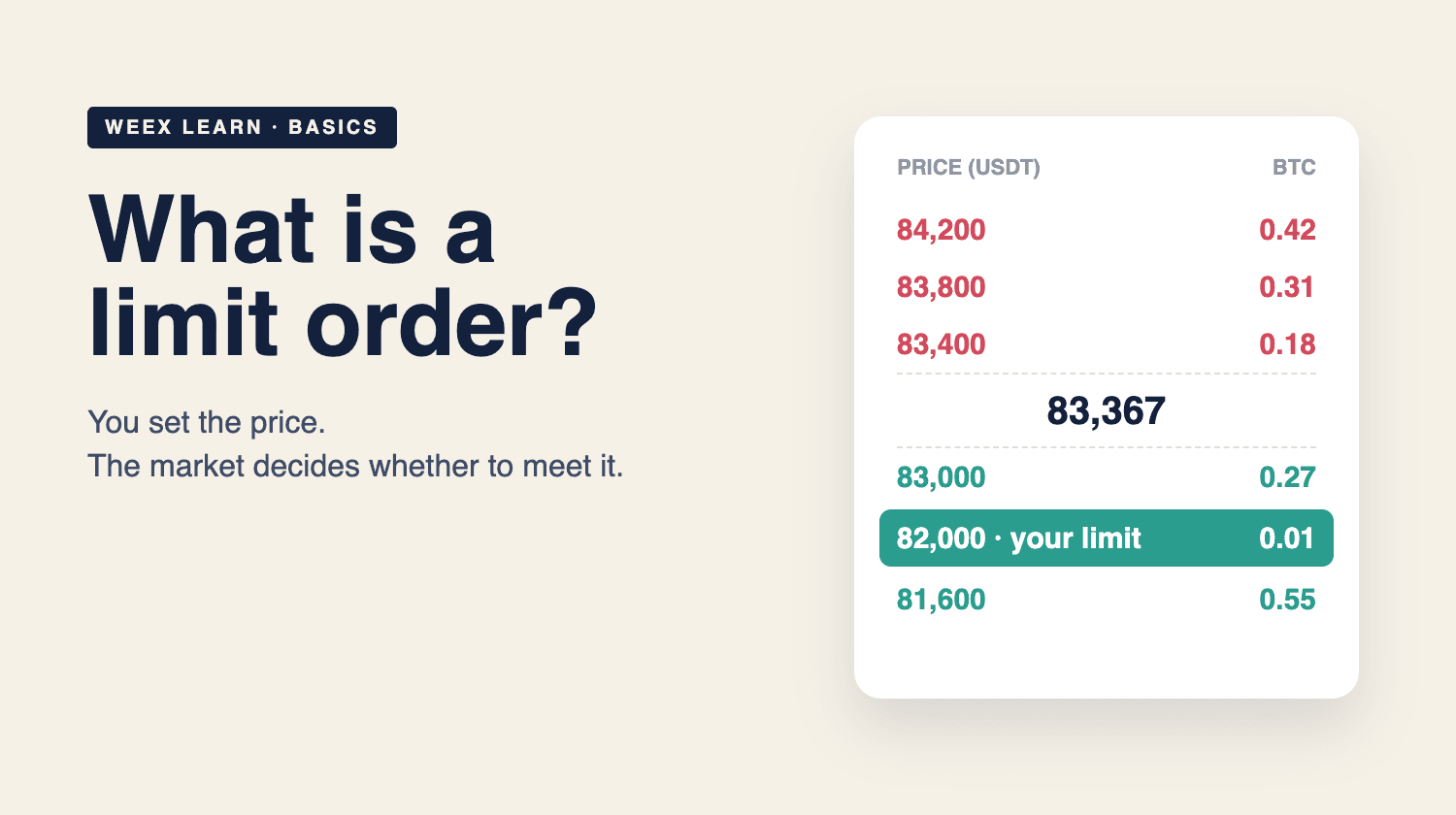
What Is a Limit Order? How It Works in Crypto With BTC Examples
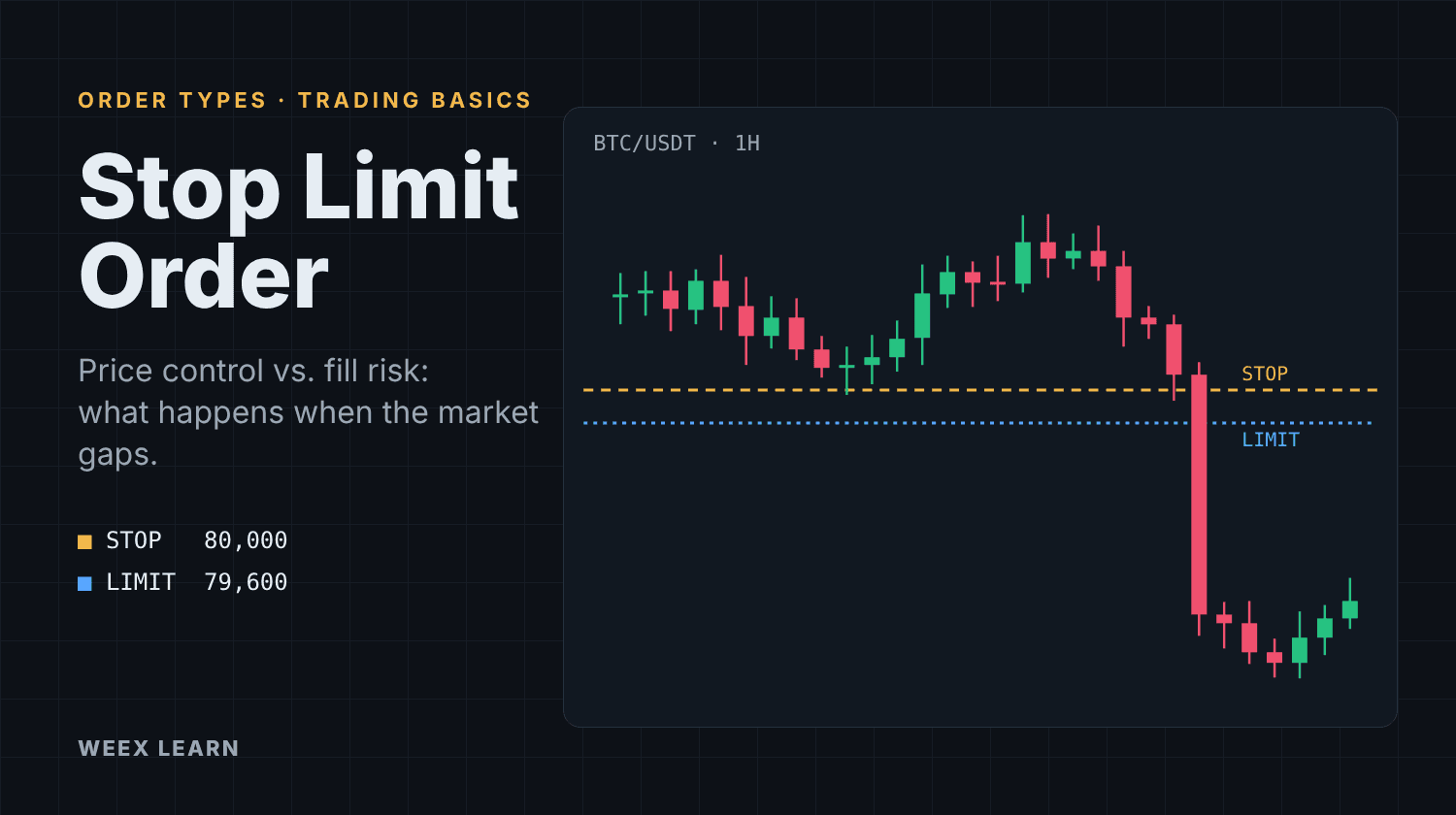
Stop Limit Order: How It Works and Why It Can Fail to Fill
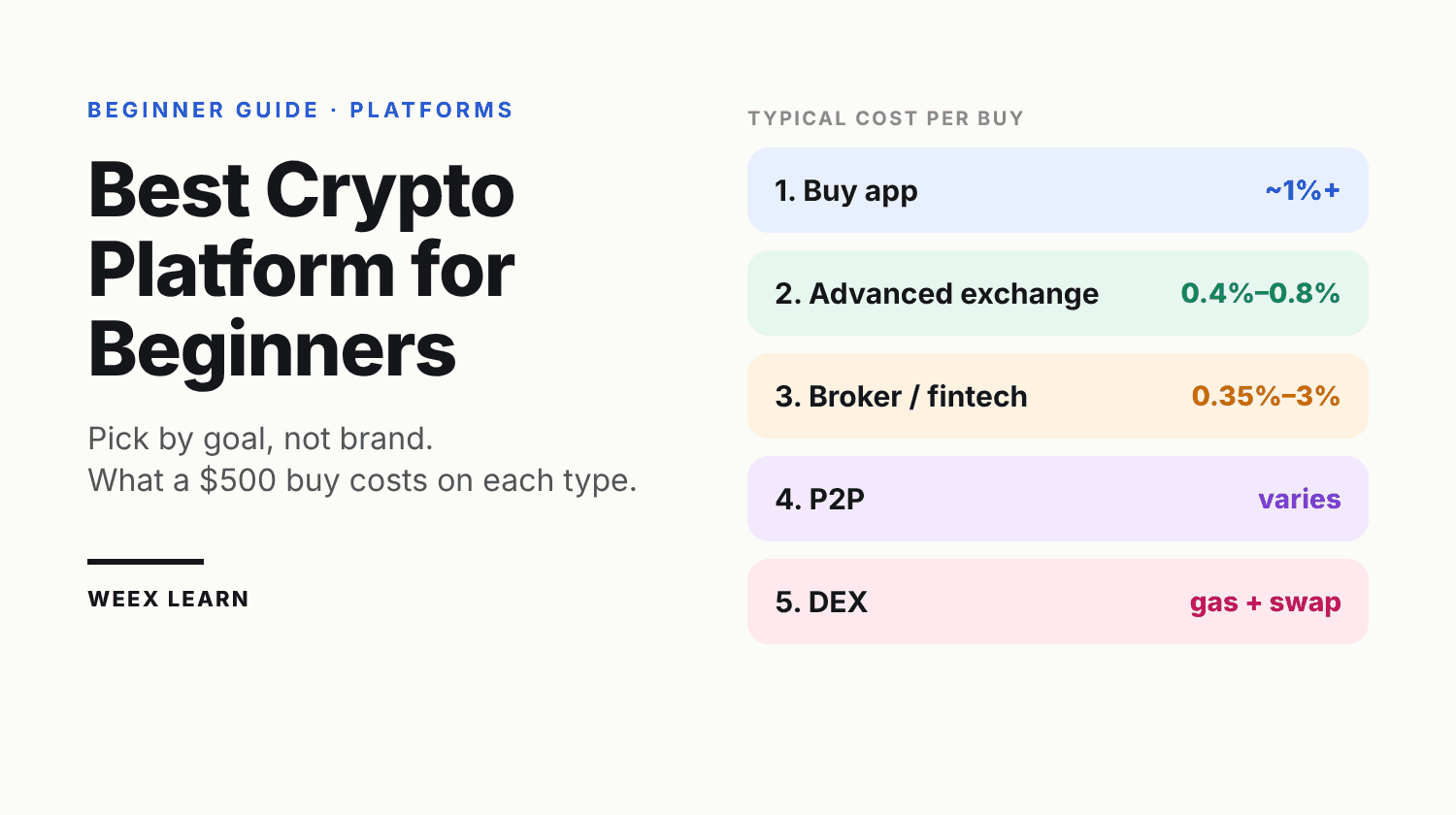
Best Crypto Platform for Beginners: Pick by Goal, Not Brand

Best Crypto Podcasts for Beginners: A 4-Week Listening Plan
How to Buy Crypto Anonymously: 5 Methods, Real Costs and Limits
Will Bitcoin Break $87,000 This Week? CPI, Fed Speakers and ETF Outflows to Watch
Conflux (CFX) Price Jumps on China's National Blockchain Network Plan: Does the Policy Actually Name CFX?
BTC Futures Analysis: $80K Held, but Longs Are Still Paying Up
ETH Futures: Why Ether Is Falling Faster Than Bitcoin This Week
ENA Token Price Drops After October 5 Unlock: What Happened to Ethena?
What Is Blockchain and How Does It Work? One Real Payment Traced

How to Buy Crypto With a Prepaid Card: Step-by-Step Guide
Best Crypto Trading Strategies for Beginners: What to Know Before You Trade
LayerZero Unlock October 2026: Can ZRO Hold $2 Amid Whale Inflows?
How to Buy Crypto With Apple Pay in 5 Steps: Why Your Bank May Decline the Payment

Why Does Bitcoin (BTC) Drop? How to Read a BTC Liquidation Heatmap Without Guessing the Bottom
How to Day Trade Crypto for Beginners: The Math Behind One Trade
Trading Psychology for Beginners: Crypto Traps and Hard Rules
What Is a Bitcoin ETF? How Creation, Custody and Fees Work
What Is Blockchain and How Does It Work? One Transaction, Traced
WEEX Convert Fees: What Zero-Fee Conversion Really Costs You
WEEX Convert Quote: How the 8-Second Price Lock Really Works